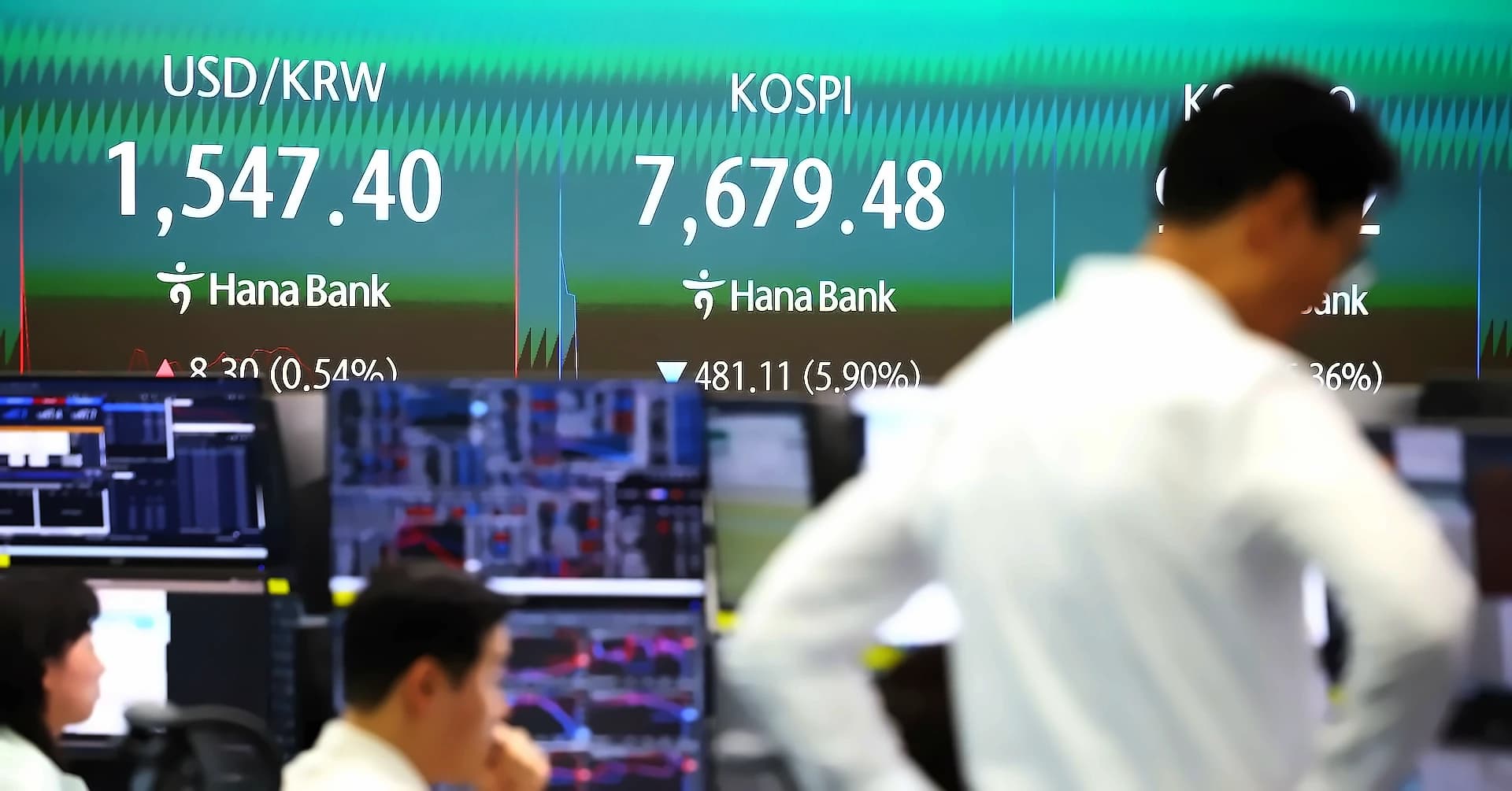
Emerging-market assets delivered exceptional performance, with MSCI's emerging market index rising 2.9% to a record high. According to reports from Bloomberg, South Korean stocks led the gains, while a similar gauge for developing world currencies advanced 0.3%. The strong performance came as markets found renewed momentum in the AI/tech cycle, with no incrementally negative news on geopolitical or oil-price fronts providing additional support. As per the Wall Street Journal, the emerging markets index has gained approximately 14% this year, significantly outpacing the S&P 500's 5.6% rise during the same period. Wall Street strategists continue to point to earnings, especially within the AI trade, as a key driver of further market gains, with Jackson Square Capital's Andrew Graham noting that "it's really hard for the market to go down when you have double-digit earnings growth."
The market surge was primarily fueled by strong technology earnings from major global companies. As reported by Bloomberg, some of the largest technology companies in the world delivered strong earnings in the previous week, including Alphabet Inc., Apple Inc. and Amazon Inc. Stock indices in regions seen as key drivers of the AI trade rallied significantly, with Korea's Kospi advancing to a fresh high and Taiwanese stocks opening more than 2% higher. According to the latest data, South Korea's Kospi benchmark has climbed 57% in 2026, while Taiwan's Taiex is up 34%. Industry heavyweights like Samsung and Taiwan Semiconductor Manufacturing Co. (TSMC) have recorded double-digit gains, with Samsung alone posting an 84% climb so far this year. However, stock reactions within Big Tech players have been mixed as investors weigh strong results against rising spending, particularly with Meta, Microsoft and Apple flagging rising costs for memory chips. As Sevens Report Research's Tom Essaye noted, "memory that everyone needs in the technology space is now skyrocketing in price."

Investor sentiment received a significant boost from positive geopolitical developments regarding the Strait of Hormuz. According to Bloomberg reports, President Donald Trump announced the US will begin guiding ships not involved in the Iran conflict through the Strait of Hormuz from Monday. Trump described discussions with Tehran as 'very positive' after it received Washington's response to its latest proposal to end the war. These steps could pave the way for smoother energy flows after a near-full blockade for two months that had roiled global markets. With oil above $100 and the Strait of Hormuz still closed amid a US-Iran standoff, AI investment may be one of the key forces holding the economy together. As Moody's Analytics chief economist Mark Zandi told Yahoo Finance, "I think we'd be likely in a recession already if not for the AI investment driven boom."
Outside of Asia, investors are increasingly favoring oil-exporting nations that maintain a low dependence on Middle Eastern energy supplies. Brazil has emerged as a standout performer, with its Bovespa index adding 16% this year. After becoming a net oil exporter in 2017, Brazil is projected to reach a production capacity of 4.76 million barrels of crude a day by 2030, representing the fastest production growth on the continent. This insulation from energy shocks has allowed Brazil's materials and financial sectors to return substantial cash to investors via dividends. Consequently, the iShares MSCI Brazil ETF has nearly quadrupled in size over the last year to approximately $12 billion.
Emerging-market stocks remain fundamentally cheaper than their U.S. counterparts, with the MSCI EM ETF trading at roughly 18.4 times earnings, compared to 28.9 times for the S&P 500. The primary engine behind this year's surge has been the massive build-out of artificial intelligence infrastructure, with key suppliers based in South Korea and Taiwan seeing their valuations soar as they provide essential hardware for global tech firms. UBS analysts continue to see stocks higher this year, with a target of 7,500 by the end of 2026, pared in April from 7,600 due to higher energy prices. Even the beaten-down iShares Expanded Tech-Software Sector ETF (IGV), which rebounded about 5% in April, was added to Fundstrat's top sector. Fundstrat's Tom Lee noted that "AI is a threat to many business models, and the software sector will need to evolve," but the setup remains favorable for dynamic adjustment and AI leverage among the best software companies.