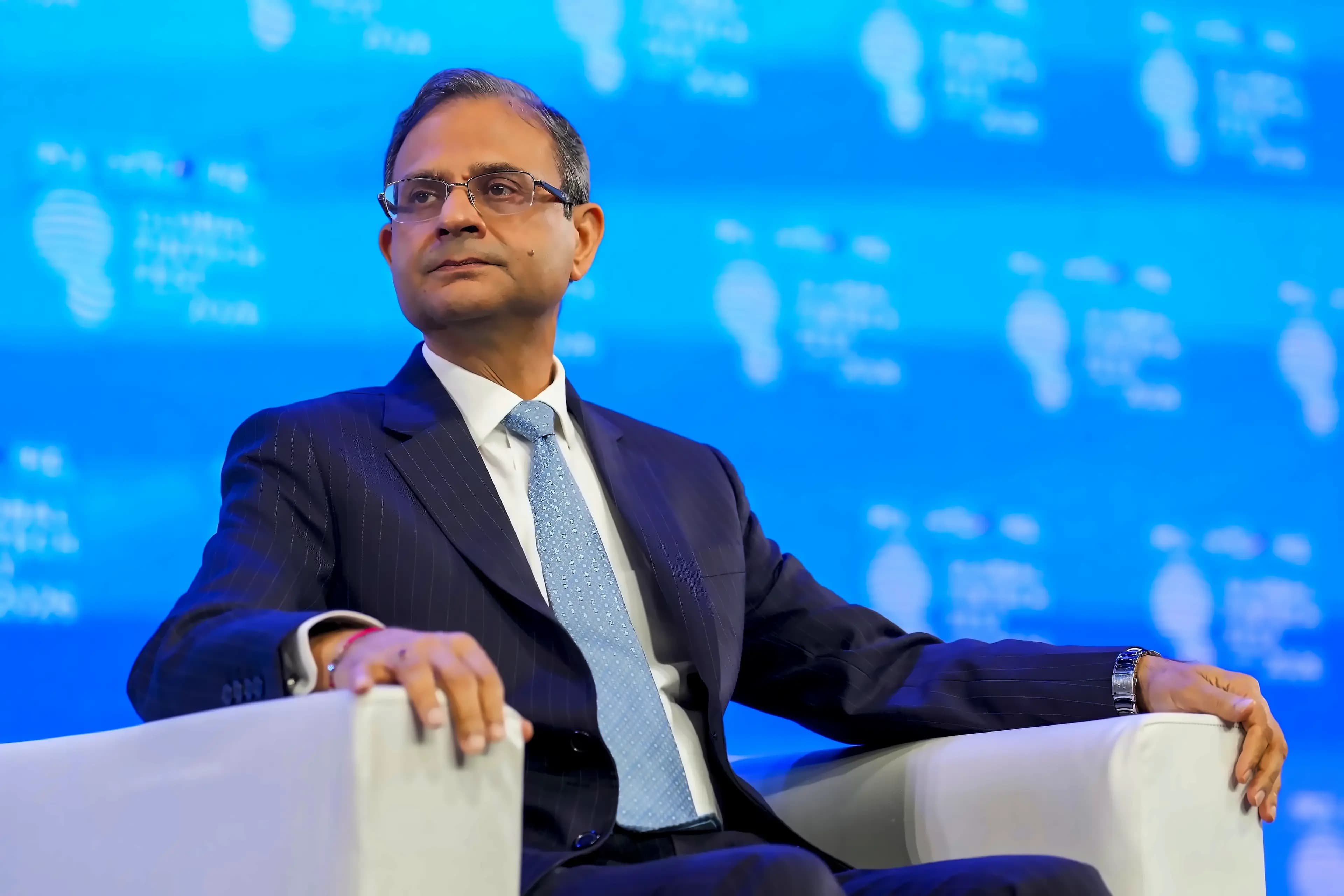
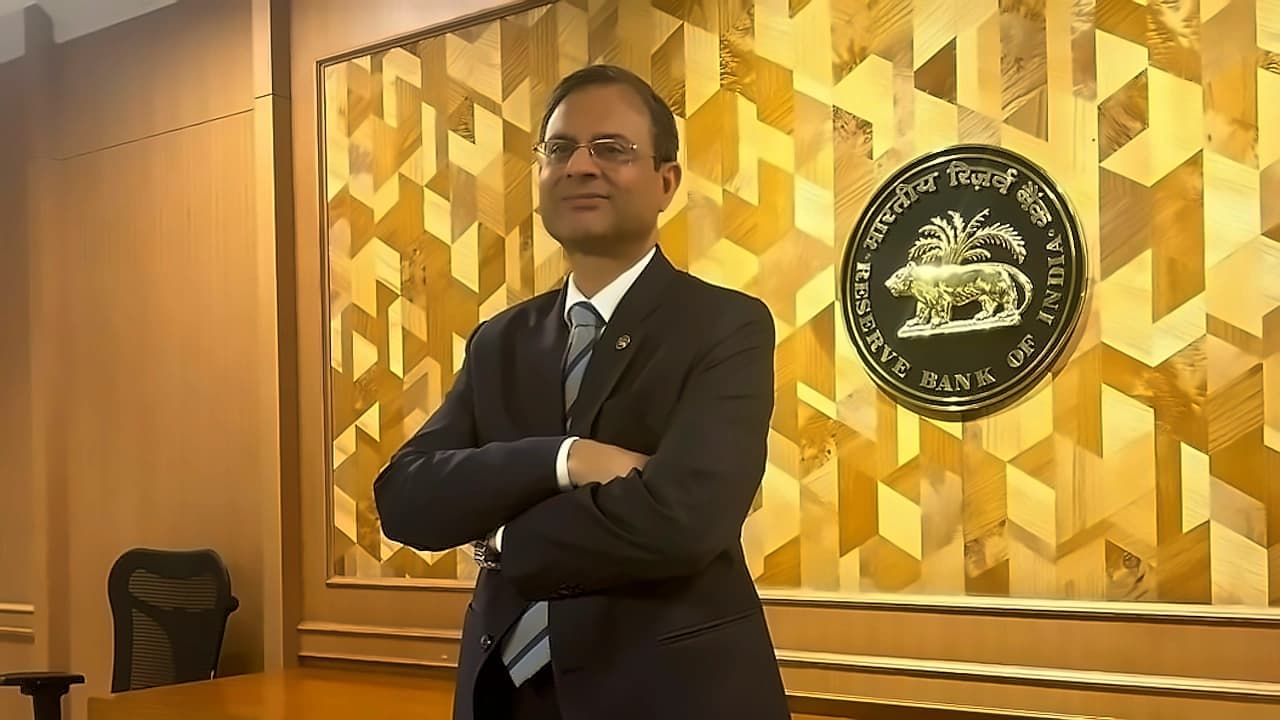
Despite the easing of geopolitical tensions in West Asia, RBI Governor Sanjay Malhotra emphasized that the central bank remains firmly data-dependent and has no pre-set path on interest rates while speaking to ET Now. The Governor described the de-escalation in the West Asian conflict as 'a big positive for the whole world and also for our Indian economy, especially because we are so deeply interconnected with West Asia'. He noted that 'the de-escalation is positive news both for growth and for inflation, as crude prices have moderated. In fact, urea prices have plummeted'. However, Malhotra cautioned that 'these are very uncertain times, and as we said in our monetary policy, we are in wait-and-watch mode', emphasizing that 'we hope that this truce continues and better times lie ahead for all of us'. The Governor dismissed speculation that the RBI is preparing markets for higher interest rates, stating 'if it was so certain that we were going to hike rates in the coming months, then we would have changed our stance from neutral to restrictive'. Following the US-Iran truce announcement, economists at Citigroup scrapped their call for rate hikes this financial year, with the Governor noting that 'the truce itself is fragile. It will take some time for the supplies to restore fully'. In his latest interview, Malhotra reiterated that 'the de-escalation in the West Asian conflict is a big positive for the entire world, including the Indian economy, and the outlook has improved, but risks have not disappeared'. As per The Economic Times, the Governor emphasized that 'India remains well prepared to deal with both external and domestic challenges'.
RBI Governor Sanjay Malhotra has reinforced the central bank's cautious stance on interest rate hikes, stating it is 'premature to talk about a rate hike' while speaking to ET Now. The Governor emphasized that 'if it was so certain that we are going to hike (the repo rate) in the coming months, then we would have changed the stance from neutral to restrictive', referring to the central bank's decision to keep rates and its stance unchanged at its last monetary policy review on June 5. This confirmation aligns with SBI Research's earlier assessment that 'uncertainty is too high for immediate action' and that policymakers should 'hold now, stay neutral, wait for clarity and keep optionality open'. The Governor's latest comments emphasize that 'the MPC felt it would be prudent to wait for greater clarity to emerge. Accordingly, the MPC voted to keep the policy rate unchanged'. The Governor noted that 'there is elevated uncertainty so we have to be cautious. There could be risks on both inflation and growth', with 'the MPC will continue to remain data-dependent and closely monitor the developments, including supply side pressures getting embedded in the general price level and inflation expectations'. The Governor's latest interview reinforced this stance, stating 'if it was so certain that we are going to hike (rates) in the coming months, then we would have changed the stance from neutral to restrictive, right? We did not do that precisely because there is elevated uncertainty'.
All six members of the Monetary Policy Committee (MPC) held their meeting during June 3-5, 2026, and voted unanimously to keep the policy repo rate unchanged at 5.25%. The MPC also decided to continue with the neutral stance and preferred a cautious 'wait and watch' approach over immediate policy action amid rising inflation risks, slowing growth and powerful external shock emanating from the West Asia conflict. As per The Hindu BusinessLine, the committee's unanimous decision reflects the elevated uncertainty that has characterized recent policy deliberations. The Governor noted that 'if the MPC was sure about the second round effects of inflation, it would have acted', emphasizing the cautious approach taken by policymakers. Minutes from the June meeting showed rate-setters believed the economy would improve quickly once the war ended, with economists at Citigroup dropping their earlier call for rate hikes this financial year following the truce. The latest interview reinforced this stance, with the Governor emphasizing that 'the MPC will continue to remain data-dependent and closely monitor the developments'.
Governor Malhotra provided detailed insights into the current inflation landscape, noting that inflation currently remains below 4%, with May reading at 3.93% year-on-year, most of it due to food. He emphasized that 'core inflation is about 2 plus per cent (2.4% or so)' and that 'WPI did go up. It was 8.3% in April, 9.7% last month'. The Governor highlighted that 'there is a lot of concentration. Lot of the increase in WPI is because of fuel', stating 'now, whether it generalizes or not is something that we have to wait and watch'. The central bank in its June policy decision raised its CPI inflation projection for FY27 by 50 bps to 5.1% from 4.6%, citing geopolitical risks, supply-chain disruptions and weather-related uncertainties. As per The Economic Times, the Governor noted that 'the currency and the external uncertainty are what we are all concerned about', stating 'last year it was more about trade and tariff-related uncertainties, and this calendar year, from March onwards, it has been more about the West Asian conflict'. The MPC revised its GDP growth forecast for FY27 down to 6.6% from 6.9%, reflecting the impact of geopolitical tensions. The latest interview emphasized that 'upside risks on crude, energy and fertilisers have certainly reduced, but we'll have to still wait and watch as to where crude prices ultimately end up', with the Governor expressing hope that 'crude prices will come down next year'.
Governor Malhotra highlighted that India's cumulative monsoon rainfall remains 43% below normal as of June 22, which could emerge as the next major risk to the economy with implications for agricultural production and rural demand. He pointed out that India has 'sufficient' food buffers though policy makers will remain watchful of any impact on the broader economy and inflation. The Governor noted that 'as of now, as I see it, is the global uncertainty, which is challenge number one' and emphasized that 'we are very well prepared to meet all challenges'. The latest interview reinforced this concern, with the Governor stating 'the monsoon has been weak so far but, just to clarify, we have enough food stocks. The impact on growth is what is to be monitored'. Overnight index swaps, a key barometer of rate expectations, eased 10 basis points as traders dialed back policy tightening bets, with India's 10-year benchmark government bond yields falling five basis points to 6.82%, the lowest level in three months. The Governor confirmed that 'the monetary policy committee is keeping a close eye on both monsoon and crude prices'.
Governor Malhotra expressed confidence that the country's balance of payments position would remain resilient despite pressure from higher crude oil imports. He highlighted that investment activity remained healthy despite global uncertainties, with growth in fixed capital formation and investments across sectors including defence, renewable energy, hospitality and shipbuilding. He noted that capacity utilisation levels remained high and financing conditions were conducive, with credit, equity capital and internal cash flows available to support expansion. The Governor emphasized that 'all of them put together, I think our balance of payments, and therefore its influence, its impact on the rupee, should all be very positive', citing strong remittances, rising gross foreign direct investment, services exports and a pipeline of free trade agreements as supporting factors. Along with the pause on rates, RBI, in a coordinated move with the Centre, widened overseas investors' access to government securities, eased investment restrictions for foreign portfolio investors (FPIs), and backed tax exemptions on sovereign bond investments. Experts expect inflows of $35-45 billion as a result of these measures. India remains hopeful of securing inclusion in the Bloomberg Aggregate Bond Index, which could support capital inflows, he added.