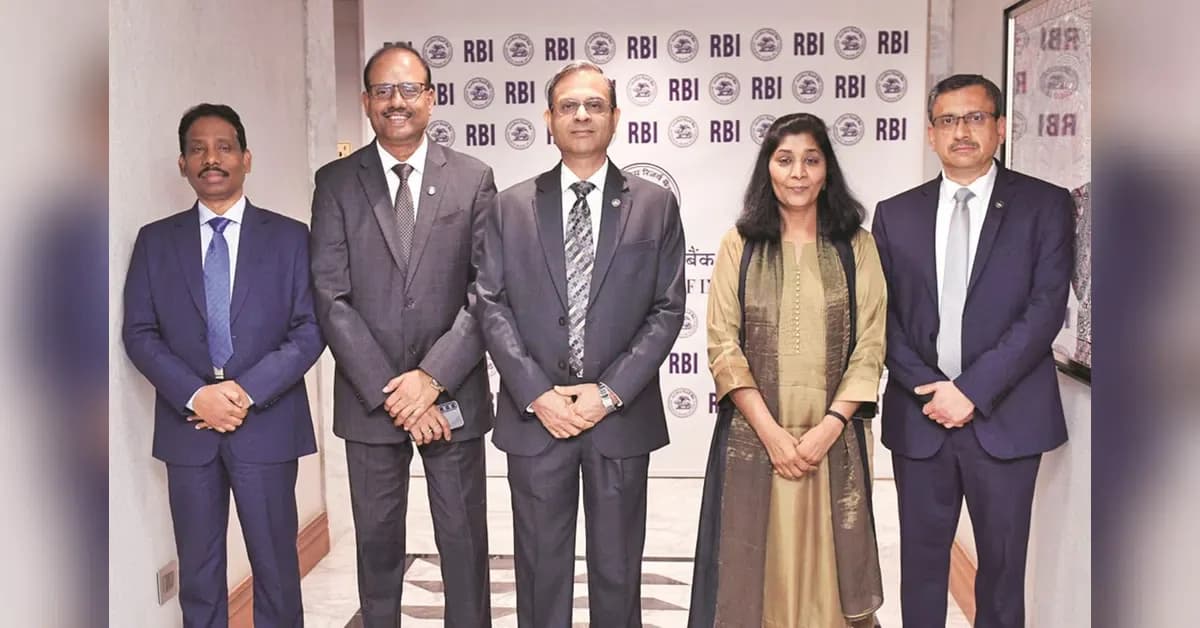
RBI Governor Sanjay Malhotra has projected GDP growth of 6.6% for the current financial year despite various challenges, as reported by The Times of India. The governor emphasized that 'monetary and fiscal policies are robust, and because of that, we are witnessing high GDP growth'. However, he identified significant external risks that could impact this optimistic outlook. 'West Asia crisis, uncertain monsoon are major risks for growth,' Malhotra stated, highlighting the dual challenge of geopolitical tensions and weather-related uncertainties. The governor noted that 'how the monsoon behaves is crucial, as a large population depends on the agriculture sector', with agriculture contributing about 17% to the GDP. This vulnerability requires continued vigilance as the central bank balances growth objectives with inflation control.
RBI Governor Sanjay Malhotra has indicated that the central bank may not react to the current bout of inflation and spurt in credit growth. According to reports from The Times of India, Malhotra struck a notably composed tone, describing price pressures as contained even if 'currently a bit elevated', and attributed the uptick largely to supply-side disturbances. The governor emphasized that inflation is also under control although it is currently a bit elevated and that this rise is primarily due to supply-side factors. In an interview with Doordarshan News, Malhotra noted that 'our primary objective is price stability, growth is our secondary objective' and that these two objectives are not contradictory, as they support each other. He reiterated that 'inflation control remained the RBI's primary objective under the flexible inflation-targeting framework, while growth was its secondary objective'.
The central bank has raised its inflation forecast to 5.1% for FY27, higher from its earlier estimate of 4.6%, as reported by The Times of India. Retail inflation climbed to 4.38% in June from 3.93% in May, mainly due to costlier food items, with food inflation increasing to 5.32% in June from 4.78% in the preceding month. Malhotra explained that 'inflation going past the Reserve Bank's median target of 4 per cent in June was largely driven by supply-side factors'. The governor's comments indicate a measured approach that prioritizes sustained economic growth while maintaining price stability as the primary mandate, even as the central bank adjusts its inflation projections to reflect current market conditions.
According to the latest data reported by The Times of India, credit growth remained broad-based across sectors with overall bank credit growing around 18% year-on-year in June, compared to 17.5% in May. Malhotra noted that 'we do not see immediate distress' despite the brisk expansion, even as RBI keeps a close watch on fast-growing segments. The governor highlighted that 'our balance of payments and our external sector will remain strong', citing that gross FDI was around USD 95 billion last year, which was a record, with net foreign direct investment in the first two months of the current financial year around USD 7 billion. He emphasized that 'in the medium and long term, our balance of payments and our external sector will remain strong'.
On artificial intelligence adoption, Malhotra said the RBI had encouraged banks to adopt AI to improve customer service, lower operating costs, and enhance decision-making while ensuring safeguards against cybersecurity and data privacy risks. As reported by The Times of India, the governor asked managing directors and chief executive officers of public and select private sector banks to 'leverage advanced technologies, including AI, to expand their reach while ensuring robust cybersecurity and safeguards against fraud and data misuse'. Regarding currency performance, Malhotra noted that the domestic currency performance against peers remains stable despite a stronger dollar and heightened global uncertainty. This stability provides a foundation for the central bank's monetary policy decisions as it navigates both domestic growth objectives and external risk factors.