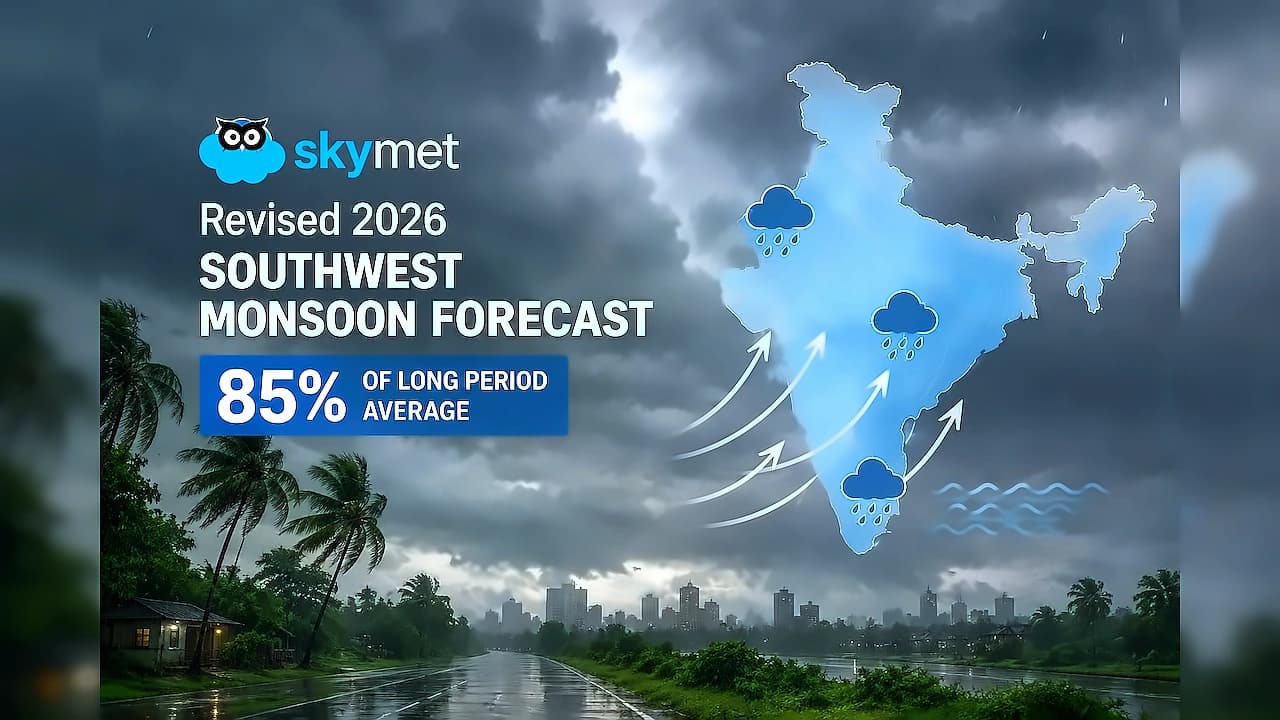
The India Meteorological Department (IMD) has forecast 'below-normal' rainfall in August-September 2026, citing El Nino's influence on monsoon patterns. According to Business Standard, this forecast comes as El Nino conditions are expected to intensify between August and October, as reported by the World Meteorological Organization. However, the IMD expects parts of peninsular, central and northern India to see 'normal to above-normal' rainfall, indicating a more nuanced regional impact across the country. This forecast aligns with S&P Global Ratings' assessment that South and Southeast Asia are among the more vulnerable regions globally to El Nino, with lower rainfall associated with the climate phenomenon raising food prices and disrupting water-intensive industries.
According to S&P Global Ratings, Asia-Pacific economies, including India, Vietnam, Indonesia and the Philippines, are experiencing a surge in prices with households remaining highly vulnerable to further weather-related supply shocks. The rating agency expects the effects of the El Nino period starting in 2026 to reach Asia-Pacific mainly through weaker rainfall and climate disruption, with the macroeconomic impact likely to be manageable. As reported by S&P, South and Southeast Asia are among the more vulnerable regions globally to El Nino, with lower rainfall associated with the climate phenomenon raising food prices and disrupting water-intensive industries. Latest reports indicate that a powerful El Nino may push nearly 49 million more people into food insecurity, with this event carrying an 81% chance of being very strong, impacting vulnerable regions most severely.

According to S&P's analysis, key transmission channels for El Nino impacts include reduced agricultural output, higher food inflation, diminished hydropower generation, and vegetation fires and haze. The World Meteorological Organisation (WMO) had indicated that strong El Nino conditions were developing and are expected to strengthen during August through October, bringing powerful weather events worldwide. S&P noted that lower hydropower generation is the next most significant channel after agriculture-related disruptions. Global food markets are currently strong, but conflict and crop losses could raise prices as the El Nino event unfolds. The latest forecasts suggest that a positive Indian Ocean Dipole may partly offset El Nino's impact, providing some relief to the monsoon and agricultural sector.
As reported by S&P, in India, strong food and grain buffers for affected crops as of July 2026 are key to managing food shock. The rating agency highlighted that authorities are enforcing district-level coordination with farmers to minimise crop losses. According to S&P's recent report, many economies have expanded food buffer stocks, improved import planning and strengthened market management mechanisms to cushion supply disruptions. Additionally, investments in reservoir management, irrigation infrastructure and water governance have strengthened resilience to periods of reduced rainfall. India holds significant food grain buffers to manage potential food shocks, positioning the country well to handle the developing El Nino episode.
The Reserve Bank of India had last week stated that deficient and uneven south-west monsoon amidst El Nino conditions poses some risks to the agriculture sector's outlook and rural demand. As reported by RBI, the central bank projected retail inflation at 5 per cent for FY27. According to RBI's assessment, going forward, El Nino's impact on temporal and spatial rainfall distribution continues to remain a risk, although proactive supply management and adequate stocks of foodgrains could provide buffers. The RBI maintained its repo rate at 5.25 percent on Wednesday, marking the fourth consecutive meeting without a change, citing sticky inflation and geopolitical risks as reasons for its cautious approach.
According to S&P, countries with more reliance on agriculture for economic output and greater food reliance for consumers will be more exposed to the worst effects of this El Nino episode. However, the rating agency noted that proactive policies would limit damage caused by El Nino, with measures such as shifting to water efficient crops, maintaining higher grain reserves, and improved water management, along with a declining role of agriculture, can buffer the fallout from a severe El Nino event. S&P emphasized that reliance on agriculture remains significant, but is gradually declining across the region. The larger lesson may be that environmental health risks are not always the loudest or most visible ones, as scientists learn more about how the body responds to its surroundings.