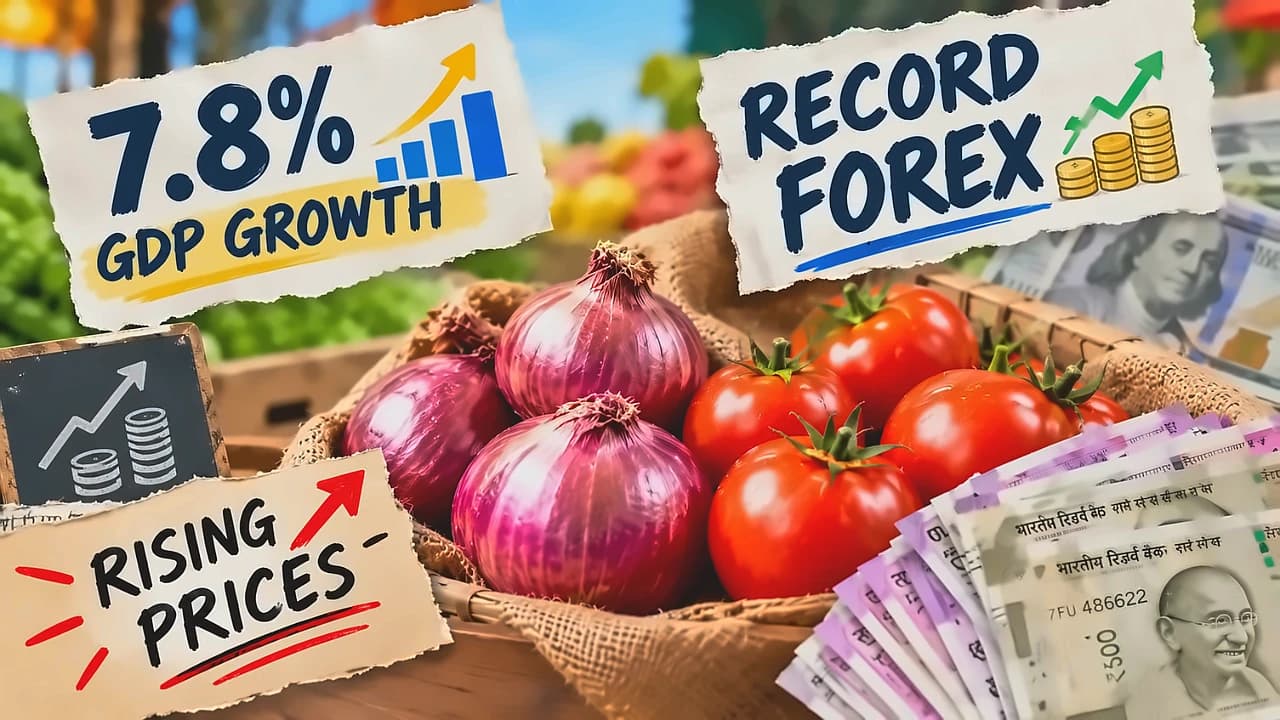
According to BMI, a unit of Fitch Solutions, India could face a 'stagflationary shock' on account of rising upside risks to food prices, which may result in higher inflation while real GDP growth remains subdued. The report warns that real GDP growth in 2026 could slow by 20-80 basis points relative to the baseline growth forecast of 6.6%, while inflation could rise by 90 basis points to 3.40 percentage points from a baseline of 5.4% during the calendar year. As per BMI, higher food prices would constitute a broadly stagflationary shock for India, raising inflation while dampening growth, employment, and fiscal and external balances.
The World Meteorological Organisation (WMO) has confirmed that strong El Niño conditions are developing and expected to strengthen during August through October, bringing powerful weather events worldwide. According to the latest WMO monthly global seasonal climate update, multi-model ensemble forecasts indicate seasonal-average sea-surface temperature anomalies expected to exceed 2.9 degrees Celsius in key monitoring regions. UN Secretary-General António Guterres warned that "El Niño is strengthening, adding fuel to a planet already on fire with scorching heat domes, apocalyptic wildfires and record hot seas." The WMO also forecasts a positive Indian Ocean Dipole - a climate pattern in the western Indian Ocean that becomes warmer while the eastern Indian Ocean becomes cooler, which can exacerbate regional climate impacts including drought, floods and wildfire risk.
The India Meteorological Department (IMD) has released its latest monthly outlook, forecasting that average rainfall over India during August 2026 is most likely to remain below 94% of the long period average. The normal rainfall for August, based on the 1971-2020 climatology, is 254.9 mm, with the long-period average rainfall for the August to September period standing at 422.8 mm. As of July 30, India recorded 270.1 mm of rainfall during the month, compared with the long-period average of 271.9 mm, though the distribution remained highly uneven. Central India received 29% excess rainfall, while east and northeast India recorded a 30% deficit and south India remained 28% below normal. Since June 1, the cumulative monsoon rainfall deficit has stood at 14%, with 17 meteorological subdivisions remaining deficient despite 16 subdivisions recording normal rainfall.
According to BMI, with over 43% of the nation's labour force engaged in the agricultural sector according to World Bank estimates, the incomes and consumption patterns of a large section of the population are exposed to weather risks and price volatility. The report notes that rising inflation is likely to affect a much larger population as food comprises 36.8% of the Consumer Price Index (CPI) basket, directly impacting headline inflation and eroding household purchasing power. As per BMI, India's economy is vulnerable to food price shocks, which can quickly spill over into higher inflation and lower growth, similar to many emerging market peers. Pulses have taken the hardest hit, with acreage down 7.5%, driven by sharp drops in tur (down 12%) and maize (down nearly 10%). While cereal prices are likely to be benign due to ample public stocks of rice and wheat, vegetable prices could be volatile owing to heat stress, dry spells, and episodes of intense rainfall.

According to the economist's assessment, food inflation has picked up to 5.3% as of July 2026, though this is moderate compared to last year's negative food inflation during the same period. BMI reports that food prices could push up inflation and curb GDP growth as El Niño and West Asia tensions threaten agricultural output and input costs. Care Ratings projects that consumer food inflation stood at 5.1% year-on-year in June but is expected to firm up to 7.5% by the third quarter of FY27 (October-December). The monsoon's impact on inflation remains significant given food's large share of nearly 40% in the CPI basket. For FY27, headline CPI inflation is expected to be higher at around 5%, reflecting the combined impact of fuel and food prices. Global oilseed prices were 23% higher year-on-year in June, driven by higher palm oil prices, of which India is a major importer.