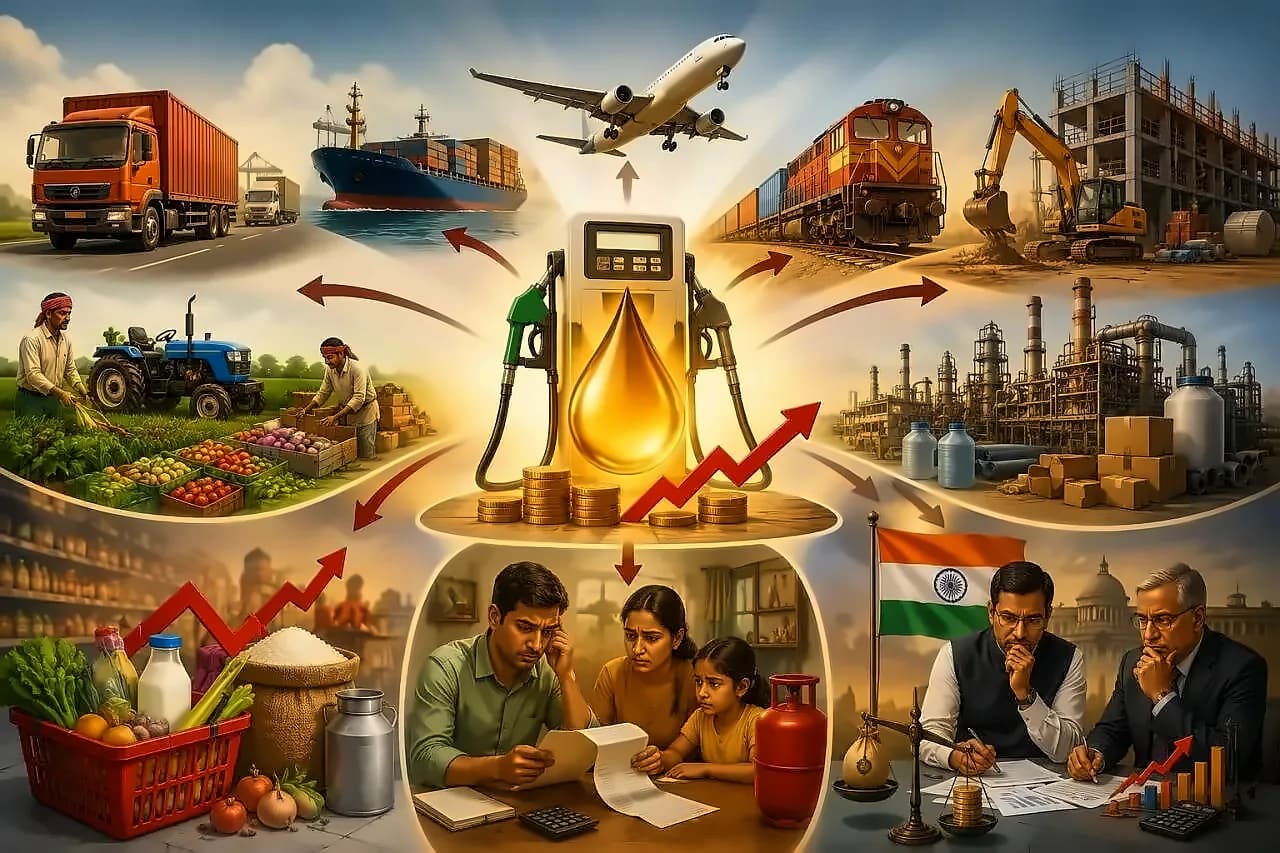
Reserve Bank of India Governor Sanjay Malhotra has confirmed that India may eventually have to increase petrol and diesel prices if Middle East tensions and rising crude oil prices continue for an extended period. Speaking at a conference hosted by the Swiss National Bank and the International Monetary Fund in Switzerland, Malhotra said the government may not be able to indefinitely shield consumers from rising global energy costs. "If this is to continue for longer period of time, it is just a matter of time before the government will pass on some of the price increases," Malhotra stated. The RBI Governor's comments come as India faces mounting pressure from the ongoing Strait of Hormuz crisis, which has disrupted energy supplies and driven crude oil prices sharply higher. Malhotra highlighted that rising energy prices due to the Iran war are testing India's flexible inflation targeting, necessitating potential policy intervention by the Reserve Bank.
A comprehensive study by Bank of Baroda has revealed that crude oil price shocks have a stronger impact on wholesale inflation than consumer prices, with delayed effects on growth. According to the study authored by economist Dipanwita Mazumdar using data from January 1991 to March 2026, changes in Brent prices show a positive correlation with wholesale inflation, particularly WPI-Fuel, while the relationship with CPI is absent. The study finds that during the volatile decade between 2006-2016, the correlation between Brent and fuel component of WPI was 0.69, indicating that wholesale prices move much more closely with crude price changes. However, over the long range, the coefficient of correlation was 0.05 with WPI-Fuel and -0.02 with WPI, suggesting oil shocks bite most in concentrated bursts rather than a steady drag.
Petrol and diesel prices in India increased by ₹3 per litre, with CNG rising by ₹2 per kg, marking the first fuel price hike after more than four years. While this was inevitable given the sizeable losses incurred by OMCs, the hike is modest and provides marginal respite. Petrol and diesel have a combined weight of 4.81 per cent in India's CPI basket, with the average fuel prices for May 2026 reflecting 50 per cent of the pass-through of the hike, with the balance seen in the next month. ICRA estimates the direct impact of this hike at around 8 basis points uptick each in the CPI inflation prints for May 2026 and June 2026, along with a mild indirect impact to the tune of around 10 basis points. However, the next question is whether this is the be all and end all, or will there be further hikes as this will only partly address the under recovery challenge for oil marketing companies.
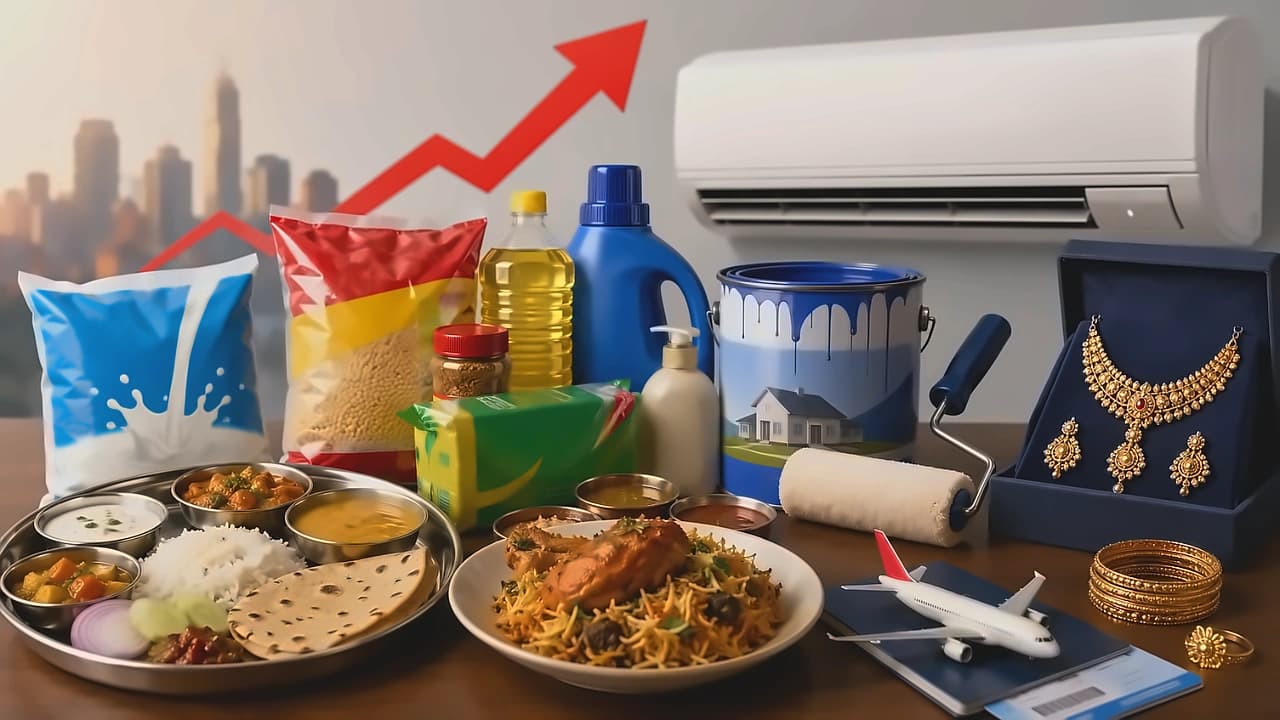
India moves roughly 65% of its freight by road, almost all of it runs on diesel, making the fuel hike a cost-of-living story rather than just a transport issue. The impact is immediate and widespread across multiple sectors. Vegetables and fruits transported over long distances in diesel-powered trucks see prices revised almost immediately after fuel hikes, with transporters passing costs to wholesalers and retailers. Milk collection operations, which are fuel-intensive, will see dairies absorb hikes for a week or two before announcing price revisions. Restaurant meals, cab fares, and online delivery fees are expected to rise soon, as CNG vehicles make up a large share of cab and auto fleets in major cities. School vans and office transport operators will seek revised rates when contracts come up for renewal, typically at the beginning of academic months or quarters. Construction and real estate costs will rise as cement and steel, which are transport-heavy commodities, see increased landed costs.
India's fuel retail market remains largely dominated by state-owned refiners, which account for nearly 90% of fuel outlets across the country. ICRA has revised its forecast for May 2026 CPI inflation to 4.3 per cent from 4.1 per cent, with the April 2026 reading coming in at 3.5 per cent. The WPI inflation had already jumped to a massive 8.3 per cent in April 2026 and is now likely to print between 9-9.5 per cent in May 2026. India had spent approximately ₹6.0 trillion on petrol and ₹10.0 trillion on diesel in FY2026, with the 3 per cent RSP hike translating into an incremental amount of around ₹0.5 trillion. On an annualised basis, the average CPI inflation print would be higher by ~25 basis points. The evident apprehension is on inflation, which will be impacted as LPG prices were hiked to begin with after which came ATF, more recently CNG price was increased, and now retail prices of petrol and diesel.