According to BJP IT cell chief Amit Malviya, India's ₹3 per litre fuel hike represents a 3.2% increase for petrol and 3.4% for diesel, making it a relatively modest response to the global oil shock. The data shows stark regional variations, with Pakistan experiencing a 54.9% increase in petrol and 44.9% in diesel, while Myanmar was hit hardest at 89.7% for petrol and 112.7% for diesel. Sri Lanka saw petrol climb 38.2% and diesel 41.8%, and China's increases were contained at 21.7% for petrol and 23.7% for diesel. The US saw petrol rise 44.5% and diesel 48.1%, with the national average crossing $4.50 per gallon for the first time since 2022. Only Saudi Arabia recorded zero increase due to direct government fuel subsidies. Recent reports suggest that fuel shock may not be over yet as experts warn of continued pressure on fuel costs, with repeated price increases affecting monthly budget plans across the country.
Indraprastha Gas Limited (IGL) has raised compressed natural gas (CNG) prices by ₹1 per kg across its network, taking retail prices in Delhi above the ₹80-mark for the first time. With the latest revision, CNG in Delhi will now cost ₹80.09 per kg, while consumers in Noida and Ghaziabad will pay ₹88.70 per kg. This increase comes just two days after IGL had raised CNG prices by ₹2 per kg on May 15, when the Delhi rate was revised to ₹79.09 per kg. The fuel price hikes come amid a sharp rise in global crude oil prices triggered by the ongoing US-Israel-Iran conflict, which began on February 28 this year, and has disrupted global crude supplies and pushed Brent crude prices above $100 per barrel. The impact of rising CNG prices will be felt by commuters of public transport, as a large portion of public transport runs on CNG, with the price increases expected to be passed on to consumers.
State-run oil-marketing companies (OMCs) have implemented ₹3 per litre increases in non-branded petrol and diesel prices, marking the first fuel price hike in four years. The latest fuel price increases come amid a sharp rise in global crude oil prices triggered by the ongoing US-Israel-Iran conflict, which began on February 28 this year, and has disrupted global crude supplies and pushed Brent crude prices above $100 per barrel. The OMCs were reportedly facing underrecoveries worth ₹1,000 crore per day before the price adjustment, making the increase necessary despite government resistance. As per the BJP, India's public sector oil marketing companies, which control roughly 90% of the retail fuel market, absorbed the rising cost of international crude for 76 consecutive days rather than passing it on to consumers. According to Qatar Tribune, India - the world's third-biggest oil importer and consumer - is one of the last major economies to raise retail fuel prices following the disruption to shipping through the Strait of Hormuz by the war started by US-Zionist attacks on Iran.
India's macro calendar for May 18-22 will be focused on high-frequency data releases, with core sector data scheduled for May 20 showing whether infrastructure-linked activity recovered in April after a weak March print due to the ongoing West Asia crisis. India's eight core sectors contracted 0.4% in March, the weakest reading in 19 months, while cumulative growth for FY26 slowed to 2.6%, a five-year low. The HSBC flash PMI is set to be released on May 21, with the April PMI showing improvement after a March dip, with the manufacturing index rising to 54.7 in April from 53.9 in March. Banking sector indicators will come into view on May 22, with bank credit growing 16% year-on-year in the fortnight ended April 30, up from 15% in the previous fortnight, while deposit growth stood at 12.3%. Foreign exchange reserves data will also be tracked for signs of external sector stability, with India's reserves standing at $696.99 billion as of May 8.
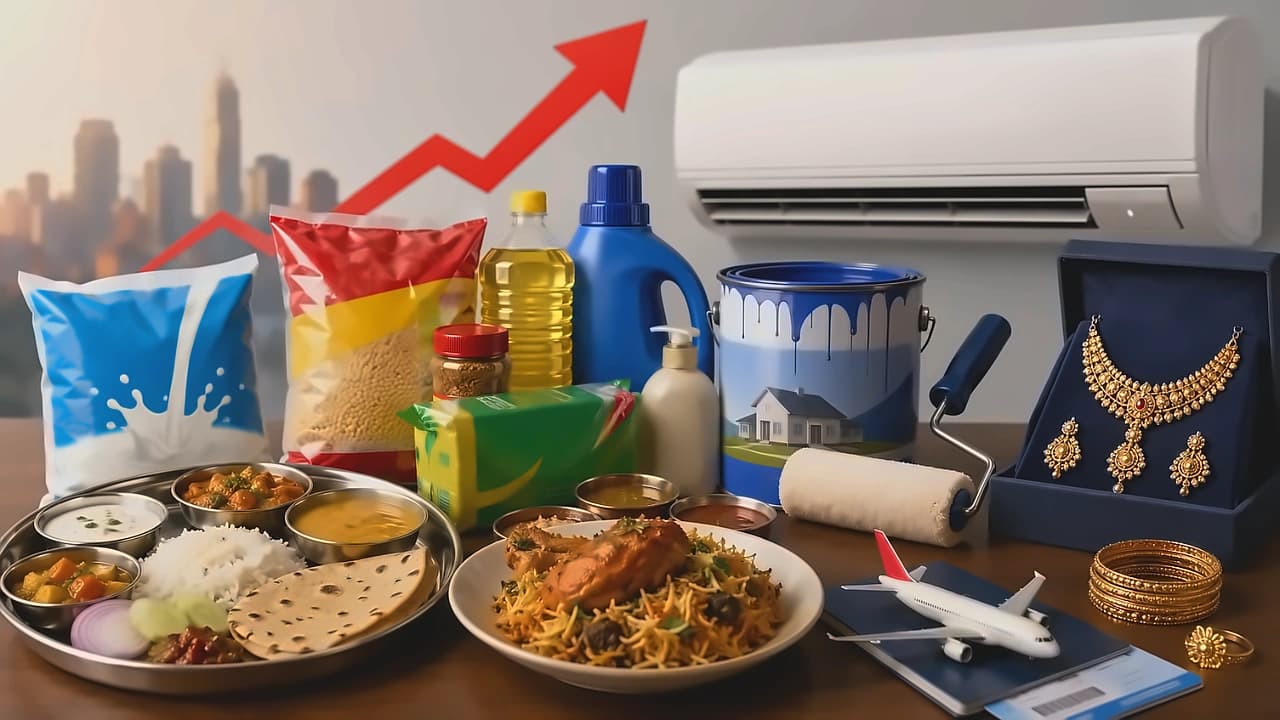
The ongoing war has significantly impacted Indian consumers across multiple sectors, with price increases affecting milk, thali meals, packaged consumer goods, air-conditioners, paint, gold jewellery, restaurant meals, and air tickets. According to reports, the war has left no sector untouched, with companies across various segments having already implemented at least one round of price hikes and factoring in another round soon due to spiking input costs from energy supply disruptions. The latest fuel price increases are expected to further inflate household budgets, with economists anticipating retail inflation rates to inch towards 4% following the fuel price adjustments. The BJP argues that India's managed approach to the global oil shock shielded ordinary citizens from the full force of an energy crisis that has destabilised economies far larger and more insulated than its neighbours.
The wholesale price index-based inflation rate increased to 8.3% in April compared to 3.9% the previous month, largely attributed to higher fuel prices. The consumer price index-based inflation rate for April remained modest at 3.5%, primarily due to limited passthrough of higher oil prices. As per Business Standard, an oil price shock tends to have stagflationary effects, reducing growth rates while increasing inflation rates. The current shock may have a bigger impact due to availability issues, particularly affecting gas supply. The Reserve Bank of India faces additional challenges as the monsoon is expected to be below normal this year, potentially affecting food and fuel prices and requiring the Monetary Policy Committee to remain extremely alert. The state-run oil companies, including Indian Oil Corporation Limited (IOCL), Bharat Petroleum Corporation Limited (BPCL), and Hindustan Petroleum Corporation Limited (HPCL), are bearing losses of about ₹1,600 crore daily as crude prices hover over $100 on account of the crisis in the West Asia region.