According to The Times of India, petrol prices have been increased by ₹7.38 per litre and diesel prices by ₹7.48 per litre over a period of 11 days starting May 15. The fuel price hikes, which include some inter-city variations, represent the biggest proof of economic fallout from the US-Iran war that began almost three months ago. Finance Minister Nirmala Sitharaman has expressed concern about the impact on the 3Fs: fuel, fertilisers and forex, highlighting the broader economic implications of these price increases.
As reported by The Times of India, fuel price hikes impact the common man through several channels including lower disposable income, higher travel costs, and increased prices for essential and non-essential items. The economic impact extends beyond direct costs, with DK Srivastava, Chief Policy Advisor at EY India, explaining that elevated fuel prices can hurt economic growth by reducing consumer spending power and increasing costs for businesses. This can force companies to delay investments or expansion plans, creating a cascading effect across sectors.
According to EY India's analysis reported by The Times of India, the recent fuel hikes will directly cascade into higher prices in sectors where petrol and diesel are used as inputs, particularly transport, storage, and electricity. The 2015-16 Input-Output Table shows that petroleum products provide inputs into 126 out of 131 sectors, with the highest share of value as percentage of total input in land transport services, real estate services, and electricity. Agriculture-related sectors may also be affected, potentially impacting food prices and creating a general cascading effect in retail or consumer price inflation.
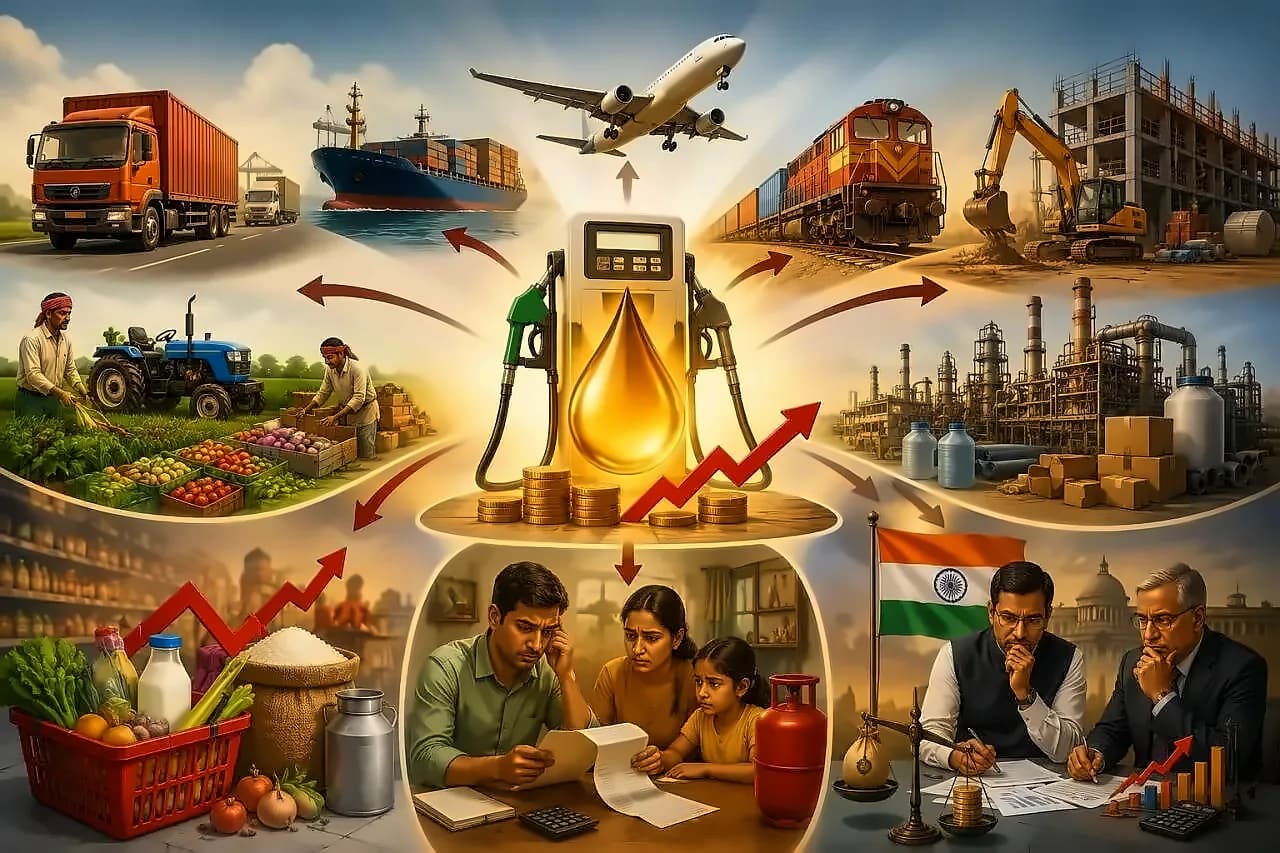
As reported by The Times of India, elevated fuel prices make monetary policy more difficult for the Reserve Bank of India by limiting the room for interest rate cuts even during periods of slowing growth. Higher fuel import bills also widen the current account deficit, weaken the rupee, put pressure on foreign exchange reserves, and increase subsidy-related stress on government finances. DK Srivastava cautions that if global crude prices remain elevated for three to four quarters in 2026-27, CPI inflation may increase to about 6% and real GDP growth may fall below 6.5%.