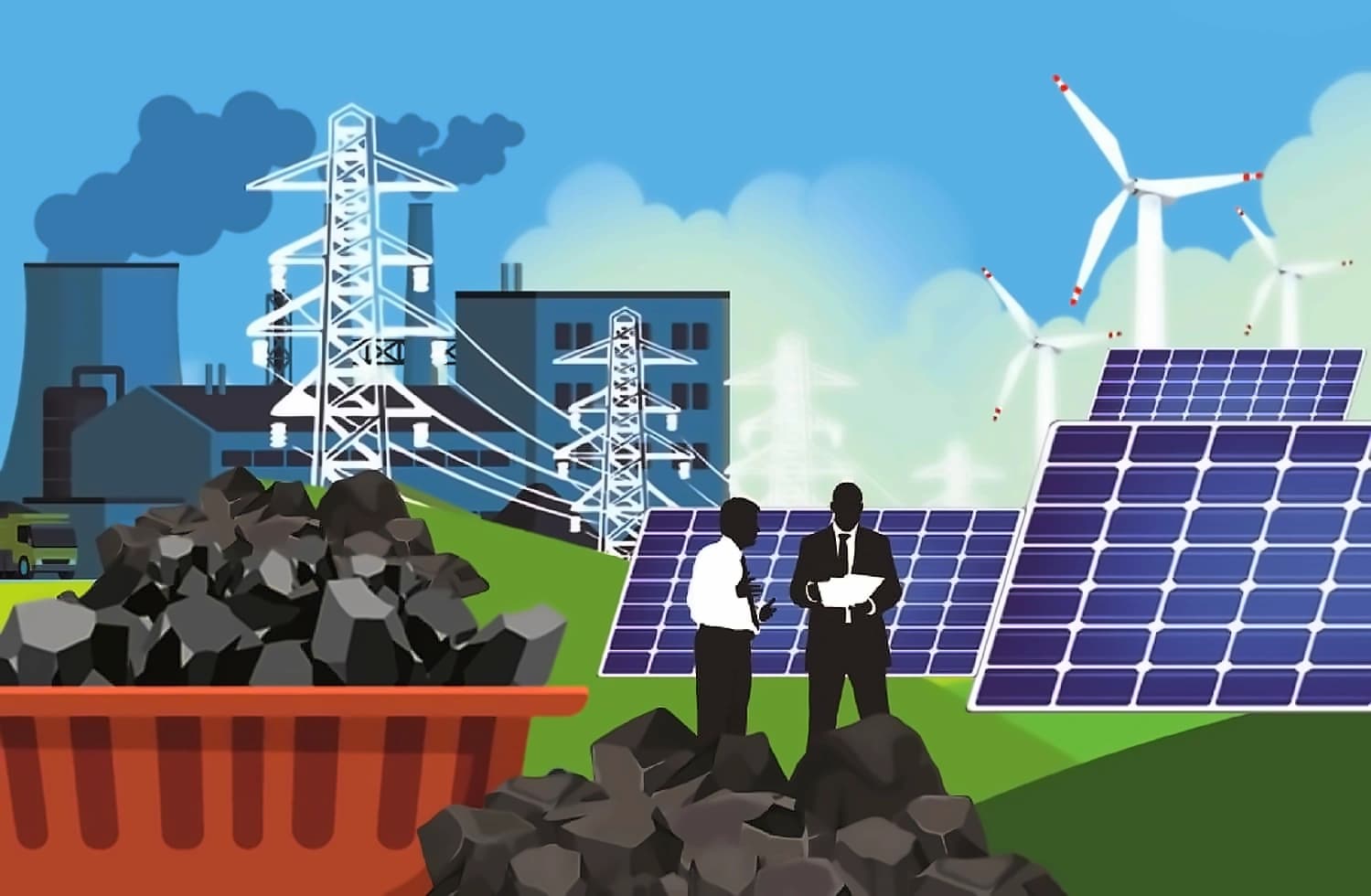
India is projected to achieve a historic milestone where solar power capacity will surpass coal-based generation by nearly 200 GW by 2036, according to Renewable Energy Minister Pralhad Joshi. As reported by Business Standard, Joshi announced that solar capacity will reach 510 GW while coal capacity remains at 315 GW, making solar the single largest source of installed power capacity in the country. This transformation represents a fundamental shift in India's energy landscape, with solar overtaking coal as the dominant power generation source.
According to the National Generation Adequacy Plan (2026-27 to 2035-36) published by the Central Electricity Authority, India will achieve 786 GW of non-fossil fuel capacity by 2035-36, accounting for nearly 70 per cent of its total installed power capacity of 1,121 GW. As reported by Business Standard, this represents a significant increase from the current levels, with non-fossil fuel-based energy capacity growing by 22 per cent in June compared to the previous year. The growth was primarily driven by capacity additions under decentralised schemes including the PM Surya Ghar: Muft Bijli Yojana at 13.84 GW and PM-KUSUM at 14.97 GW.
India's energy sector investments are expected to reach $170 billion in 2026 as renewable energy becomes the backbone of the country's growth story, according to Joshi's announcement. As reported by Business Standard, India's power consumption increased by nearly 12 per cent in June, highlighting the growing demand for electricity. The minister also revealed that over the next two weeks, PM Surya Ghar will cross 50 lakh beneficiaries, demonstrating the rapid expansion of decentralised solar schemes across the country.
Speaking at the same event, ReNew Chief Executive Officer Sumant Sinha highlighted critical grid management challenges emerging from high renewable energy penetration. According to Business Standard, Sinha noted that renewable energy is already 15 to 20 per cent of the grid, creating a duck-curve problem with excess power during the day and insufficient supply in the evening. This imbalance is causing sharp price fluctuations, with prices rising sharply in the evening and collapsing during the day. While price fluctuations are manageable for companies with long-term contracts, the fluctuating availability of power requires addressing through batteries and better grid management.
India has emerged as a global leader in solar PV capacity additions, with 33 GW added in 2025 according to PV Tech Premium data, nearly matching the US at 35 GW. The country has become the world's third-largest solar market and demonstrates remarkable growth momentum. Indian companies are increasingly expanding beyond domestic markets, with Larsen & Toubro building more capacity in Saudi Arabia (around 4 GW) than at home, while Sterling & Wilson operates across the Gulf, Australia and Africa. This international expansion reflects India's growing expertise in solar EPC and O&M services, positioning the country as a global solar technology hub.