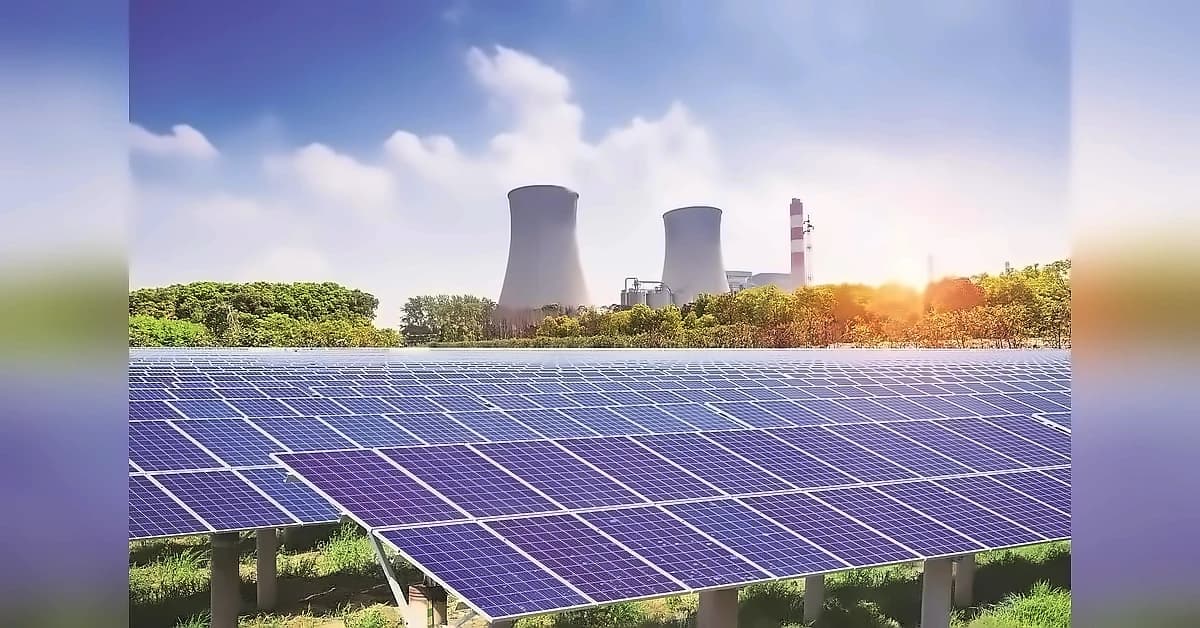
China has achieved a landmark moment in its energy transition, with solar power capacity surpassing coal-fired generation for the first time. According to the latest data from the National Energy Administration (NEA), solar capacity reached 1,286 gigawatts (GW) at the end of July, exceeding coal's 1,275 GW and making solar the top source of installed power capacity. The milestone was reached earlier than initially projected, with Chinese authorities indicating in July that China would have more installed solar power capacity than coal-fired generation capacity as early as this quarter. The National Energy Administration described this development as a "signature achievement" in China's shift towards a greener and lower-carbon energy system, breaking the long-standing dominance of coal that has been the backbone of China's power sector for more than a century. However, as reported by ESG News, installed capacity tells only part of the story, as solar generation depends on daylight and weather conditions while coal plants can generate electricity when required.

Solar power's contribution to China's electricity consumption has shown significant growth, with solar accounting for 31.5% of total installed power generation by the end of July. According to the National Energy Administration, China generated 802.4 billion kilowatt-hours of solar electricity during the first seven months of 2026, representing an increase of 15.5% from the same period a year earlier. The renewable energy boom has been particularly pronounced, with renewable energy accounting for 41.2% of China's total electricity generation in the first half of 2026, while wind and solar combined generated almost 25% of the total power output. However, solar's contribution to power generation remains lower since it cannot generate electricity when the sun isn't shining, and coal remains far more important in terms of electricity actually delivered to the grid.
China's solar expansion has slowed this year compared with last year, following changes to the economics governing new projects. The country has moved away from fixed feed-in tariffs toward market-based electricity pricing, exposing renewable developers more directly to wholesale power prices and market conditions. As reported by ESG News, this transition changes the risk profile of new solar projects, with revenue certainty becoming more dependent on market prices, project location, grid conditions and the timing of electricity generation. The policy change could test whether China can maintain rapid renewable investment while building a more commercially responsive electricity market, particularly as high levels of generation during sunny periods can place pressure on electricity prices and increase the importance of storage, transmission and flexible demand.
China has established itself as the dominant player in the global solar industry, with the country accounting for about 80 per cent of the world's solar module production and developing what the NEA describes as the world's most competitive photovoltaic supply chain. According to Reuters, China is also investing heavily in its electricity grid infrastructure to handle the rapid addition of solar and wind capacity, with grid investment expected to exceed 5 trillion yuan ($743.8 billion) during the 2026-30 period as part of Beijing's broader infrastructure push covering what it calls the "six networks." The capacity crossover also highlights the widening gap between renewable deployment and system integration, as China must connect vast amounts of new renewable power to regions where electricity demand is concentrated.
Looking ahead, India is expected to eventually cross China's current milestone in terms of the relative position of solar and coal, with Renewable Energy Minister Pralhad Joshi stating that India's installed solar capacity will overtake coal-based capacity by 2036 and could exceed it by nearly 200 GW. Despite the milestone of reducing coal power output to below 50% of total generation for the first time ever, China continues to rely on coal for power for industry and to maintain the reliability of the power grids. The renewable energy boom has also faced challenges, with renewable energy curtailment rates soaring amid grid constraints and rising coal-fired generation, while the renewable energy boom has slowed in recent months amid policy changes. However, the next phase will depend less on headline capacity additions and more on whether grids, markets and storage can convert record renewable deployment into sustained reductions in coal-fired generation, with coal unlikely to disappear quickly from the system due to its ability to provide dispatchable electricity for reliability.