The Confederation of Indian Industry (CII) has called for coordinated policy action on what it terms the Indian '3Fs' challenge - fuel, fertiliser and food - stating that the ongoing West Asia crisis has exposed the interconnected risks facing the Indian economy. According to reports from CII, Director General Chandrajit Banerjee emphasized that 'The 3Fs are not three disparate pressures. Fuel feeds into fertilizer, fertilizer feeds into food, and all three feed into inflation, fiscal stress, and household welfare.' The industry body noted that disruptions in global energy and fertilizer markets due to geopolitical tensions in West Asia are increasing logistics costs, food inflation and currency volatility, making it necessary to treat these sectors as one integrated economic challenge. The chamber noted that the government's initial response in cushioning consumers from fuel price shocks and prioritising gas supply to critical sectors had been reassuring, though it stressed the need for medium- and long-term reforms to strengthen economic resilience.
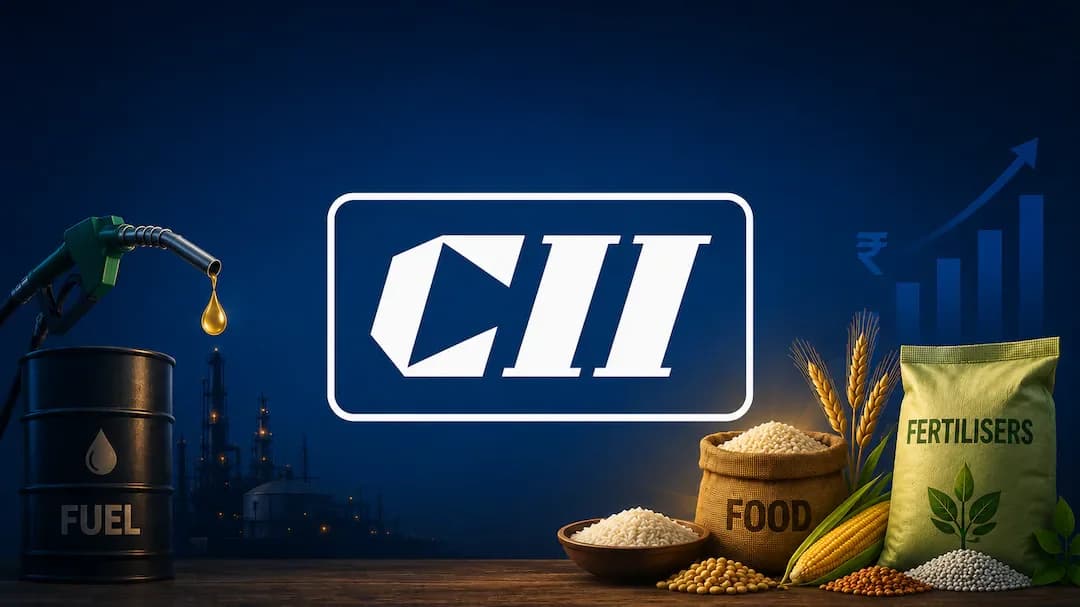
India faces significant import dependency across all three sectors, with the country bringing in 88% of crude oil, 90% of phosphates and 25% of urea. As reported by CII, a considerable portion of these imports also passes through the Strait of Hormuz, creating additional strategic vulnerability. The organization argues that treating these as separate challenges rather than an integrated economic challenge makes it difficult to navigate external shocks effectively. The chamber noted that a large portion of crude oil and LNG imports also passes through the Strait of Hormuz, increasing risks from geopolitical instability in West Asia.
For the fuel sector, CII proposes greater utilization of existing BIS standards on higher ethanol blends from E22-E30, expedite deployment of flex-fuel vehicles, establish an integrated national strategy on long-haul LNG trucking, and further accelerate domestic exploration and expansion of Strategic Petroleum Reserve. The organization has now expanded these recommendations to include promotion of LNG trucking corridors and gradual transition towards alternative cooking fuels such as electric and ethanol-based solutions. Additionally, CII suggests accelerating domestic oil and gas exploration, expanding strategic petroleum reserves and increasing investments in bio-CNG, coal gasification and nuclear energy to enhance energy security and reduce import dependency.
Regarding fertiliser policy, CII proposes a gradual shift to a Direct Benefit Transfer model of subsidy using digitised land records and soil health cards, alongside gradual assimilation of urea under the nutrient based subsidy regime. As reported by CII, Director General Banerjee clarified that 'the goal is not to curtail support but to enhance it' through more targeted and efficient delivery mechanisms. The organization now recommends phased reforms including direct benefit transfer (DBT) of subsidies to farmers and integrating urea under the Nutrient Based Subsidy framework to improve efficiency and reduce excessive nitrogen usage. 'The objective is to strengthen support, not reduce it,' Banerjee emphasized, adding that direct subsidy delivery and data-driven systems could help protect small farmers and improve soil health.
For food security, CII advocates timely release of onion and tomato buffer stocks held by Price Stabilisation Fund prior to August-September, a period typically considered a lean season, and crack down on hoarding. According to CII, India's record foodgrain harvest offers some relief, but rising fuel and fertilizer costs, along with monsoon uncertainties, could still increase prices of perishables such as tomato, onion and potato. The organization has now expanded these recommendations to include improved cold-chain infrastructure and expansion of farmer-to-consumer networks to reduce supply disruptions and price volatility. CII noted that food inflation hits the most vulnerable households first and fastest, requiring a decisive yet measured response.