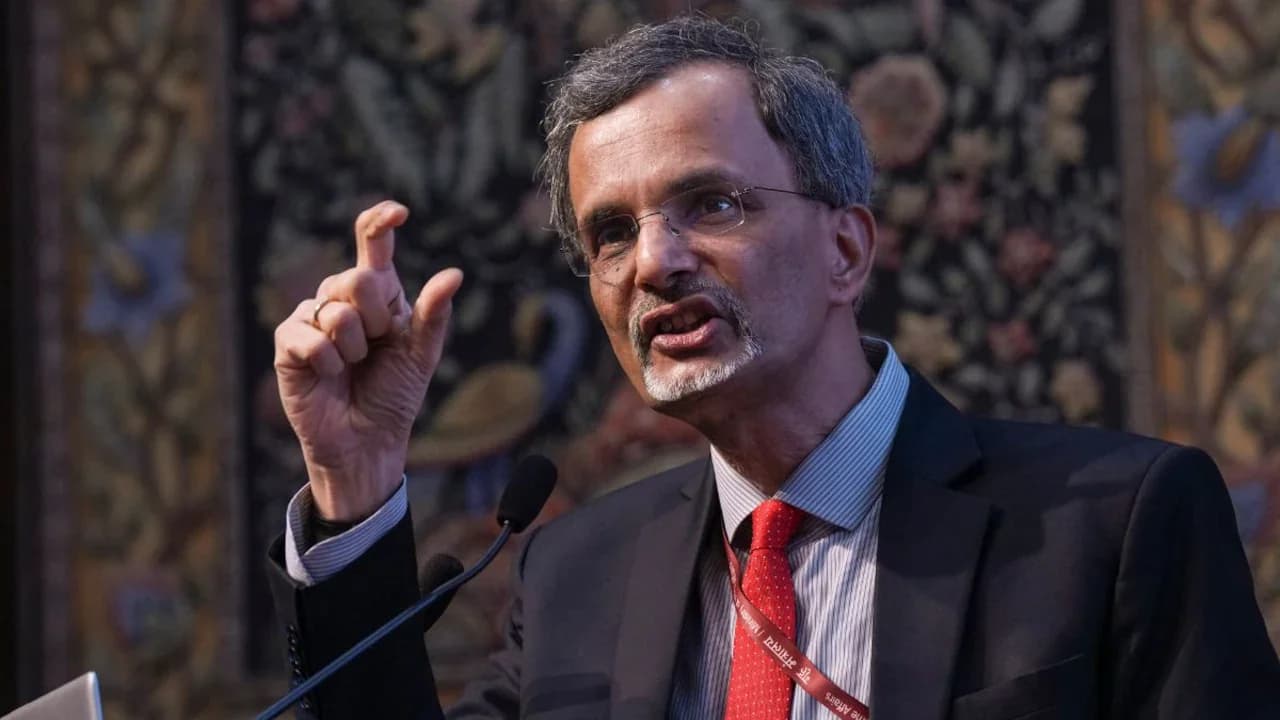
India's Chief Economic Adviser (CEA) Dr. V. Anantha Nageswaran has characterized crude oil prices below $80 per barrel as a 'huge windfall' for the country in FY28. Speaking at the annual general meeting of FICCI on Wednesday, November 18, CEA Nageswaran stated that Brent crude could remain below $80 per barrel, which would significantly benefit India's economic outlook. According to Business Standard, the CEA emphasized that lower energy prices will naturally lead to lower input costs, lower inflation, and higher growth in the upcoming financial year. He noted that while there had been concerns during the current financial year about electricity prices, crude oil prices, and availability of natural gas and fertilisers, the glass looks more than half full as things stand today.
CEA Nageswaran highlighted that India's next major economic challenge may be managing the rupee's strength rather than its weakness, as reported by The Times of India. This shift comes amid ongoing geopolitical uncertainties and recent volatility in the domestic currency. The rupee has rebounded from its lowest closing level of 96.88 against the US dollar on October 8 to close at 93.41 on Wednesday, demonstrating the currency's resilience. This development represents a significant change from previous concerns about rupee weakness, with the CEA noting that managing currency strength will become a priority rather than addressing depreciation pressures.
India's export performance has reached unprecedented levels, with exports reaching $568 billion in the first seven months of the current fiscal year, as reported by The Times of India. CEA Nageswaran noted that given this strong performance, exports are likely to touch the $1 trillion mark by March 2027. The CEA explained that extrapolating from the first seven months' performance, India is positioned to achieve this ambitious target. This export growth trajectory, combined with the anticipated oil price benefits, positions India for significant economic momentum in the coming year.
CEA Nageswaran emphasized that India faces no 'AI hangover' and remains insulated from the global artificial intelligence bubble burst. As reported by Business Standard, he stated that India attracted $5 billion in foreign investment over two months when AI concerns emerged across global markets. The CEA noted that with the diffusion of artificial intelligence risks, capital inflows into India would increase substantially. He added that 'If the previous day of trade is negative for US tech, it mostly results into a positive day for Indian markets. India doesn't have any hangover if the AI bubble is to puncture'. This resilience is particularly significant as India prepares for a potential shift in economic challenges, with the CEA suggesting that managing rupee strength may become a challenge rather than rupee weakness in the coming year.
According to the CEA's analysis, the factors that previously contributed to lower foreign direct investment are positioned to reverse themselves. As reported by Business Standard, CEA Nageswaran indicated that AI capital flowing in reverse direction could help India attract more FDI. The CEA identified four headwinds that should abate next year, including unsettled relations with the US, energy market conditions, absence of India's 'AI play', and higher interest rates in developed countries. However, he highlighted that India needs to manage the triangle of energy costs, energy security and energy transition, noting that this trinity was not a factor for Asian countries when they made the journey into the first world. The CEA also noted that post-pandemic economic shocks would be supply-side in nature rather than demand-side, with recent growth performance coming along with macroeconomic stability and fiscal prudence.