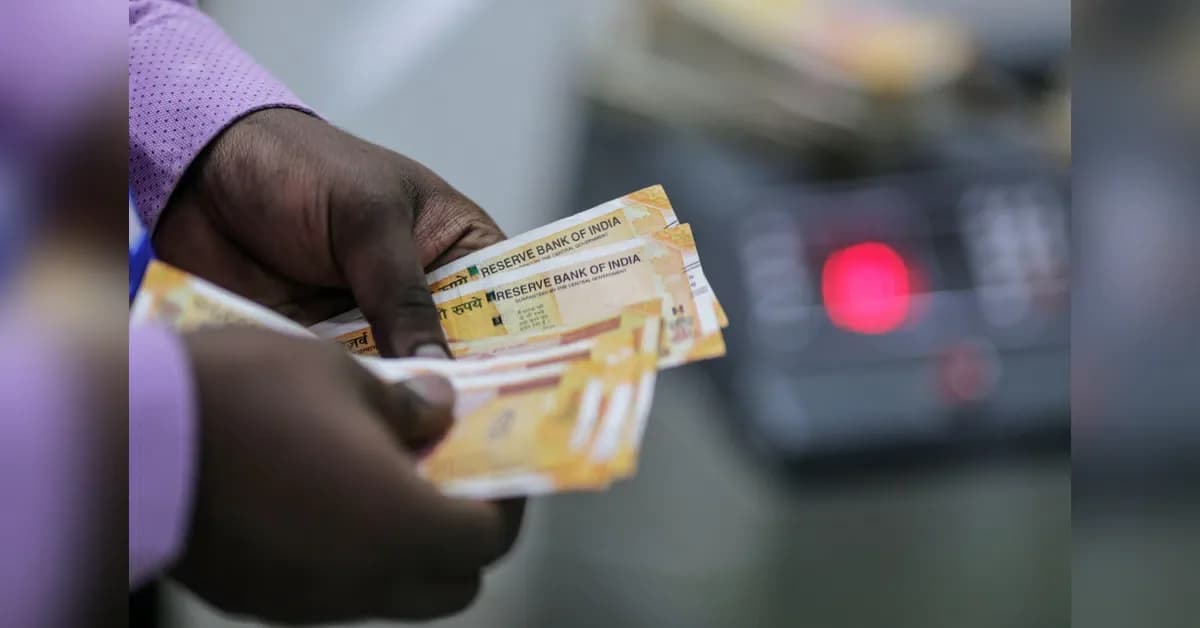
The Indian rupee has fallen to a fresh record low, nearing the 96 mark against the US dollar, extending its decline after hitting record lows in every trading session since Tuesday. According to Firstpost, the falling rupee is making everyday life more expensive for Indians, raising the cost of fuel, imported goods, overseas travel and education. As India relies heavily on imported oil, a weaker currency may also increase inflationary pressure across the economy. The rupee's decline represents a significant escalation from its previous average of 93.6 per US dollar in April, which was already weaker than March's 92.8 average.
Foreign portfolio investors have intensified their withdrawal from Indian markets, resulting in net outflows of $21 billion over the past two months, driven by surging crude prices and apprehension stemming from the ongoing Middle East conflict. As reported by Crisil, the Crisil Financial Conditions Index (FCI) stood at -1.2 in April compared with -1.4 in March, with the report noting that "a negative FCI value, particularly one that falls outside the comfort band of one standard deviation, indicates financial conditions are significantly tighter than the long-period average." The Middle East crisis continued to adversely impact foreign portfolio investor inflows, the rupee and government bond yields during the month.
One of the biggest concerns highlighted by Crisil was crude oil, with Brent crude averaging $120.4 per barrel in April — the highest monthly average in more than a decade — registering a 16.1 per cent increase over March. The report warned that financial conditions are likely to remain tight even if geopolitical tensions ease, with Crisil expecting crude prices to average $90-95 per barrel during the current fiscal year. The pressure from elevated oil prices pushed the 10-year benchmark G-sec yield to an average of 6.96 per cent in April from 6.75 per cent in March, driven by fiscal and inflation concerns stemming from the West Asia conflict.
Despite the stress, Crisil identified some supportive domestic trends, with bank credit growth remaining strong at 16 per cent in April and systemic liquidity surplus touching a four-year high of ₹5 lakh crore amid higher government spending and bond maturities. However, the report projected GDP growth to slow to 6.6 per cent from 7.6 per cent last fiscal due to higher input costs, weaker global growth and elevated inflationary pressures. Crisil expects retail inflation to rise to 5.1 per cent this fiscal, compared with 2 per cent last fiscal, citing higher commodity prices and expectations of a below-normal monsoon. The report cautioned that persistently high oil prices could worsen India's growth-inflation balance by impacting inflation, fiscal deficit, current account deficit and overall economic growth.