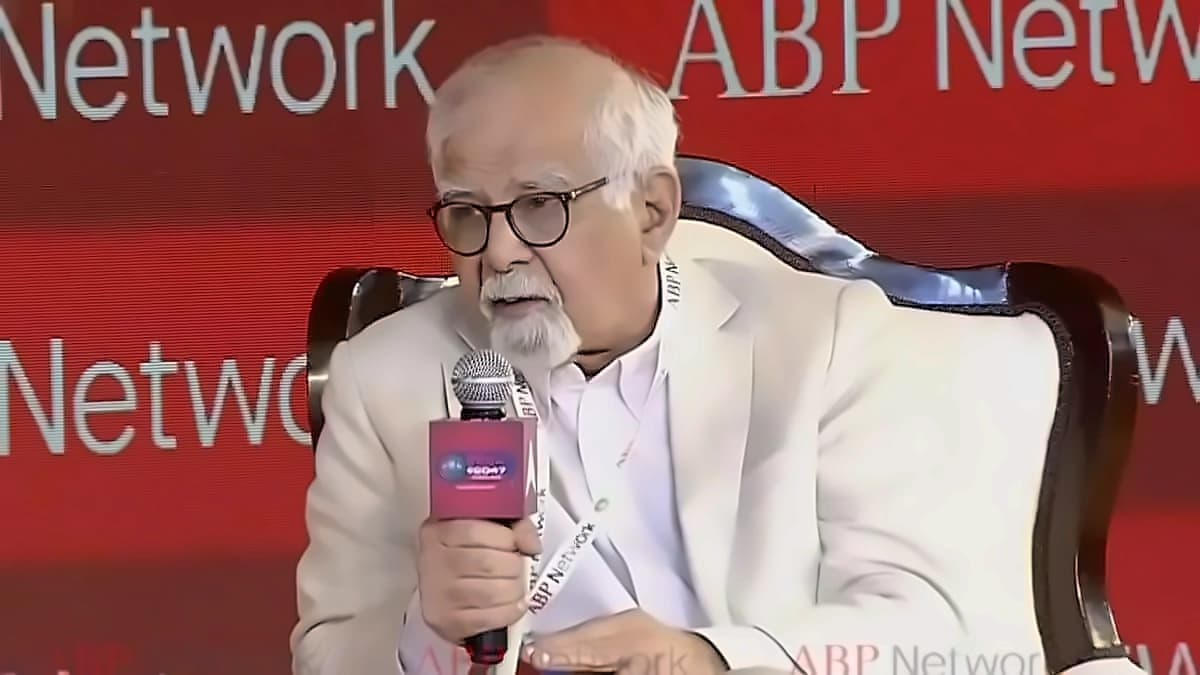
Former Deputy Chairman of the Planning Commission Montek Singh Ahluwalia warned that India is entering a period of serious macroeconomic stress during the ABP Network India@2047 Conclave on Wednesday. Speaking in a session titled 'Reviving PPP: Reimagining Infrastructure Financing', Ahluwalia said the country must now manage a widening current account deficit with far less foreign capital coming in than before. 'We are entering a period of serious macroeconomic stress,' Ahluwalia stated, highlighting the challenging economic environment facing India. The warning comes as economist Surjit Singh Bhalla simultaneously raised concerns about India's 6.34% average growth rate falling short of the government's Viksit Bharat vision, advocating for sustained growth closer to 9% annually.
Ahluwalia revealed that India has been running a current account deficit of around 1.5% of GDP for several years, which was manageable because foreign capital flows were generating a capital account surplus of roughly 2% of GDP. However, the ongoing West Asia crisis is expected to push the current account deficit up to around 2.2% of GDP due to higher import bills for oil and fertiliser. Simultaneously, the capital account surplus is falling from about 2% to nearly zero as high US interest rates pull global investors back toward American assets. As Ahluwalia explained, 'Money flows back to the US. Very unfair because the US economy has a lot of longer-term problems, but that's what happens in the short run'. This shift in external accounts creates significant challenges for India's economic management.
Ahluwalia expects oil prices to remain at an elevated level of around $95 per barrel through the end of 2026, attributing current relative stability to major countries drawing down their strategic reserves. Once the situation normalises, rebuilding those reserves will itself drive fresh demand and keep prices high. The economist warned that 'If my forecasting skills extended to being able to predict what President Trump says or does, I would be a lot richer than I am', highlighting the uncertainty around geopolitical developments. With a current account deficit of roughly $60 to $70 billion and little to no capital account surplus available, India faces significant economic pressures from sustained high oil prices.
Ahluwalia firmly opposes blanket fuel subsidies, arguing that petroleum does not deserve government support. Instead, he advocates for increasing direct income transfers to poorer households, stating that 'If a very poor person is going to be hit by the rise in petroleum prices, it is better to increase the general transfer to poorer people' rather than holding down petrol prices for everyone. He drew a distinction between petroleum and essential medicines, saying the latter are legitimate candidates for subsidies. Regarding macroeconomic solutions, Ahluwalia emphasized that 'Macroeconomics will tell you that to do that you just have to reduce aggregate demand. You don't do that by banning this import and stopping that import', dismissing the approach used in the 1970s as outdated. He outlined India's options including allowing foreign exchange reserves to fall while protecting the rupee if policymakers are confident oil prices will normalise within eight or nine months.