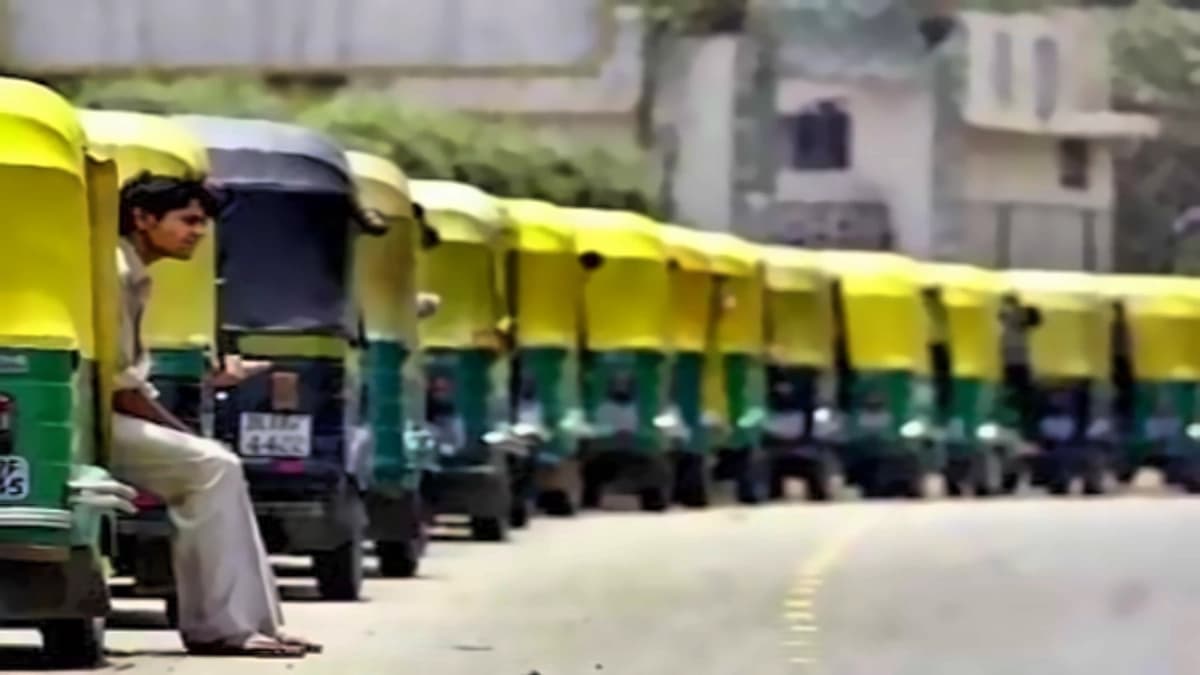
A major transport disruption hit Delhi-NCR on Thursday as auto-rickshaw, taxi and commercial vehicle unions launched a three-day strike from May 21-23, 2026. The protest, called by the All India Motor Transport Congress (AIMTC) and the United Front of All Transport Associations (UFTA) against the Delhi government's decision to increase the environment compensation cess (ECC) on commercial vehicles entering the capital, has started impacting office commuters, railway and airport passengers, delivery services and traffic movement across several busy corridors in Delhi-NCR. According to reports from Goodreturns, the strike has started affecting commuters at major transit points including the New Delhi Railway Station, where availability of autos and cabs dropped sharply. The impact of the strike is being felt across Delhi, Noida, Gurugram, Ghaziabad and Faridabad, where reduced movement of autos, taxis and goods carriers has slowed traffic flow and disrupted public mobility during peak hours.
Commuters are facing significant fare increases during the strike period. As reported by Goodreturns, Mandhir Singh, a resident of Kondli, described the situation at New Delhi Railway Station, stating that drivers are demanding ₹800-1,000 for rides that usually cost ₹250-300. Priya Sharma, an office employee travelling from Noida to Connaught Place, reported paying almost double the usual price just to reach office on time. The disruption has also impacted app-based ride services, with commuters reporting longer waiting times, frequent booking cancellations and surge pricing during office rush hours. Since several auto and taxi unions are participating in the protest, the number of available vehicles on ride-hailing platforms has reduced significantly, adding further pressure on daily commuters. According to latest reports, drivers are demanding immediate fare hikes due to soaring fuel costs and alleged exploitation by app-based aggregators, with unions claiming that taxi fares are being charged at old rates despite rising inflation. The protesters argue that taxi and auto fares in Delhi-NCR have not been revised for nearly 15 years despite repeated hikes in petrol, diesel and CNG prices.
Traffic movement is expected to remain particularly slow near wholesale markets, freight zones and interstate entry points where commercial vehicle activity is concentrated. According to reports from Goodreturns, roads surrounding Ghazipur, Azadpur, Anand Vihar, Kalindi Kunj and the Badarpur border are witnessing heavy congestion. While stretches of NH-48 towards Gurugram and routes linking Delhi with Noida and Ghaziabad could continue to face intermittent bottlenecks and diversions throughout the strike period. The disruption has made metro routes connecting Delhi with Noida, Gurugram and Ghaziabad more attractive as commuters seek faster alternatives to road transport. To reduce congestion within the capital, heavy vehicles are expected to divert towards the Eastern Peripheral Expressway and Western Peripheral Expressway, which are designed to bypass central Delhi traffic. Passengers may face longer waiting times, fewer vehicles on roads and surge pricing during peak hours if a large number of drivers participate in the protest.
To reduce congestion within the capital, heavy vehicles are expected to divert towards the Eastern Peripheral Expressway and Western Peripheral Expressway, which are designed to bypass central Delhi traffic. As reported by Goodreturns, travellers moving between south Delhi, Noida and Faridabad may use the DND-KMP Expressway link to avoid crowded stretches around Ashram, Badarpur and Mathura Road. The disruption has led to higher passenger volumes on metro routes connecting Delhi with Noida, Gurugram and Ghaziabad as travellers look for faster and more predictable alternatives to road transport. With the strike set to continue until May 23, transport disruptions and traffic congestion are likely to persist across Delhi-NCR, making metro travel and alternate routes crucial for daily commuters over the coming days. Delhi Metro and DTC bus services are operating normally during the strike period.
Despite the widespread strike, the Delhi Auto Rickshaw Sangh has clarified that auto-rickshaw services are not part of the protest and will continue to operate normally across the city. According to Rajendra Soni, General Secretary of the Delhi Auto Rickshaw Sangh, as reported by PTI, the ongoing agitation is primarily linked to goods carriers and commercial transport operators, with auto and taxi services functioning normally at railway stations, bus terminals and other locations. The union stated that the issues related to goods-carrier vehicles have been continuing for the last 15-20 days and are not connected with auto or taxi drivers. The strike is expected to continue until May 23, with transport disruptions and traffic congestion likely to persist across Delhi-NCR during this period. Unions have warned that if the Delhi government does not revise taxi fares within the next one or two weeks, the ongoing agitation could intensify into a larger protest movement, with protests planned outside the Delhi Secretariat on May 23. More than 68 transport unions under the banner of the All India Motor Transport Congress (AIMTC) and the United Front of All Transport Associations (UFTA) are participating in the "chakka jam" protest.