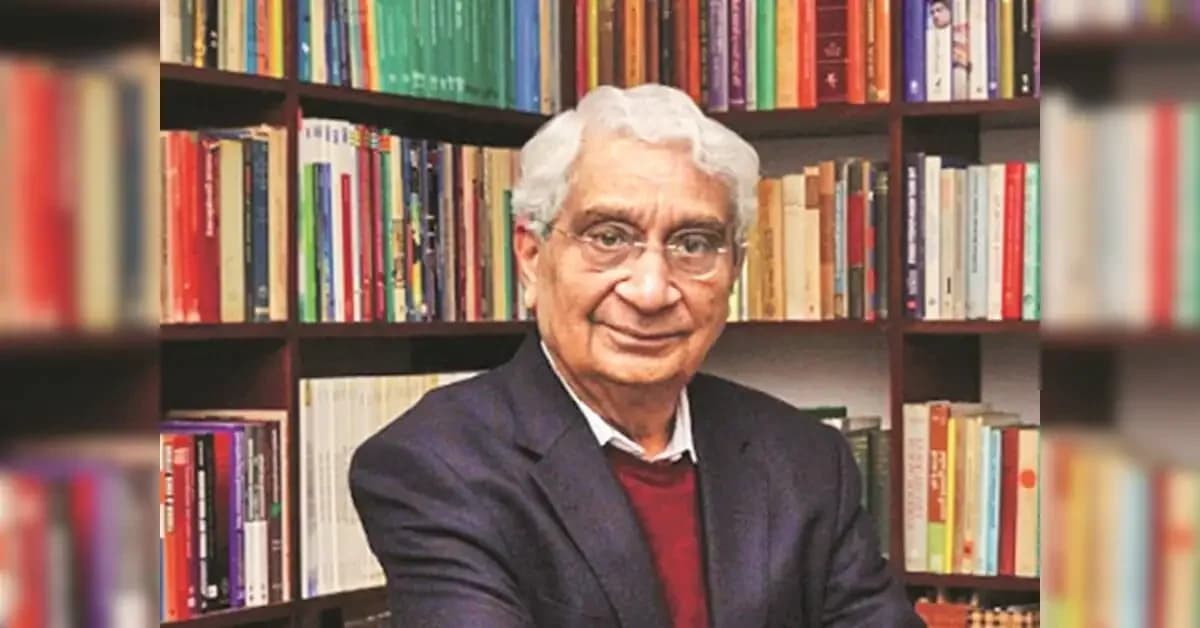
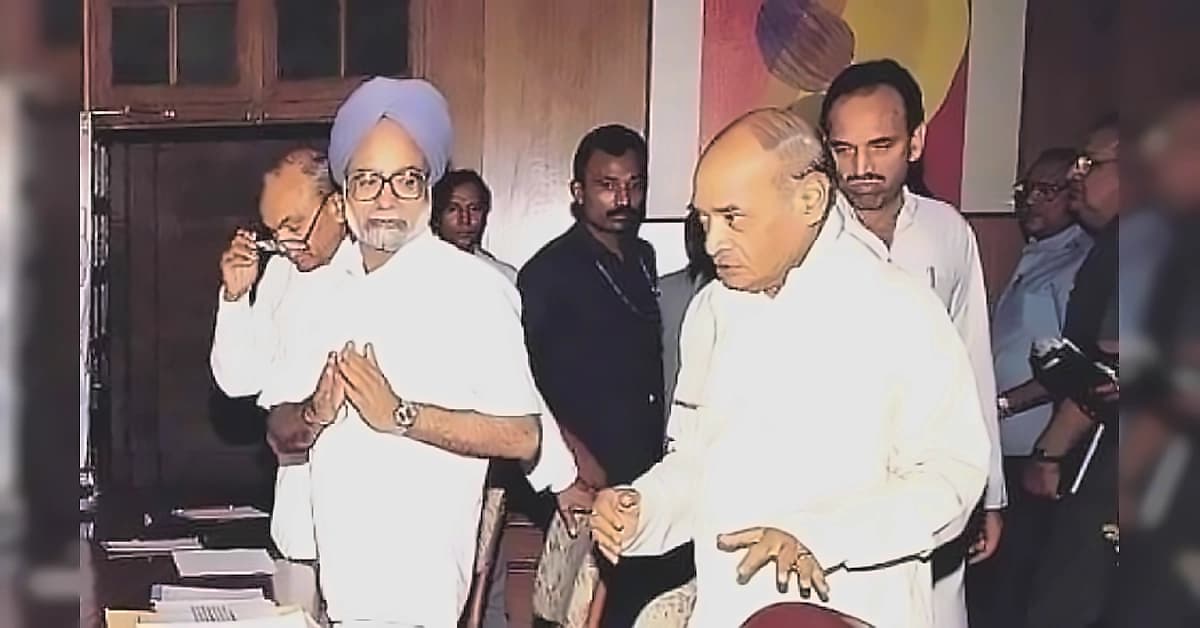
According to Business Standard reports, Deepak Nayyar, who served as Chief Economic Adviser during the 1991 crisis, revealed that the reforms resulted from crisis management efforts spanning multiple governments. Nayyar was the only secretary to serve under three Prime Ministers - V P Singh, Chandra Shekhar, and P V Narasimha Rao - and three finance ministers during the most acute economic crisis in independent India. The crisis was triggered by excessive borrowing during Indira Gandhi's second term and worsened under Rajiv Gandhi's administration, leading to mounting fiscal deficits and current account deficits. The minor oil shock of 1990, when Iraq invaded Kuwait, proved the final straw, with India facing a $6 billion short-term debt that needed daily rollover and $10 billion in outstanding NRI deposits prone to capital flight. As Nayyar explained, "The fundamental problem was excessive borrowing at home and abroad. It led to mounting fiscal deficits for the government and burgeoning current account deficits for the economy. The fiscal profligacies of the 1980s were undeniably responsible for the macroeconomic crisis in 1991."
As reported by Business Standard, the Rao government implemented critical measures within the first two weeks of July 1991, including exchange rate adjustment, abolition of all export subsidies, and shipment of 15% of RBI's gold reserves as collateral. On July 24, 1991, the new industrial policy was announced in the morning, followed by Manmohan Singh's Union Budget presentation in the evening. Nayyar prepared a comprehensive three-page note for Rao outlining necessary actions, including fiscal deficit reduction to 6.5% of GDP through subsidy cuts and petroleum price increases. The blueprint for fiscal adjustment had been developed earlier in 1991 through discussions between key officials, demonstrating that the reforms were part of a continuum rather than a single magical event. Nayyar revealed that "I prepared a three-page note on the crisis and added a half-page handwritten annex outlining necessary actions. This included an exchange rate adjustment, pledging 15% of the RBI's gold reserve assets with the Bank of England, a major adjustment to reduce the fiscal deficit to 6.5% of GDP by slashing food and fertiliser subsidies, while raising petroleum prices."
According to Business Standard reports, Nayyar identified significant gaps in India's structural reforms that led to long-term de-industrialisation. He criticised the absence of industrial policy as an industrial policy itself, noting that "India's share in world manufacturing value-added dropped from 1.3% in 1990 to 3% in 2025, while China's share rose from 0.8% to 28%." Nayyar emphasised that "No country in history has industrialised without an industrial policy, including the United Kingdom, the United States, and the now successful Asian economies like South Korea, Taiwan, China, and Vietnam." He highlighted that India's R&D expenditure as a share of GDP declined from 0.66% in 1990 to 0.60% by 2024, while China's increased to 2.4% by 2024. As Nayyar explained, "Industrialisation is not about passive insertion into the world economy. It is about strategic integration. Our trade liberalisation did not foster industrialisation because it was not combined with an effective industrial policy."
As reported by Business Standard, Nayyar warned that India has wasted its demographic dividend opportunity, with poor learning outcomes in schools and politicised universities potentially leading to a middle-income trap similar to the Philippines or Latin America. He emphasised that employment remains India's biggest challenge, with manufacturing as the potential source of quality jobs, while the informal services sector and construction currently provide low-wage employment. Nayyar called for a strategic industrial policy requiring coordination of exchange rate, monetary, technology, industrial finance, and R&D policies, along with improved education quality to avoid the middle-income trap. He noted that "Viksit Bharat (developed India) is not feasible if the education system is declining, with poor learning outcomes and excessive centralisation of admissions processes."