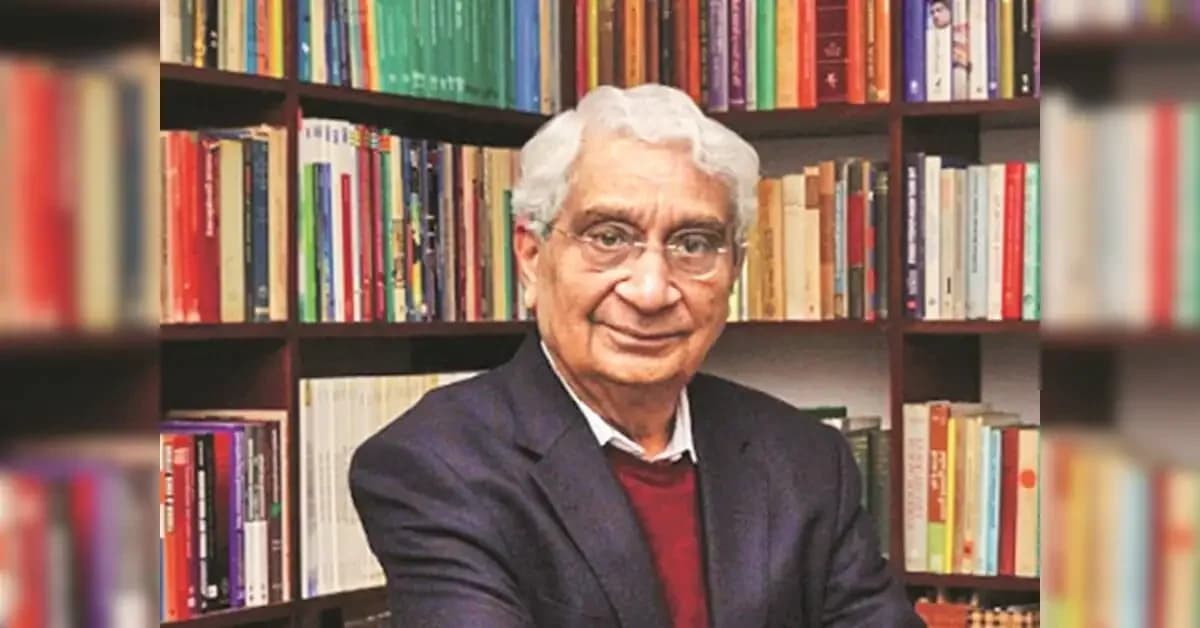
According to Business Standard, Rakesh Mohan, who served as Economic Advisor to the Ministry of Industry during the 1991 reforms, explained that India's licence-permit regime originated from the Defence of India Act of 1939 and was formalized through the Industrial Development and Regulation Act of 1951. The system was designed to address India's low savings-investment rate of 10-12% and achieve planned development, with public sector reservation introduced in 1956 due to concerns about private sector resource constraints. As reported by Business Standard, Mohan noted that India's licence-permit system was unique globally, with small-scale industry reservation and the Urban Land Ceiling Act of 1975 being entirely Indian inventions. Speaking about the post-Independence context, Mohan explained that there was a clear view after Independence that India and other developing countries needed to break off the shackles of colonialism and increase their growth rate, as the per capita income growth rate was near-zero in the 50 to 100 years before Independence.
As reported by Business Standard, the 1991 reforms were implemented within six weeks by July 24, 1991, following a comprehensive industrial policy reform paper prepared by Mohan and Industry Secretary A N Varma in 1990. The document was approved by the Cabinet under the V P Singh government and continued under Chandra Shekhar's administration, with Finance Minister Manmohan Singh having knowledge of the reform paper from his previous role as Economic Advisor. According to Business Standard, the reforms included the removal of industrial licensing, abolition of the Directorate General of Technical Development, and significant tariff reductions from approximately 110% to less than 15% over 15 years. Speaking about the reform trajectory, Mohan explained that there was a clear view in the 1950s and 1960s in the global post-colonial environment that developing countries needed to increase their growth rate, with the successful example available being planning in the Soviet Union, which had attained higher growth through it relative to their past.

According to Business Standard, the 1991 reforms achieved significant success in demonstrating India's competitive capabilities and implementing domestic deregulation. Average tariffs decreased from about 110% in 1991 to less than 15% over the following 15 years, while the government abolished multiple regulatory bodies including the Controller of Capital Issues and the Chief Controller of Imports and Exports. However, as reported by Business Standard, the biggest disappointment was that industrial growth failed to lead overall GDP growth, with manufacturing's share of the economy remaining stagnant despite expectations for growth. The failure to de-reserve small-scale industry until around 2010 was identified as a major omission, preventing India from following the successful path of labor-intensive manufacturing that other Asian economies achieved.
According to Business Standard, Mohan noted that India has missed opportunities in manufacturing and exports due to a colonial mindset that focused on developed-country markets rather than emerging economies. He highlighted that India imports $130-140 billion from China against exports of about $20 billion, suggesting that restricting economic relations with China economically hurts India more than it helps. As reported by Business Standard, Mohan emphasized that the real challenge is not wage competitiveness but management and efficiency issues, as Chinese manufacturing wages are now three to four times Indian wages yet India still cannot compete on basic products like cotton shirts. Speaking about the current manufacturing landscape, Mohan explained that the challenge is not just about wage competitiveness but about management and efficiency issues, as Chinese manufacturing wages are now three to four times Indian wages yet India still cannot compete on basic products like cotton shirts.
According to Business Standard, Mohan advocated for evidence-based, problem-specific industrial interventions rather than comprehensive policy frameworks. He criticized production-linked incentive schemes as potentially creating a new licence raj mentality and suggested that subsidies should focus on labor-intensive sectors and skill development for ordinary trades rather than large corporations. As reported by Business Standard, Mohan emphasized the need for better urbanization policies, noting that unlike China's provision of cheap land around cities for industry and housing, India has not focused on this critical infrastructure component that connects to overall economic growth. Speaking about future policy directions, Mohan emphasized the need for better urbanization policies, noting that unlike China's provision of cheap land around cities for industry and housing, India has not focused on this critical infrastructure component that connects to overall economic growth.