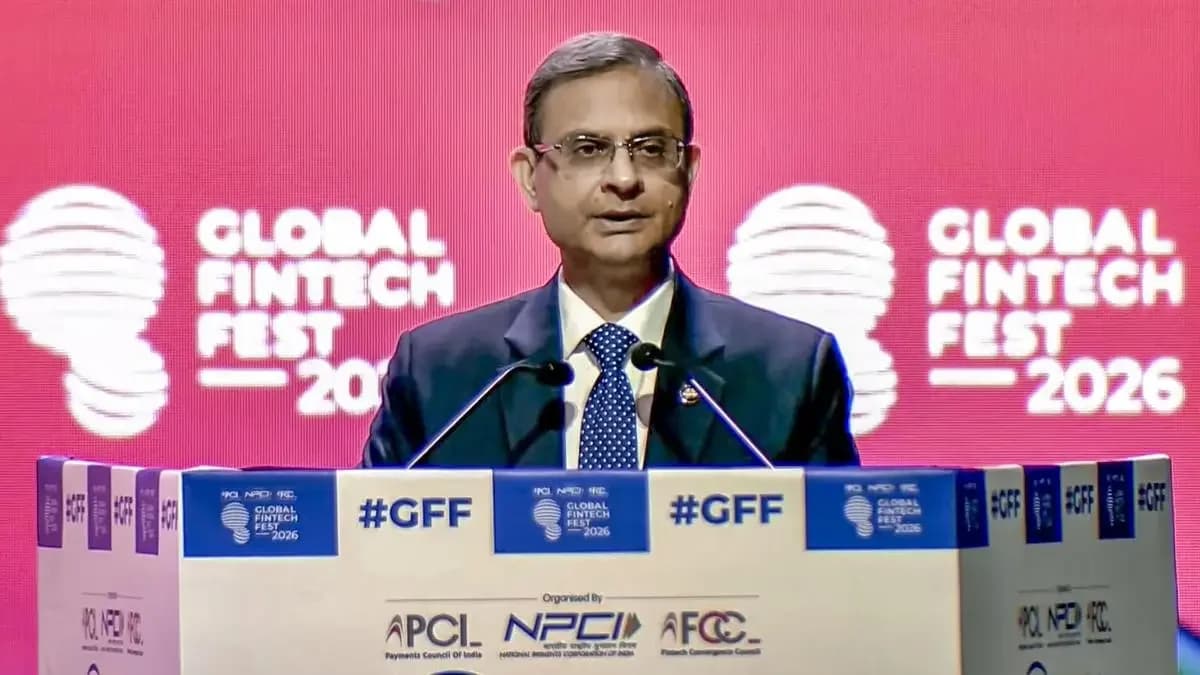
RBI Executive Director P Vasudevan announced at Global Fintech Fest 2026 that the central bank is exploring gold tokenisation as part of a broader plan to add more asset classes to its Unified Markets Interface. As reported by Uniresearch, this initiative represents a significant expansion beyond financial securities to include physical assets like gold in the digital finance ecosystem. The exploration comes alongside existing trials of certificate of deposit tokenisation, with about 248 transactions worth ₹17,000 crore processed so far, with roughly two-thirds of these occurring in the secondary market. RBI's existing Card-on-File Tokenization mandate, active since October 2022, has tokenised around 118 crore cards with 5 billion transactions processed, demonstrating the central bank's commitment to digital transformation across multiple asset classes.
RBI Governor Sanjay Malhotra and SEBI Chairman Tuhin Kanta Pandey launched a pilot project on the tokenisation of corporate bonds under D-MAT 2.0 at the Global Fintech Fest 2026. As confirmed by Governor Malhotra while speaking at the Global Fintech Fest, this represents a milestone step in India's digital securities market development. The pilot project will explore whether distributed ledger technology can bring securities and settlement legs closer together, enable faster and potentially atomic settlement, and automate parts of asset servicing. The initiative brings together tokenised securities, digital settlement assets through the central bank digital currency (CBDC) and smart-contract functionality, while building on existing market infrastructure and preserving legal certainty around ownership.
Executive Director P Vasudevan explained that the Unified Markets Interface pairs tokenised assets with wholesale Central Bank Digital Currency for settlement, allowing both the asset and the payment to move on the same platform, achieving what he called atomicity of settlement with no settlement gap. As reported by Uniresearch, this technological framework enables seamless integration of digital assets with traditional payment systems. However, he flagged legal clarity, data privacy and concentration risk as challenges that need to be addressed as RBI gold tokenisation and other asset classes are considered for implementation. The initiative builds on the existing D-MAT 2.0 framework that brings together tokenised securities, digital settlement assets and smart-contract functionality.
Infosys Chairman Nandan Nilekani clarified at GFF 2026 that financial tokenisation is fundamentally different from AI tokens, explaining that AI tokens refer to units of work used to measure AI consumption, while tokenisation in finance involves the digital representation of assets. Speaking at the Global Fintech Fest, Nilekani emphasized that the time has arrived for tokenisation, pointing to RBI and SEBI announcements on tokenising certificates of deposit and corporate bonds. He explained that tokenisation involves packaging an asset together with its descriptors so complete information travels with the asset, comparing it to a government file carrying history and comments, or a ₹500 note carrying value, RBI certification and serial number details. Nilekani outlined three tokenisation pilots covering dairy, warehouse receipts and asset securitisation, with the first seeking to tokenise cows for credit facilitation, the second involving warehouse receipts for commodities like rice and wheat, and the third creating a marketplace for securitising assets.
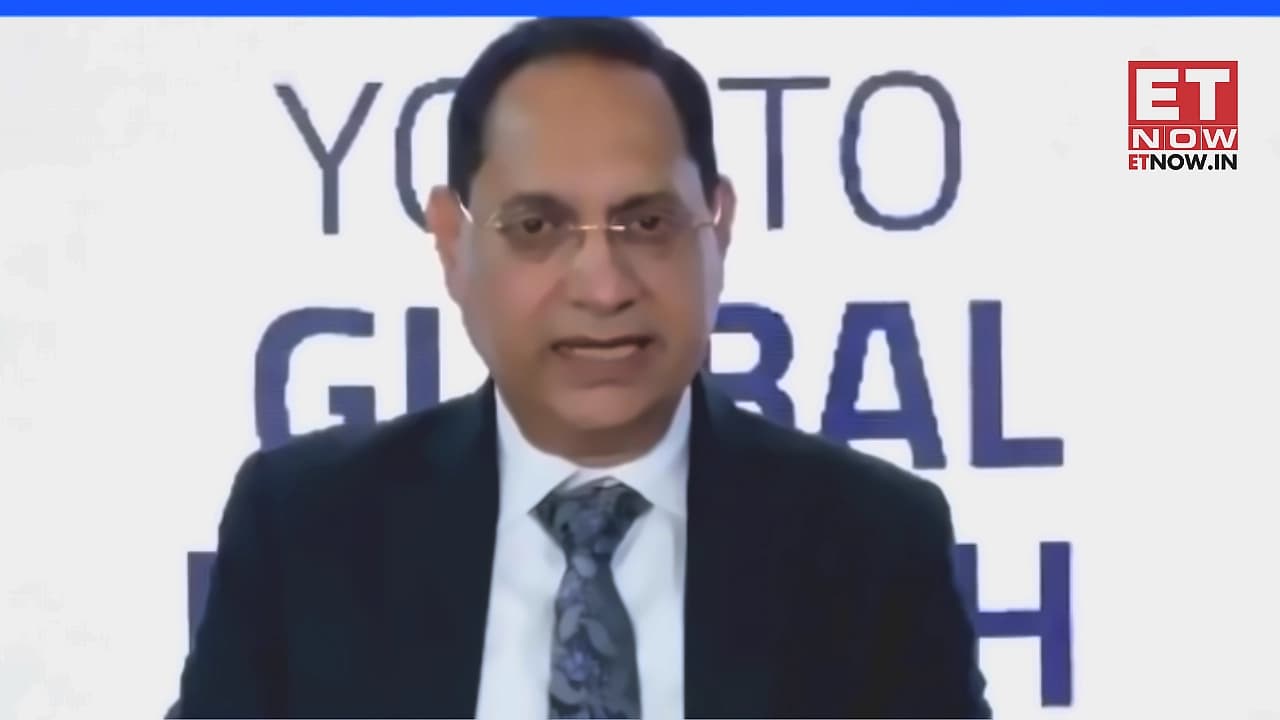
India's fintech ecosystem ranks third globally by funding, attracting $2.4 billion last year, and is home to 30 fintech unicorns, according to RBI Governor Sanjay Malhotra. As reported by PTI, the transformation of digital finance has happened because of public-private partnership, which has facilitated entrepreneurship. RBI Governor Sanjay Malhotra emphasized that the most remarkable aspect of the fintech sector is not scale or transformation, but that digital finance has quietly become a part of ordinary life. India has the opportunity of becoming a trusted partner in shaping the architecture of global finance, with the RBI committed to supporting the industry in building a connected global system. India has become the second largest market for telecom with 133 crore mobile phones, of which almost 52 crore belong to the rural sector, as highlighted by Minister Jyotiraditya M Scindia. Data costs have fallen from ₹287/GB to ₹9/GB, making India the cheapest data capital of the world.