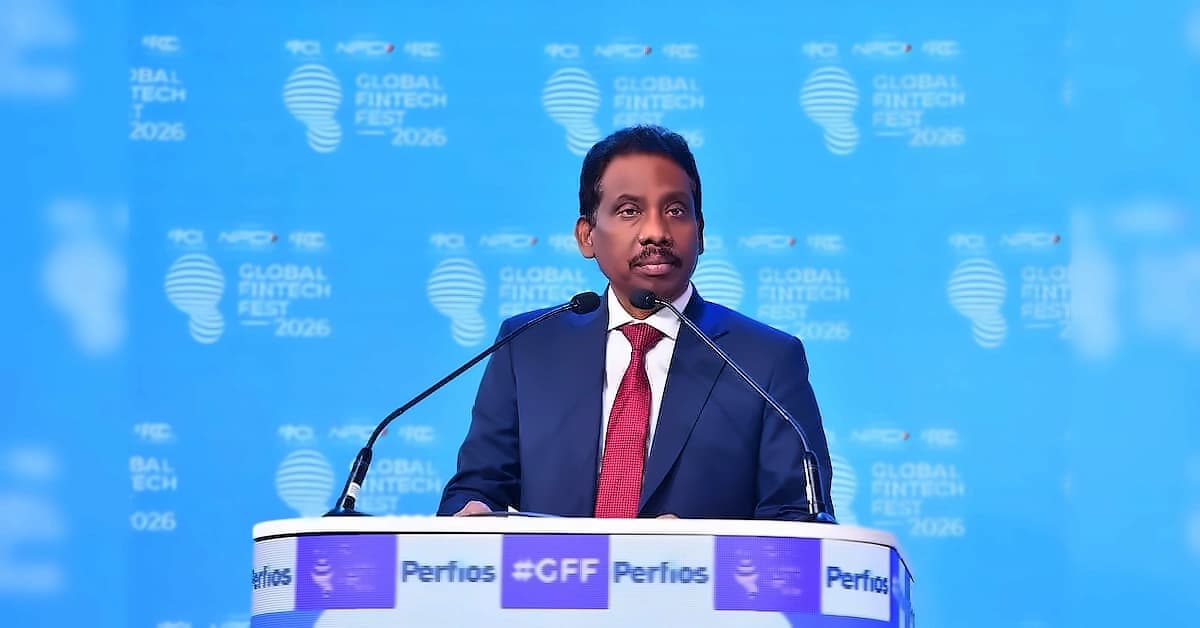
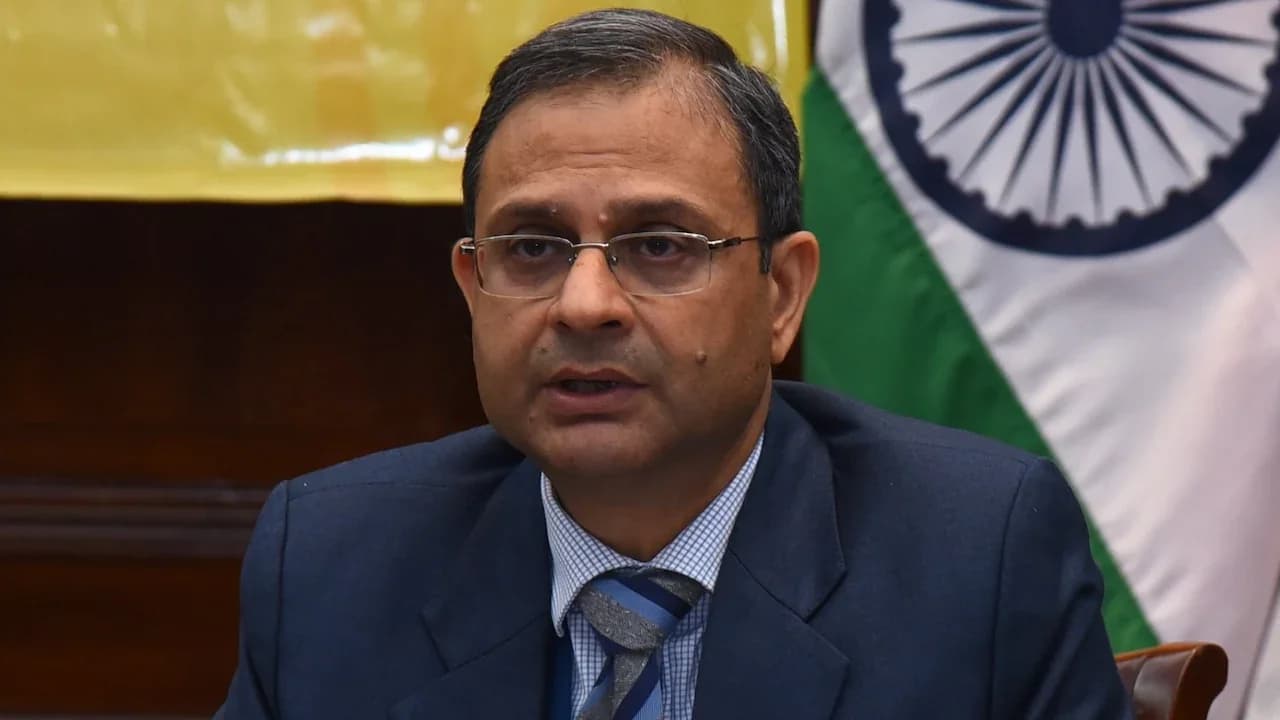
Governor Sanjay Malhotra emphasized that the Reserve Bank of India has consistently viewed fintech as a 'valuable partner' in building the financial system of the future. Speaking at the 7th Global Fintech Festival 2026 in Mumbai on September 8, Malhotra outlined the central bank's approach built around 'continuous, open and constructive engagement' with start-ups, fintech companies and other stakeholders. According to reports from The Economic Times, The Hindu BusinessLine, ETBFSI, Business Standard and Mint, the RBI's regulatory sandbox, the Reserve Bank Innovation Hub and continued dialogue with the fintech ecosystem reflect the regulator's belief that 'better policy emerges from continuous, open and constructive engagement'. The governor noted that the central bank has encouraged self-regulation within the sector and supported the development of digital public infrastructure that FinTechs can build upon, while remaining open to new ideas and new players and promoting responsible innovation while safeguarding trust, that is the very foundation of finance. In his latest remarks at Global Fintech Fest 2026, Malhotra stressed that fintech companies should treat customer data as a fiduciary responsibility rather than a business asset, emphasizing the need for responsible data handling in the financial sector. 'I would urge all of you (fintechs) to treat data as a fiduciary responsibility, not as a business asset. Every fintech in this room holds something which is much more valuable than capital and that is the data, financial as well as non-financial of very real people like you and me. This data must be treated the way a trustee treats assets held for a beneficiary, collected with a clear purpose and used strictly within the consent provided and protected as though it was one's own', Malhotra cautioned fintechs. He warned against building businesses around regulatory gaps, urging firms not to follow a strategy of 'scaling first and seeking clarity or forgiveness later'. 'Where a firm treats consumer data as a monetizable asset first and a responsibility second, trust erodes and once it does, it does not return easily', he emphasized. According to The Economic Times, Malhotra reiterated the risks of adopting artificial intelligence (AI), including bias, exclusion, cybersecurity, data privacy and erosion of human judgement.
India's fintech sector has achieved remarkable global recognition, with Governor Sanjay Malhotra announcing that India's fintech sector ranks third globally, with 30 unicorns and $2.4 billion in funding last year, as reported by Mint. Speaking at the Global Fintech Fest 2026, Malhotra said 'India has the opportunity to become a trusted partner in shaping the future architecture of global finance'. The governor highlighted that 'today, a shopkeeper in a small town, a farmer in a remote village, a young professional in a metro city, all of them transact, save and borrow through the same seamless digital rails'. He pointed to UPI, Aadhaar-enabled payment systems and the Jan Dhan ecosystem as key enablers of this transformation, describing this as 'financial inclusion not only as a policy aspiration but as lived everyday reality for hundreds of millions of Indians'. The governor noted that fintech has helped connect India's diverse population to formal finance 'faster and affordably' and that the impact of India's digital financial infrastructure is now visible across geographies and demographics. 'Our greatest FinTech achievement is not that finance has become digital. It is that many areas of digital finance today have become common', Malhotra highlighted. He acknowledged the success of digital payments in India, citing 57 crore PMJDY accounts, 280 billion digital transactions in FY26 with 24 billion UPI transactions per month, yet emphasized that 'while we have many achievements under our belt, we still have miles to go before we sleep'. According to The Economic Times, Malhotra said many emerging economies face challenges similar to India's. According to Mint, Malhotra emphasized that global leadership comes when other countries adopt India's standards, ideas, and solutions, stating that 'our greatest contribution will therefore lie in exporting products, sharing approaches, public digital infrastructure, governance frameworks, and institutional experience'. According to The Economic Times, Malhotra said India's solutions for financial inclusion, affordable payments, digital identity, interoperable infrastructure, and trusted innovation can be appropriately repurposed for wider global adoption.
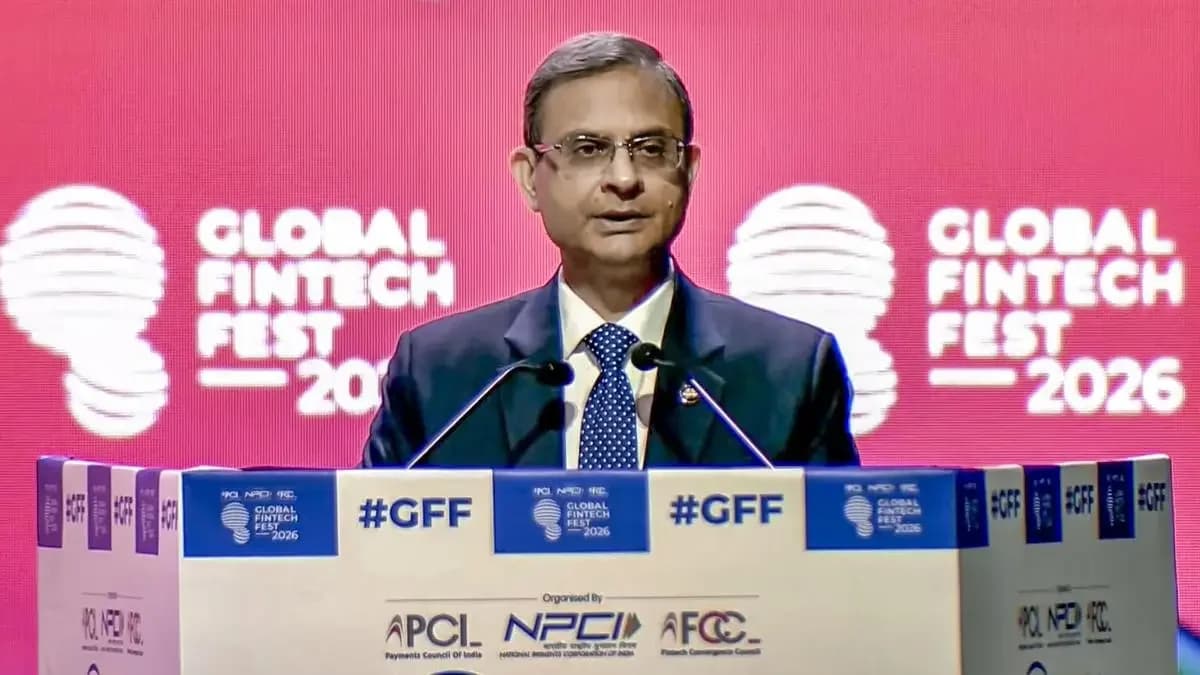
At the Global Fintech Fest 2026, RBI Governor Sanjay Malhotra unveiled two new UPI products from the National Payments Corporation of India (NPCI) to enhance digital payment capabilities. As reported by Mint, the first innovation is the 'Tap & Pay' feature, which allows UPI users to tap their phones and pay via UPI at Point-of-Sale (PoS) terminals using near-field communication (NFC) technology. The second product is a customer support AI-powered platform called 'My UPI', which provides a single-window view of customers' transactions and mandates, as well as increased user controls, the ability to decline UPI debit transactions, delink a mobile number from receiving UPI payments, instant processing for chargebacks, and 24x7 multilingual support for grievances. These new features demonstrate the continued evolution of India's digital payment infrastructure and the central bank's commitment to 'building digital public infrastructure for next-generation financial services'. According to The Economic Times, Malhotra described these innovations as part of the central bank's approach to 'building digital public infrastructure for next-generation financial services'.
According to Malhotra's address, fintech has transformed the efficiency of the financial system through improvements in customer experience and financial infrastructure. As reported by The Hindu BusinessLine, ETBFSI, Business Standard and Mint, these improvements include reductions in account-opening and payment-settlement times, lower transaction costs, stronger fraud detection through AI-driven analytics and real-time supervision. The governor emphasized that fintech has enabled faster and more efficient credit delivery across India. According to the latest reports, artificial intelligence-driven analytics are strengthening fraud detection, while fintech is also enabling real-time supervision of the financial system. The RBI Governor also underlined that the central bank sees fintech as a partner in building India's future financial system, while making it clear that innovation must be accompanied by safeguards around trust and safety. 'Operational resilience, business continuity and cyber security are not burdens or costs minimized, they are the price of the scale a firm has achieved', Malhotra stated. He noted that 'a firm that engages transparency not just earns the regulatory goodwill, but also a faster and a more durable path to scale'. According to The Economic Times, Malhotra said firms that outrun the rules typically find that the rules catch up at a much higher price to themselves and to consumer trust. According to Mint, Malhotra emphasized that fintech can contribute to consumer services by meeting credit and other financial needs, enhancing operational efficiency, reducing financial intermediaries' costs, and reducing fraud through advanced technologies such as quantum computing, AI, and tokenisation.
Malhotra highlighted the significant impact of fintech on credit delivery to MSMEs, stating that 'perhaps nowhere is the impact more tangible than credit delivery to our MSMEs'. According to The Hindu BusinessLine, ETBFSI, Business Standard and Mint, through cash-flow-based lending, account aggregators and the Unified Lending Interface, fintech companies are helping bridge India's MSME credit gap by providing 'formal collateral-light credit' to small businesses that had historically remained outside traditional underwriting models. The governor described this as 'credit reaching the last mile of entrepreneurs, powering jobs and livelihoods across the country' and emphasized that fintech has 'bridged and connected our vast diverse population to the formal finance faster and affordably'. As reported by ETBFSI, fintechs are enabling formal and collateral-light credit for millions of small businesses that remained 'invisible' to traditional underwriting models for decades. According to multiple sources, fintech has helped credit reach the last mile of entrepreneurs, making financial inclusion a lived reality for hundreds of millions of Indians. 'The harder work of reaching those still outside the system is where the potential to make an impact is least realised today, and where it matters the most. I would only ask that connecting the last man standing in the queue remains the focus of today's innovation for all of you present here, and not merely a footnote to it, as fintechs have a big role to play in this', Malhotra emphasized. According to The Economic Times, Malhotra said financial institutions must take systemic responsibility that scales with size.
The governor outlined the RBI's broader objective to build a financial system that is 'safer, more trustworthy, more inclusive, fair, efficient' and supportive of economic growth and public welfare. As reported by The Hindu BusinessLine, ETBFSI, Business Standard and Mint, this vision encompasses the central bank's commitment to leveraging fintech partnerships to create a more inclusive and efficient financial ecosystem that serves the diverse needs of India's population across all sectors and regions. The RBI's approach reflects a 'structured and continued dialogue' with startups, fintechs and other stakeholders, with the central bank maintaining an 'open and constructive engagement' philosophy to foster innovation and regulatory clarity in the fintech sector. According to Mint, RBI's work towards a comprehensive AI governance framework for the financial sector and the recently constituted Quantum Secure and Adaptive Financial Ecosystem Committee on quantum resilience reflects the central bank's commitment to anticipate technological change, rather than merely respond to it. 'Our endeavour is to ensure that India remains not merely an adopter of emerging technologies, but a leader in shaping trusted, inclusive, and responsible digital finance', Malhotra stated. 'As a result, our solutions for financial inclusion, affordable payments, digital identity, interoperable infrastructure and trusted innovation can be appropriately repurposed for wider global adoption', he said. 'India's first decade of fintech hovered largely around building for India. The next decade presents an opportunity to build for the world in India', Malhotra announced, telling Indian fintechs that **'while the sector's first decade was largely about building for India, the next presents an opportunity to 'build for the world in India'****, with India having an opportunity to become a 'trusted partner' in shaping the future architecture of global finance'. The governor emphasized that 'global leadership is not achieved simply because a country develops advanced technology. It is earned when others look to that country for its ideas, standards and solutions'. According to The Economic Times, Malhotra said trust in the financial system ultimately drives adoption and endurance, leading to transformational impact.