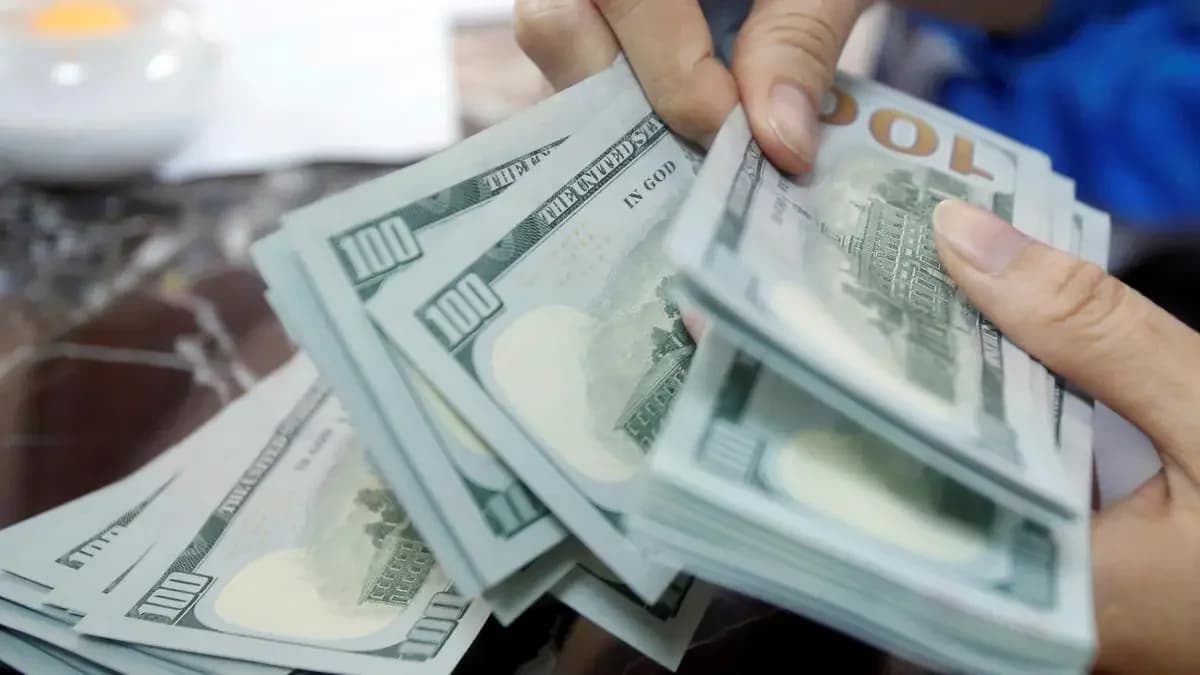
Many Venezuelan business elites are resisting the idea of replacing the bolivar with the US dollar, citing concerns that such a move would eliminate Venezuela's ability to devalue its domestic currency against the dollar. According to reports from Professor Steve Hanke, these elites believe this inability would make Venezuela uncompetitive in international markets. However, Hanke challenges these concerns, arguing that the repetition of devaluation assertions is not a substitute for sound reasoning and empirical evidence. As Hanke explains, the siren song of devaluationists is repeatedly asserted in certain elite circles, but this Do-It-Yourself-Economics (DIYE) approach lacks proper economic theory or empirical evidence.
Since 2007, the bolivar has experienced a massive devaluation, losing virtually all of its value against the US dollar. As reported by Professor Steve Hanke, during this same period, Venezuela's economy has collapsed dramatically, with GDP per capita plunging from an index of 100 to 37.22. This represents a severe decline in the country's economic prosperity, contradicting the belief that currency devaluation leads to economic growth. The maxi-devaluation of 99.9999% against the US dollar has resulted not in prosperity, but in impoverishment, demonstrating that devaluations do not produce competitiveness and prosperity as commonly believed.
Ecuador provides a compelling counterexample to Venezuela's experience with currency devaluation. According to Professor Steve Hanke, after the Ecuadorian sucre lost 75.6% of its value against the US dollar from 1998 until January 2000, President Jamil Mahuad announced on January 9th that Ecuador would replace the sucre with the US dollar. Since dollarization, Ecuador's exports have grown more rapidly than its GDP, with non-oil exports growing at an annual compound growth rate of 7.1% per year, nearly twice as fast as the solid GDP growth rate of 4.3% per year. This transformation demonstrates that the relationship between devaluations and exports is negative, not positive, contradicting the assertions of DIYE practitioners.
One of Ecuador's most successful non-oil exports since dollarization is its prawn industry, which has replaced all international competition. As reported by Professor Steve Hanke, the prawn industry now provides employment for 1.6% of Ecuador's population and contributes 6% to the country's GDP, exceeding the automobile industry's contribution to Germany's economy. This transformation demonstrates how dollarization can create an export-led economy from what was previously a mini-petrostate, with the country successfully transitioning from oil dependence to diversified export-driven growth.