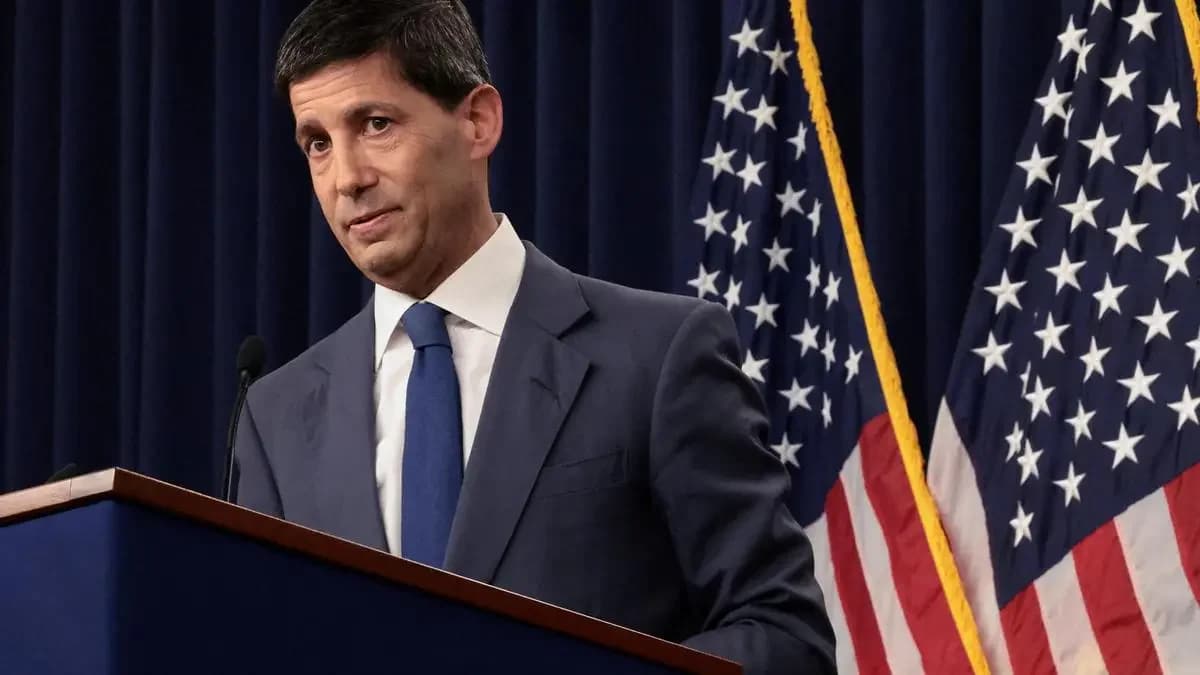
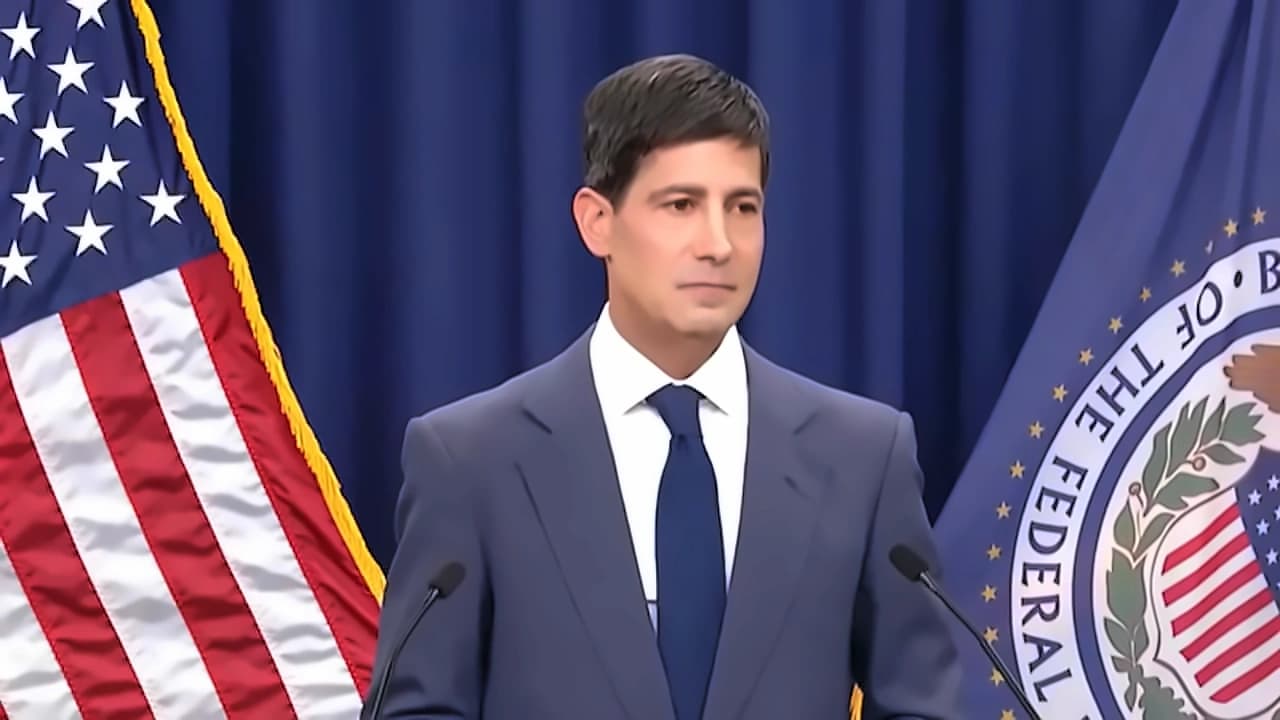
Markets are pricing in an 80% probability that the Federal Reserve will raise interest rates by December 2026, according to latest federal funds futures pricing, marking a significant shift from the previous 97.4% probability of holding rates steady. This represents a major test for Kevin Warsh in his first Federal Reserve meeting as chairman, as he presides over a Federal Open Market Committee where several participants have grown increasingly worried about stubborn inflation that erodes households' purchasing power. The meeting's significance lies in being Warsh's inaugural FOMC meeting as chair, as he was sworn in on May 22, 2026, just three weeks before this decision. Fed officials will release their post-meeting statement at 2 p.m. Wednesday in Washington, with Warsh's first press conference as chairman to follow 30 minutes later. The Fed's options are genuinely constrained, with inflation remaining above the 2% target and hovering near three-year highs at 4.2%, while May payrolls came in at 172,000 new jobs and the unemployment rate sits at 4.3%. According to The Economic Times, several officials have outlined scenarios they believe could warrant rate hikes and want to eliminate language in their post-meeting statement suggesting their next move is likely to be a cut.
The Iran war, which began with U.S. and Israeli strikes on February 28, drove Brent crude to a 2026 intraday high near $115 per barrel in late March, feeding directly into headline inflation and compressing Warsh's policy options before he took office. However, by June 15, a peace agreement had been announced with a formal signing ceremony scheduled in Switzerland on June 19, and Brent crude retreated to approximately $83 per barrel, removing the most direct source of near-term inflation pressure. The Bureau of Labor Statistics confirmed on June 10 that May CPI rose 4.2% year-over-year, its highest reading since April 2023, with core CPI at 2.9% year-over-year and PPI final demand rising 1.1% month-over-month in May. The U.S. economy added 172,000 jobs in May, above consensus expectations, eliminating any labor-market case for near-term accommodation. Goldman Sachs pushed its expected easing path into 2027 following these releases, abandoning its prior December 2026 cut forecast. The deal provides Warsh with measurable breathing room ahead of his inaugural press conference on June 17.
Kevin Warsh's first Federal Reserve meeting on June 16-17 introduces a potentially transformative policy framework that could reshape crypto markets. According to The Crypto Times, Warsh has floated a unique theory during his confirmation hearings: productivity gains from artificial intelligence could expand the economy's supply capacity. In theory, this would allow the Fed to lower rates without reigniting inflation, creating a policy path toward easier monetary conditions despite elevated inflation near 4.2%. If he introduces this 'AI productivity' framing into the FOMC statement or press conference, it could act as major rocket fuel for risk assets, specifically benefiting Bitcoin and AI-related utility tokens. The OECD itself flags stronger-than-expected AI productivity as genuine upside to an otherwise grim global outlook, though whether Warsh is willing to lean on this early remains the open question. As CNBC TV18 reports, economists say Warsh will likely focus on bigger-picture questions, such as how AI will impact the economy, while avoiding thornier issues such as whether tariffs raise inflation, which Powell was willing to address. By avoiding such hot-button issues, the Fed could attract less negative attention from the White House.
Kevin Warsh opens his first Federal Reserve meeting on June 16, marking a significant shift in monetary policy leadership. According to reports, Warsh took over from Jerome Powell in May and has implemented a notably different approach to communication. His financial disclosures revealed more than $100 million in digital asset exposure before taking office, including stakes in Solana, Compound, dYdX, and a position in Flashnet, a Bitcoin payments startup. However, under Federal Reserve ethics rules, he divested all these holdings before assuming the position. Notably, while Warsh has disclosed crypto-related exposure, he has signed an ethics agreement requiring him to divest most private holdings, so his personal stake is not the tell some assume. As CNBC TV18 reports, Warsh is expected to bring a different leadership style to the Fed than Powell, people who've worked with him say. He wants Fed policymakers to give fewer speeches, have more debates behind closed doors, and will likely avoid commenting on the daily ups and downs of the economy. Powell was relatively plainspoken and straightforward, while Warsh has suggested he sees the famously oracular Alan Greenspan as a model. Robert Tetlow, a former senior policy adviser at the Fed, said the new chair would likely say less, because he doesn't find that stuff very helpful. Randall Kroszner, an economist at the University of Chicago who served on the Fed's governing board from 2006 to 2009, when Warsh was also a governor, said Warsh would likely focus on bigger-picture questions, such as how AI will impact the economy, while avoiding thornier issues.
The FOMC appears to be shifting from its previous easing bias toward something more neutral, possibly even hawkish. According to The Economic Times, policymakers are expected to release fresh quarterly economic projections and an updated 'dot plot' following this week's meeting, with economists surveyed by Bloomberg News expecting officials to project significantly higher inflation. Economists surveyed by Bloomberg News expect officials to project significantly higher inflation, and to push back expectations for rate cuts into 2027. Previously, policymakers had projected one cut in 2026 and one in 2027. Michael Feroli, chief US economist at JPMorgan Chase & Co, noted that "If he doesn't retain the confidence of the bond market, that would have a sort of immediate negative effect in terms of potentially higher risk premium being embedded in interest rates, which would be bad for the overall economy." The June meeting is really about two things: the updated dot plot projections and Warsh's tone. If the median dot shifts higher, or if the number of officials projecting cuts drops significantly, expect a repricing across risk assets. Fed watchers will look closely to see if Warsh participates in the quarterly projections. If he doesn't submit his own forecasts, it could be a sign he will seek to get rid of them entirely in the coming months.
The digital asset market is watching less for what the Fed does than for who the new chairman turns out to be, with every recent Fed leadership change coinciding with a deep crypto drawdown within roughly the first year. As detailed by The Crypto Times, historical patterns show crypto crashes during Fed transitions, with the most recent being Powell's second term when Terra/Luna and FTX collapses occurred. However, this transition is genuinely novel as Warsh is simultaneously the most crypto-sympathetic chair the Fed has had and one of its most committed hawks. The bearish case is the death of easy money, as Warsh resigned from the Fed Board in 2011 over opposition to quantitative easing and wants to accelerate balance sheet runoff. Conversely, the bullish case is legitimacy, with Warsh describing Bitcoin as "a very good policeman for policy" and calling digital assets "already part of the fabric of our financial services industry." For crypto specifically, one on-chain tell worth monitoring during the press conference is the Coinbase Premium, which tracks price gaps between U.S.-regulated Coinbase and offshore venues, as institutional appetite wavers under hawkish tones. Despite his criticism of the Fed's handling of the inflation surge that followed the pandemic, Warsh is expected to pursue changes through consensus-building rather than sweeping institutional reforms, focusing on strengthening the central bank's credibility while maintaining continuity in its operations. However, there's at least a risk that six months down the road, Trump is fulminating about how he didn't get what he wanted from Warsh, and he'd like to fire Warsh, according to CNBC TV18. During his Senate confirmation hearing in April, Warsh said he would focus on quelling inflation, stating "Inflation is a choice, and the Fed must take responsibility for it." If he acts on that sentiment by keeping rates unchanged — or even raising them — Trump could end up disappointed in another Fed chair.