XRP derivatives have experienced one of the most severe contractions in crypto history, with open interest for perpetual futures collapsing 96% from its peak of approximately 7 billion XRP in July 2024 to just 1.5 billion XRP by late October 2025. According to latest market data, aggregate open interest for all XRP futures across major exchanges has plunged 70% from its peak five months ago, settling at $203 million on March 3. This level echoes the low seen in April 2025, a period that immediately preceded a significant price rally. The spot price has been trapped in a horizontal channel since early February, recently breaking above this range with an 11% weekly surge to $1.53, accompanied by a 125% spike in trading volume. However, this rally occurred without a corresponding buildup in derivatives leverage, creating a disconnect between spot momentum and futures positioning.
Crypto wallets are undergoing significant restructuring to accommodate AI agents, according to executives from Trust Wallet and Mesh speaking at CoinDesk Miami. Arjun Mukherjee, CTO of Mesh, explained that AI agents face a fundamental challenge known as the cold-start problem - they cannot perform actions until they have a funded wallet with value for transactions. As reported by CoinDesk, Mukherjee noted that crypto has found its niche as a solution to this problem, providing autonomous software with the ability to hold value, transact, and in some cases, establish on-chain identity. The Consensus Miami 2026 event demonstrated this convergence more clearly than ever, with dedicated discussions around AI agents executing transactions, managing wallets, and participating in blockchain-based financial systems.
Felix Fan, CEO of Trust Wallet, outlined the company's bifurcated strategy for agent integration. On the consumer side, where users maintain key control, agents function as copilots to simplify navigation and reduce friction without taking custodial control. According to CoinDesk reports, users always hold the keys and provide consent for every step, while agents assist with on-chain navigation and understanding. On the developer side, Trust Wallet has launched an agent kit enabling autonomous trading, transfers, and other on-chain actions, while implementing EIP-8004 to provide agents with on-chain identity and credit-style scores. The infrastructure layer is increasingly becoming invisible to users, with the industry recognizing that mainstream adoption will likely happen when players no longer notice the blockchain layer at all.
Mesh, which builds connectivity across exchanges, wallets, smart contracts and decentralized exchanges, has launched Smart Funding technology that routes payments across chains, networks, accounts and tokens for both human and agent users. As reported by CoinDesk, this technology abstracts Web3 complexity for both user types, addressing the challenge of managing multiple blockchain interactions. The company maintains an agnostic strategy across wallets, networks and tokens to maximize compatibility with various Web3-based applications. The convergence of AI and blockchain infrastructure is becoming increasingly natural, with AI agents requiring programmable payment rails, persistent identity systems, and machine-readable economic infrastructure - blockchain increasingly appears positioned to provide those foundational layers.
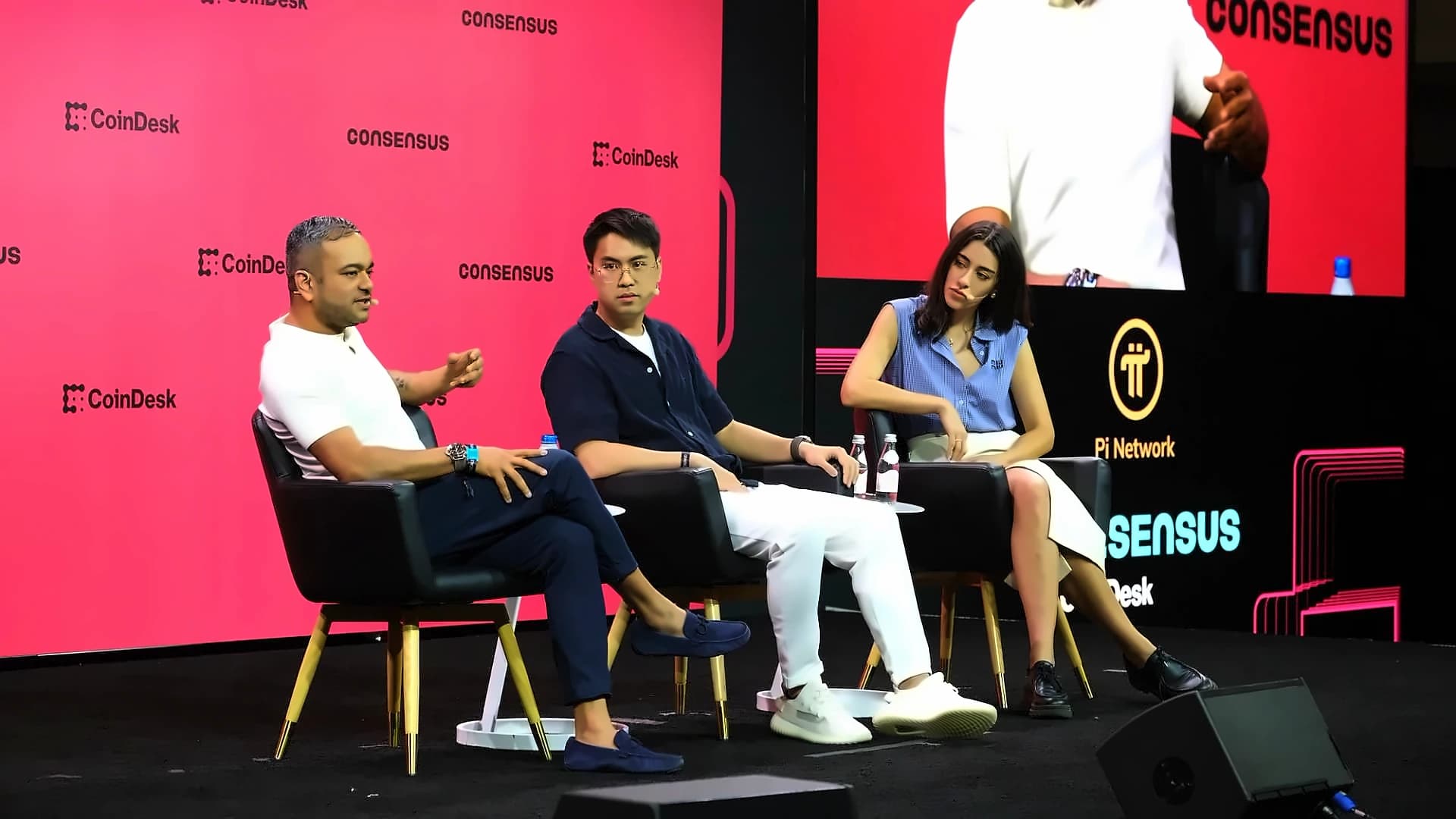
Both companies emphasized maintaining human accountability in AI agent operations. Mukherjee from Mesh stated that AI should augment human judgment rather than replace human responsibility or accountability, with responsibility for agent actions resting with the deploying institution. According to CoinDesk reports, both executives expect AI labs to launch their own wallets, with Fan noting that X Money and Grok are likely to have wallets, while Mesh remains agnostic across wallets, networks and tokens to maximize compatibility. The regulatory clarity has advanced significantly compared to previous years, with discussions around legislation such as the GENIUS Act and ongoing market structure efforts reflecting an industry increasingly focused on integration with the broader financial system rather than opposition to it. For a similar bottom to form in the derivatives market, the thesis suggests the derivatives flow must not only hold but start to climb above the current $200 million aggregate OI level, indicating renewed speculative interest and providing momentum for a decisive breakout from current consolidation patterns.