Tata Steel has commissioned a series of advanced manufacturing facilities at its Kalinganagar plant and unveiled the expansion of Neelachal Ispat Nigam Limited (NINL) in Odisha, involving a cumulative investment of around ₹9,067 crore. According to reports from Business Standard, the new facilities at Tata Steel Kalinganagar (TSK) include two continuous galvanising lines (CGLs) with a combined capacity of one million tonnes per annum (mtpa), a 0.9 mtpa continuous annealing line (CAL), Phase I of a 7 mtpa slurry pipeline project and an air separation unit set up by Linde India Limited. The investment comes amid rising demand for specialised steel products that offer improved strength, safety and performance, positioning Tata Steel to capitalize on growing automotive and appliance manufacturing requirements.
The galvanising lines will enable Tata Steel to manufacture advanced automotive steel, including coated advanced high-strength steels (AHSS), catering to the requirements of automobile and appliance manufacturers. As reported by Business Standard, the lines are equipped with advanced coating technologies designed to improve product quality, consistency and reliability. The continuous annealing line is one of the top three benchmark automotive lines globally, which will further strengthen the company's capability to supply high-quality steel grades for automotive applications. Uttam Singh, vice-president, operations, Tata Steel Kalinganagar, stated that these investments will enhance the company's ability to deliver high-quality steel products, improve operational efficiency and strengthen the raw material supply chain, with the new facilities strengthening Tata Steel's manufacturing capabilities in Odisha.
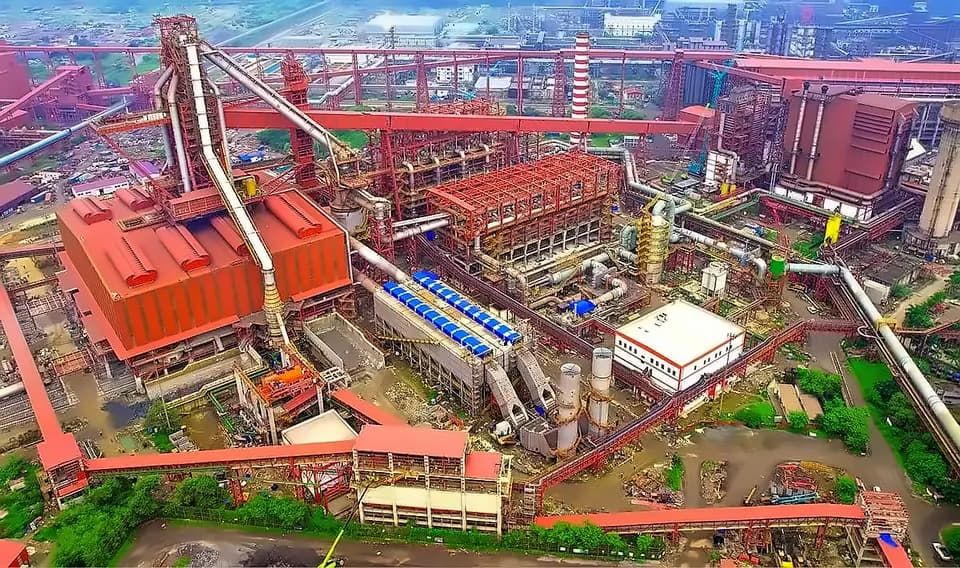
The 7 mtpa slurry pipeline will transport iron ore fines from Tata Steel's Kalamang mines to its Kalinganagar plant, with the underground pipeline expected to improve raw material supply reliability, reduce dependence on road and rail transportation, ease congestion and lower emissions associated with transportation. According to the company, Linde India's air separation unit will produce 3,600 tonnes of oxygen, 1,940 tonnes of nitrogen and 120 tonnes of argon per day through cryogenic distillation, supporting the steel plant's continuous operations with oxygen also available for medical use during emergencies. TSK is Tata Steel's second major integrated steel plant in India and its largest single-location greenfield project.
The NINL expansion project was kicked off, focusing on major modernisation and capability upgrades, incorporating key sustainability-focused upgrades including a blast furnace fume extraction system and zero effluent discharge measures. As reported by Business Standard, NINL now operates as a 100 per cent wholly owned subsidiary of Tata Steel, which has already approved a capital expenditure of ₹33,873 crore for expanding its crude steelmaking capacity by 4.8 mtpa, taking the total capacity to 6.2 mtpa in two phases. The projects will generate an additional 10,500 direct and indirect employment opportunities, with Singh noting that with continued government support, the company remains committed to advancing sustainable steelmaking, generating employment and contributing to the state's industrial growth.
Odisha Chief Minister Mohan Charan Majhi inaugurated the facilities and laid the foundation for expansion projects, marking a significant push to strengthen the country's steel manufacturing ecosystem, enhance production of high-value automotive steel and improve raw material logistics. According to Business Standard, Tata Steel's India standalone turnover for FY26 exceeded ₹1.39 trillion (up 5 per cent year-on-year), supported by the production ramp-up at the Kalinganagar plant. The projects will help Tata Steel focus on technology-led manufacturing, value-added steel products and more sustainable operations as it works towards its net-zero emissions target of 2045 across its global operations, with the company committed to advancing sustainable steelmaking and contributing to the state's industrial growth.