The CLARITY Act stalled with a 50-49 vote, falling short of the required 60-vote threshold for procedural advancement after Senate Democrats blocked the Digital Asset Market Clarity Act on Tuesday following disputes over the Trump administration's crypto interests and inadequate presidential ethics safeguards. According to reports from crypto.news, the opposition did not come simply from lawmakers hostile to the crypto industry, but from a dozen Democrats who had contributed significant input to its drafting and supported a narrower, industry-focused bill the previous year. Kyle Bligen, executive director at the Decentralization Research Center, told crypto.news that the Senate result was disappointing but did not remove the need for lasting digital asset rules, stating "Congress remains the best route to a comprehensive market structure framework." The House passed its version in July 2025 by a 294-134 vote, with 78 Democrats supporting the measure, but the Senate's Republican majority of 53 seats meant the bill needed at least seven Democratic votes to clear procedural hurdles.
Coinbase CEO Brian Armstrong has strongly distanced himself from claims by the Wall Street Journal (WSJ) that he was responsible for the CLARITY Act's failure, stating "In January, I opposed a draft of the bill going into a committee vote because it needed a lot of work on DeFi, tokenization, CFTC authority, and stablecoin rewards. At the time, the bill had major issues that would have harmed crypto." According to reports from AMBCrypto, Armstrong added that "The final draft of CLARITY that went to the Senate was great, and I strongly supported it. It's a shame that the WSJ takes direction from bank lobbyists." The CEO characterized the failed vote as a "disappointment" but suggested it could be "for the best," noting that some stablecoin yield compromises in the bill were "tough to swallow." Former CFTC Chair Chris Giancarlo and Ripple CEO Brad Garlinghouse have made similar calls, urging regulators to fill the legislative gap. Kyle Bligen from the Decentralization Research Center called on the SEC and CFTC to use their current powers to give the industry clearer guidance, cautioning against applying rules built for conventional financial middlemen directly to decentralized systems.
Despite the legislative setback, the SEC and CFTC have begun rolling out rulemakings by Thursday, demonstrating continued regulatory momentum. According to AMBCrypto, the CFTC issued no-action relief for passive software providers, effectively allowing players like self-custodial wallets such as Phantom to avoid registering as brokers to offer derivative trading. The CFTC also submitted a new crypto market structure proposal for White House review, which would allow existing and unregistered crypto platforms to get approval for leveraged trading if approved. Separately, the SEC published a 5-year tokenization exemption program, allowing crypto platforms to facilitate tokenized stock trading and exempting some firms from registering as full securities exchanges. However, ETF expert Nate Geraci views the rulemaking as a "legitimate window" for the crypto industry to build, though others believe there are still regulatory risks for investors and developers if the next regime is anti-crypto. SEC Chairman Paul Atkins has pushed forward with major policy initiatives, including Regulation Crypto Assets for raising funds on crypto offerings and a technical rule allowing blockchain data to serve as official ownership records. The CFTC, led by Chairman Mike Selig, has also submitted a crypto transactions and markets proposal for White House review, with Selig's staff working on affixing "crypto asset market" labels on firms similar to designated contract markets.
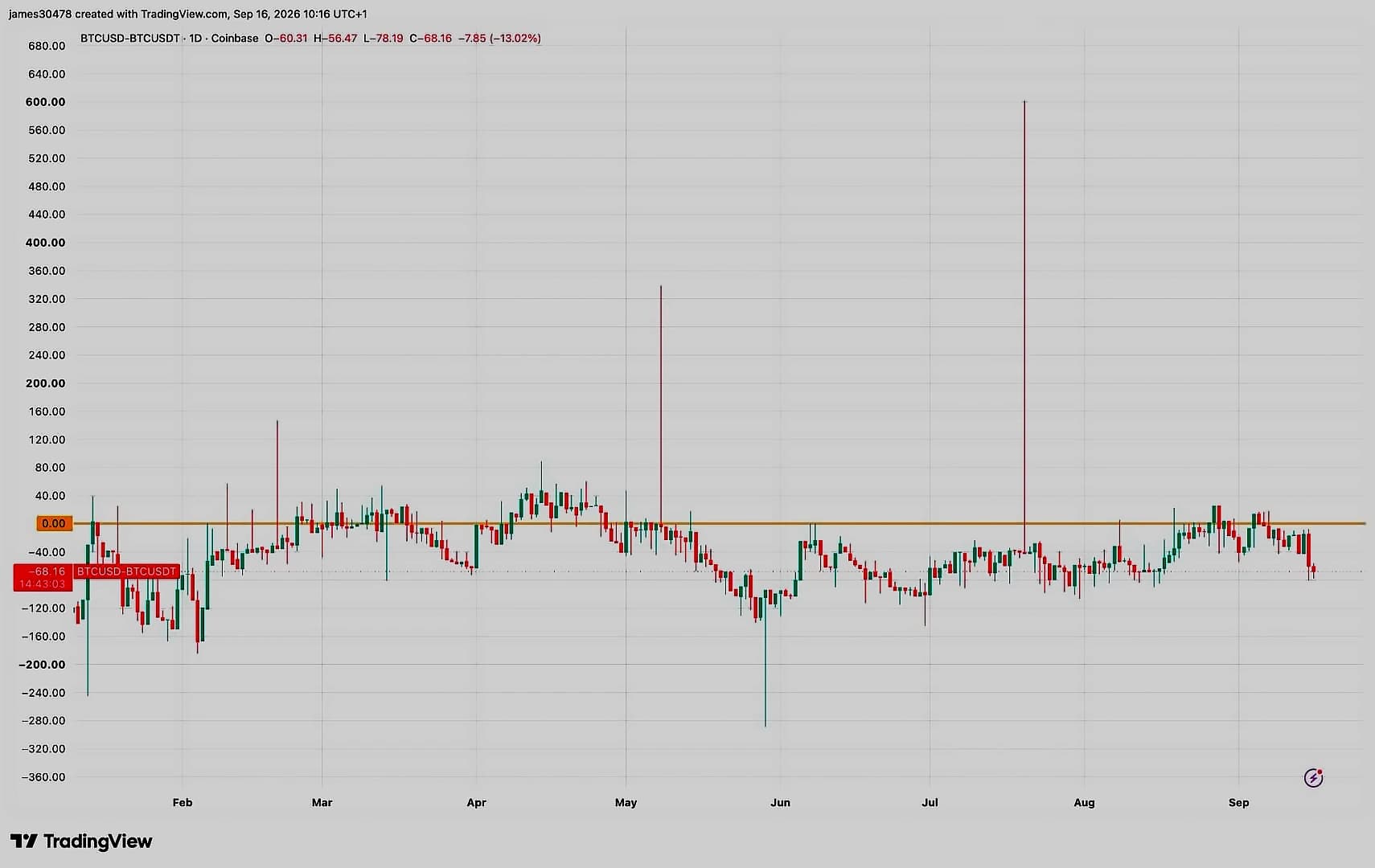
Following the failed vote, the GMCI 30 index of the 30 largest crypto assets fell 4.16%, with Bitcoin dropping to $75,038 at the time of writing, though it has since recovered to $75,825 (-1.9% over the past 24 hours). Ethereum lost 3.4%, Solana 4.1%, and XRP 8.3%, while spot bitcoin ETFs saw the largest outflows since late June with investors pulling $450.33 million from 13 U.S. funds. Fidelity's FBTC led outflows, losing $214.75 million, followed by BlackRock's IBIT ($161.69 million), Grayscale's GBTC ($44.14 million), ARK 21Shares' ARKB ($17.38 million) and Bitwise's BITB ($12.36 million). COIN and CRCL stocks dropped more than 10%, with COIN being one of the top trending tickers on Stocktwits as retail sentiment around it remained in the "bearish" zone. Matt Price, head of global partnerships at stablecoin platform WasabiCard, said the vote had left companies with the same classification and jurisdiction questions they faced before the Senate acted, stating "The failure to advance CLARITY leaves the industry with the same basic problem it had before the vote."
The CLARITY Act stalled with a 50-49 vote, falling short of the required 60-vote threshold for procedural advancement. As reported by AMBCrypto, several moderate Senate Democrats who were expected to be crucial swing votes voted against the bill. These senators include Kirsten Gillibrand (D-NY), Mark Warner (D-VA), Cory Booker (D-NJ), Raphael Warnock (D-GA), Reuben Gallego (D-AZ), Angela Alsobrooks (D-MD), and Catherine Cortez (D-NV). However, almost every Senate Republican, including Banking Chairman Tim Scott (R-SC), voted to advance the bill. The vote showed Senators Collins (R-ME), Josh Hawley (R-MO), Jerry Moran (R-KS), and Thom Tillis (R-NC) voting no, while Senator Rand Paul (R-KY) did not vote. Senator Bernie Moreno (R-OH) called the vote "a deliberate, calculated betrayal of American innovation," blaming Democrats led by Senator Elizabeth Warren (D-MA) for the cloture motion's failure. Senator John Kennedy said the measure could return during a lame-duck session after the November elections, while Senator Ted Cruz described it as "mostly dead."

The attention has now shifted to regulatory rulemaking, with Senate Banking Chair Tim Scott saying the SEC and CFTC should set clearer digital asset rules while Congress continues working on legislation. According to AMBCrypto, the ethics provision and Democrats' demand to rein in alleged Trump family corruption in the crypto sector were among the major deal breakers. However, there appears to be a last-minute shift, with reports indicating that crypto's super PAC (Fairshake) was planning to not spend on Democrats who supported the bill. Polymarket odds on the CLARITY Act being signed into law in 2026 fell to 7% from 31% a day earlier, with the probability dropping to 5% from 82% in February. NEAR general counsel Abhishek Vaidyanathan noted that companies now depend entirely on regulators' decisions and guidance, adding "Companies planning budgets for 2027 will face another delay. This forces them back to case-by-case assessments and endless legal work." H.R. 3633 remains on the Senate calendar, and Tillis' procedural vote permits another cloture attempt, though a shortened House calendar has reduced the number of voting days available before lawmakers leave Washington. SEC Chairman Paul Atkins has repeatedly emphasized that "Legislation remains indispensable to enacting 'future-proofed' rules of the road that are durable enough to protect the work we are undertaking today from being unwound by a future rogue regulator," while acknowledging that his agency can serve as an important ally to legislative work.