The U.S. Senate failed to advance the CLARITY Act on Tuesday, dealing a significant blow to the cryptocurrency industry's regulatory hopes. According to reports from Reuters, the vote was a disappointment for industry executives who had been pushing for comprehensive crypto legislation. Coinbase CEO Brian Armstrong acknowledged the setback in a social media post, stating that the CLARITY Act didn't advance and expressing disappointment with the outcome. The failure comes as Bitcoin fell more than 5% as the vote appeared on track to fail, marking its biggest daily percentage decline since June. Shares of crypto exchange Coinbase and stablecoin issuer Circle fell as much as 10% following the legislative setback. However, industry experts like Ajeet Khurana, Founder of Reflexical, told NDTV Profit that the CLARITY Act's failure was not a major setback, noting it had failed to pass several times in the past. The setback also sharply reduced expectations of the bill passing in 2026, with odds falling from 75% to 10%.
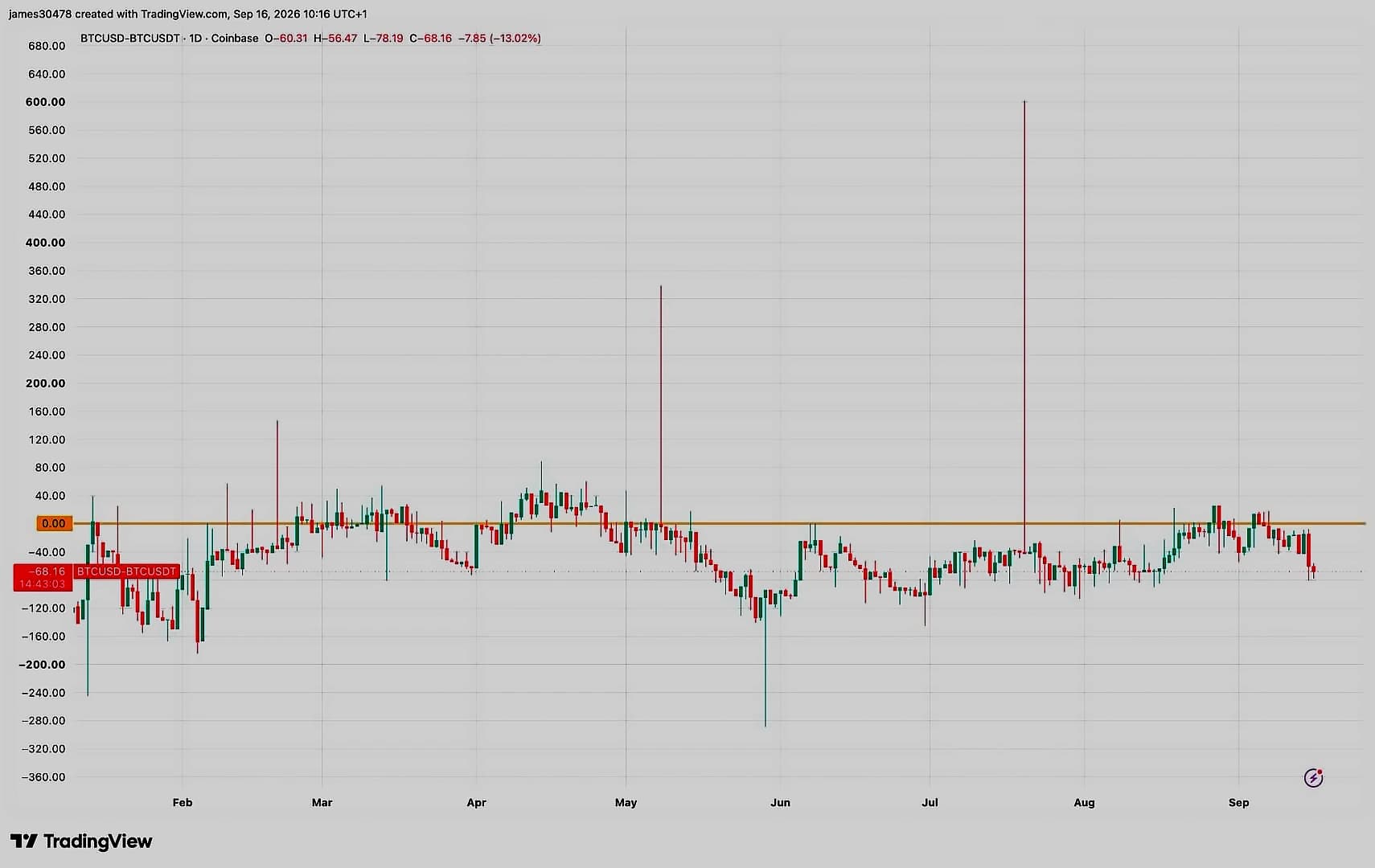
Bitcoin's Coinbase premium has declined to its lowest level in one month, with the discount widening to approximately $50 as the cryptocurrency retreated towards $75,000. According to reports from CryptoQuant, the Coinbase Premium Index reading of around -0.07% on Tuesday represents a significant deterioration from the previous day's level of roughly -0.02%. This premium measures the difference between bitcoin's dollar price on Coinbase and its USDT price on Binance, with negative readings indicating discounted pricing on the U.S. exchange.
Despite the CLARITY Act setback, crypto stocks also reflected the impact of expected interest rate hikes by the US Federal Reserve, as noted by NDTV Profit expert Ajeet Khurana. He explained that while stock markets are sensitive to interest rate movements, crypto tends to be even more sensitive because of its smaller market size compared with equities. The upcoming interest rate hike creates additional pressure on crypto markets, with traders now watching if Senate brings the bill back before elections. One senator warned Congress may not try this again until 2030, while experts say a final CFTC rule may not apply before late 2027.
Since Congress failed to advance the CLARITY Act, the Commodity Futures Trading Commission (CFTC) has decided to write its own crypto rules, sending draft regulations to the White House on September 17. The proposal is still at an early stage and is not yet a final, binding rule, with the White House review expected to take 90-120 days. The CFTC rules would allow direct oversight of crypto trading exchanges, while the Securities and Exchange Commission (SEC) has given some platforms up to five years to trade stock-like crypto tokens. Without proper legislation, crypto rules can change with every new government, making it riskier for big companies to build crypto businesses long-term.
Despite current weakness, U.S. spot Bitcoin ETFs pulled in $159.9 million to start the week on September 14, representing a strong start as markets move through the month. The weekly chart shows Bitcoin has topped near $126,000 in mid-2025 and trended lower since, with the weekly close reading $63,078, down 2.74% and $1,780. Support sits at $72,000, then $68,000 and $66,000, while resistance appears at $80,000, then $82,000 and $87,000. The RSI reads 39.06 with its signal line just above at 39.32, sitting well below the midline and near oversold conditions, though momentum is weak with the decline losing force. Bitcoin trades for $76,850, down 1.2% over the past 24 hours, following a 2.2% drop over the last seven days, with daily trading volume at $31.9 billion.