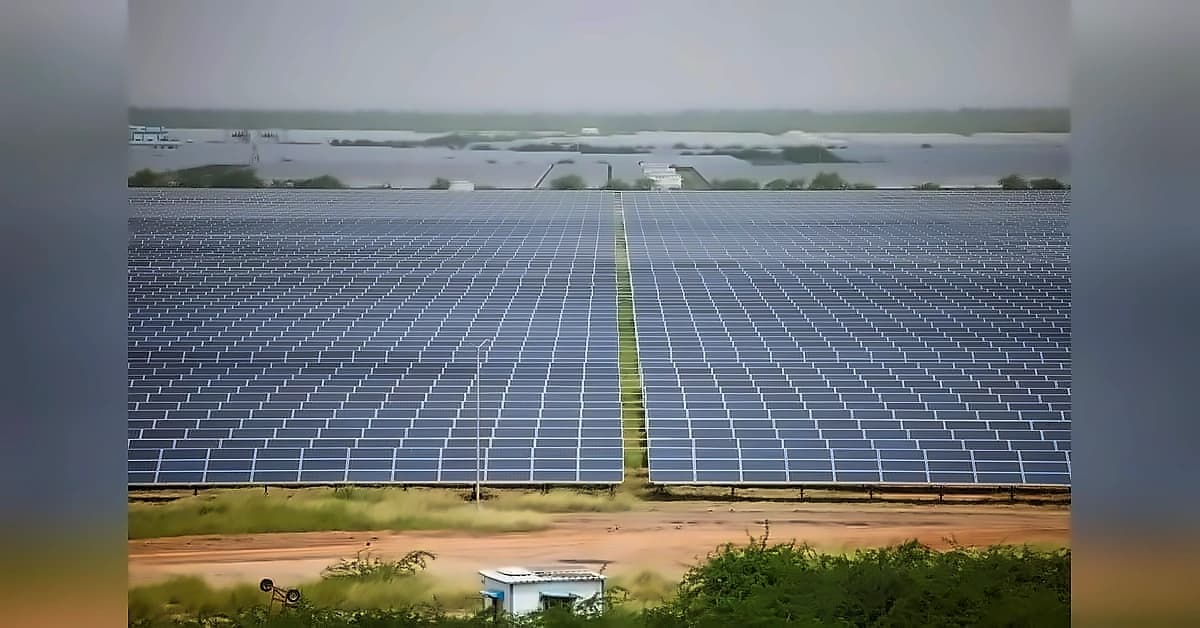
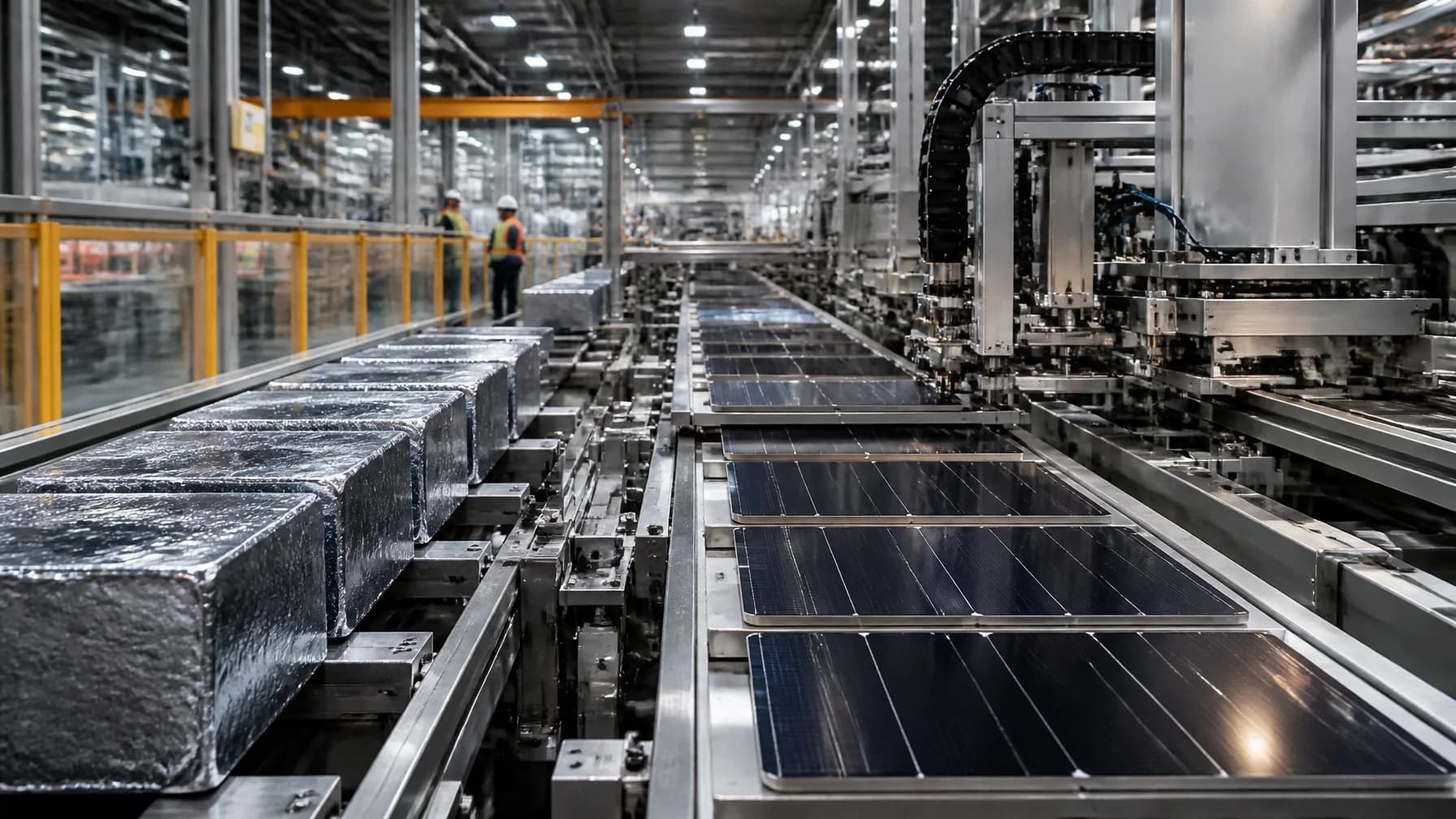
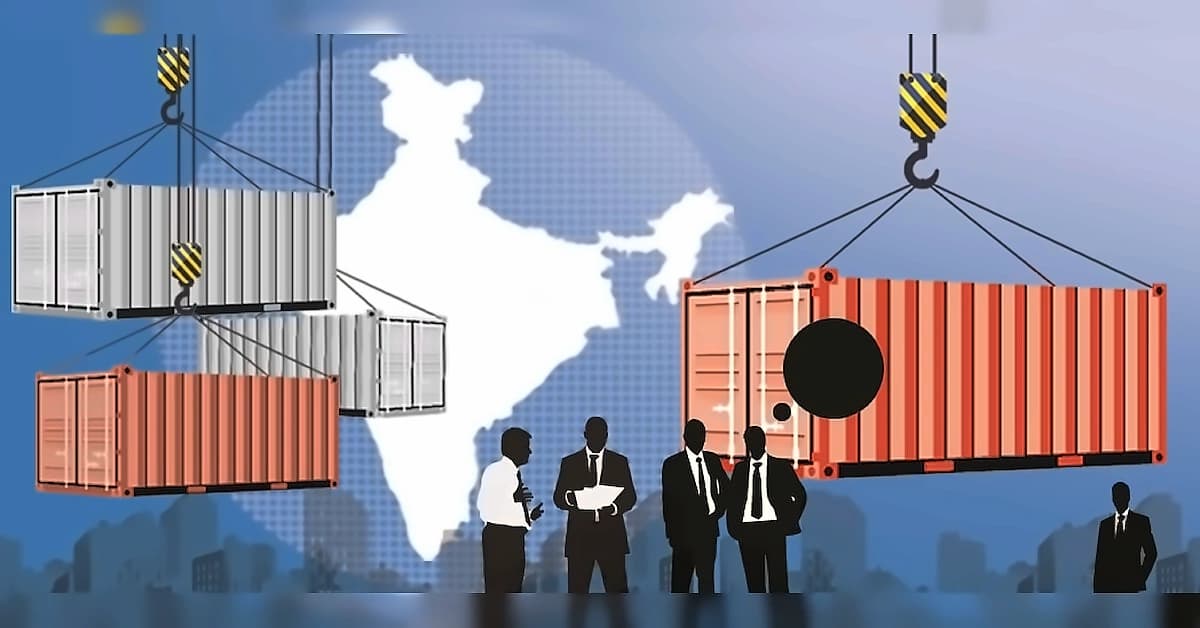
The Uyghur Forced Labor Prevention Act effectively barred Chinese modules, while anti-dumping and countervailing duty circumvention investigations targeted Southeast Asian assemblers. Indian manufacturers, offering modules 19-21% cheaper than US-made panels and perceived as ethically sourced alternatives, captured nearly 95% of India's solar exports destined for American shores.
This growth trajectory now faces a structural break. The Trump administration's August 6 proclamation establishes a four-tier minimum import price regime: $21/kg for polysilicon, $100/kg for ingots and wafers, $0.22/W for cells, and $0.38/W for modules, alongside a 15% additional ad valorem duty on downstream products. These measures take effect December 4, 2026.
Margin Compression Under the Weight of Tariffs
The cumulative duty burden creates an insurmountable commercial barrier. Indian exporters already face preliminary countervailing duties of 125.87% and antidumping margins of 123.04%, totaling approximately 234% before Section 232 measures. Adding the 15% Section 232 tariff, Section 122 surcharge, and reciprocal tariffs brings total exposure to roughly 292%.
Historically, US exports offered margins 40-60% higher than domestic sales, with pre-tariff export prices around INR 25,000/kWp versus domestic INR 15,000/kWp. Tariff escalation from 14% pre-2025 to 50% by August 2025, then 126% in February 2026, already caused module prices to double from INR 25,000 to INR 49,500/kWp. The new measures will likely push effective costs beyond $0.70/W against US-made modules at $0.31/W.
The price floors present an even steeper challenge. Indian non-DCR modules at approximately $0.14/W would need to increase 171% to reach the $0.38/W module floor. The polysilicon floor of $21/kg stands 76.7-77.3% above current Chinese spot prices of $4.76-4.88/kg. These gaps are not marginal adjustments but attempts to establish a protected US price curve materially detached from Asian levels.
The Compliance Cost Burden
Beyond tariffs, the minimum import price program imposes unprecedented documentation requirements. Importers must submit documentation showing first arm's-length transaction prices meet prescribed thresholds or demonstrate fixed-term contracts signed before August 6, 2026. This requires complete transaction chain documentation: manufacturer invoices, middleman invoices, purchase orders at each level, payment records, and evidence of title transfer.
CBP has significantly expanded data requests, asking for detailed supplier records including purchase orders, payment records, manufacturing records, transportation records, product specs, and photos. If records cannot be provided to prove valuation accuracy, CBP quickly moves to apply duties on the full product value. Materially false documentation could result in permanent import bans.
For mid-sized Indian exporters, incremental compliance costs likely range from $200,000 to $500,000 annually in direct costs, plus $500,000 to $2 million in one-time technology and infrastructure investments. The working capital impact is equally severe—importers must post cash deposits of approximately 234% pending final determinations.
The September 9 ITC Hearing: A Critical Juncture
The September 9, 2026, final-phase hearing by the US International Trade Commission on antidumping and countervailing duties represents a critical milestone. Final Commerce determinations for India and Indonesia are scheduled for July 13, 2026, with Laos following around September 9. The ITC's final determination is scheduled for October 19.
This timeline extends uncertainty, forcing Indian exporters to continue posting 234% cash deposits while making strategic decisions about market participation. The hearing may establish precedents for future enforcement, with critical circumstances findings already allowing retroactive duties up to 90 days before announcement for certain Indonesian exporters and Mundra Solar from India.
Strategic Crossroads: Invest or Exit
The Commerce Secretary's authority to offer company-specific tariff benefits for US manufacturing investments creates a two-tier market structure. Approved companies may import specified equipment and products without paying Section 232 duties, with benefits linked to investment size and progress. However, companies must begin construction by January 20, 2029, to qualify.
This creates a fundamental competitive disadvantage for Indian exporters. US manufacturing investments require substantial capital—T1 Energy's 2.1 GW cell facility in Texas costs $400 million, while integrated facilities like Qcells' represent billions in investment. The January 2029 deadline creates compressed timelines for investment decisions, site selection, permitting, and construction.
Indian companies face three strategic paths: invest heavily in US manufacturing to qualify for tariff relief, permanently exit the US market, or attempt to maintain limited presence through contract manufacturing or joint ventures. Each carries significant risks and requires substantial capital commitment.
The December 4 Implementation Surge
The December 4, 2026, implementation date will create distinct shipment patterns through the remainder of 2026. August-October may see a 20-30% increase in shipment volumes as Indian exporters attempt to maximize pre-tariff exports, focusing on fulfilling existing contracts with fixed terms signed before August 6.
November will likely see acceleration followed by sharp decline as the deadline approaches and enforcement risk increases. Post-implementation, shipments could drop 80-90% compared to pre-tariff levels as the market becomes commercially unviable. However, CBP will monitor abnormal stockpiling and may restrict subsequent imports where companies accelerated shipments or built excessive inventories.
Market Diversification as Survival Strategy
The forced redirection of capacity from the US market will trigger several feedback loops. The EU-India Free Trade Agreement, concluded in January 2026 and covering 99% of India's export trade, offers potential relief. Europe seeks to reduce dependence on Chinese supply chains, which account for 98% of EU solar panel imports. However, European buyers demand high efficiency, bankability, and long-term reliability—factors where Indian manufacturers remain largely invisible and must invest heavily in marketing and positioning.
Middle Eastern markets, particularly the UAE with large-scale projects like the Mohammed bin Rashid Al Maktoum Solar Park, present opportunities. African markets, where Indian companies already account for about 20% of pharmaceutical exports, offer growth potential as part of India's "Global South" pivot.
Domestic market focus provides another buffer. India's target of 500 GW non-fossil fuel capacity by 2030, combined with the Approved List of Models and Manufacturers requiring domestic sourcing from April 1, 2026, creates guaranteed domestic demand. Enforcing Renewable Purchase Obligations for heavy industry could create demand for 10 GW of solar PV capacity.
The Path Forward
The Section 232 measures represent not just tariff increases but a fundamental restructuring of US solar trade protection from country-specific actions into a price-management system spanning the value chain. The central constraint is not the nominal 15% rate alone, but the combined barrier created by minimum import prices, additional duties, existing trade remedies, and strict certification and enforcement.
For Indian solar exporters, the medium-term outlook points toward progressive erosion of US market competitiveness. The most successful companies will likely be those that either make strategic US manufacturing investments to qualify for tariff relief or successfully pivot to alternative markets while leveraging cost advantages and technology capabilities. The January 2029 deadline creates urgency for these decisions—delay risks permanent exclusion from the US market or significantly higher costs to establish competitive positioning later.
The sun isn't setting on India's solar ambitions, but the path forward requires strategic reinvention. The tariff turbulence may ultimately accelerate India's emergence as a more diversified, vertically integrated global solar manufacturing powerhouse—but only if companies navigate this transition with strategic clarity and decisive action.