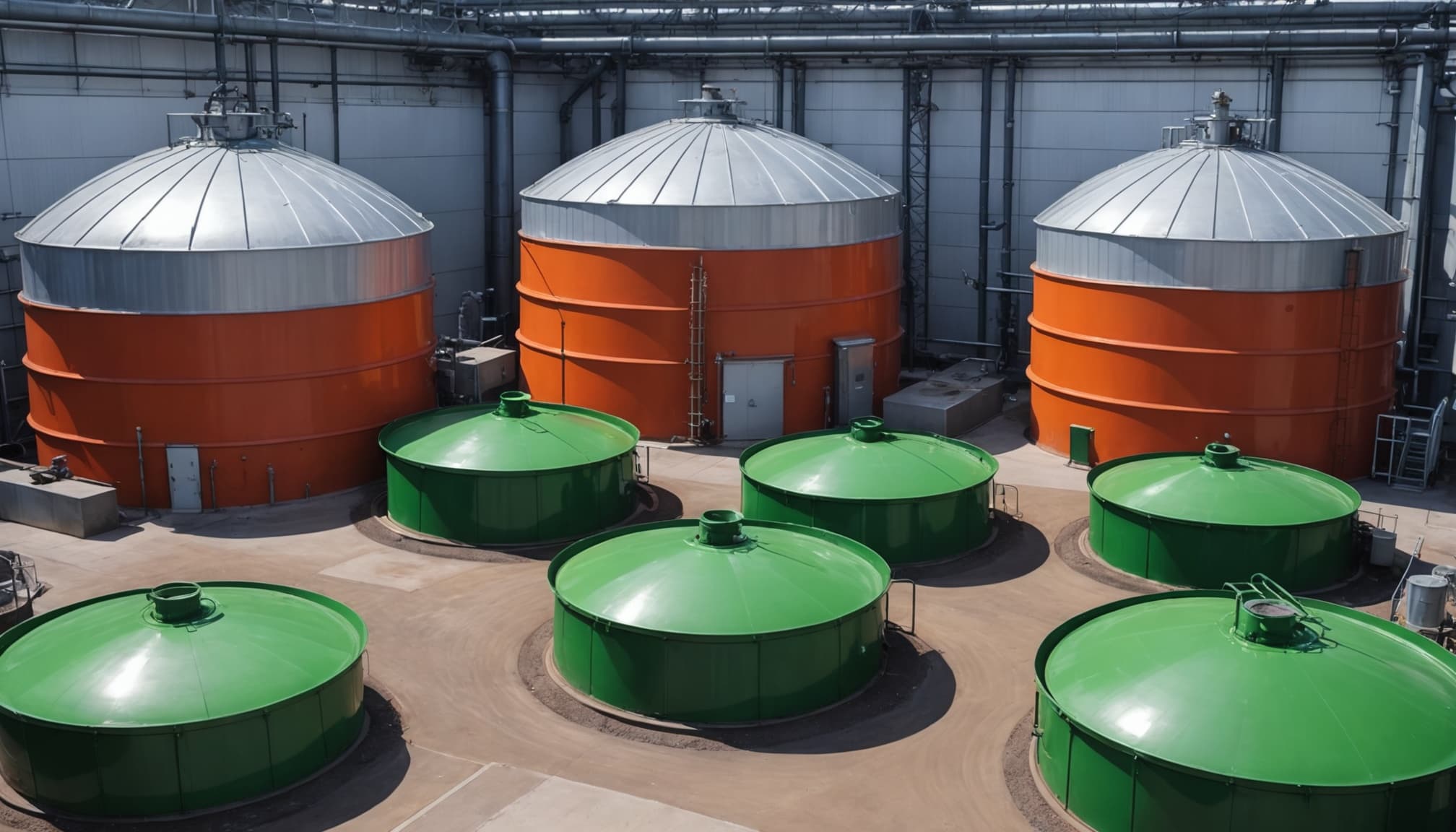
Reliance Industries is doing what it does best: building massive infrastructure before the rest of the market has even woken up. The company has committed about ₹15,000 crore to set up nearly 100 compressed biogas (CBG) plants across India by 2030. This comes on top of earlier announcements, including a ₹65,000 crore plan for 500 plants in Andhra Pradesh and a separate ₹1 lakh crore commitment to the state announced by Executive Director Anant Ambani. While the exact relationship between these figures isn't entirely clear, the aggregate exposure to bioenergy is substantial, likely running into several lakh crores over the next decade.
Why build when the industry is still in diapers? India's CBG sector is struggling. Out of 1,929 plants registered on government portals, only 217 are actually commissioned. The gap between intent and execution is massive. But Reliance sees an opportunity in this mess. The government is pushing hard to increase natural gas's share in India's energy mix from about 6.2% to 15% by 2030. To get there, it needs domestic alternatives to expensive imported LNG. Reliance is positioning itself to be that alternative, banking on policy support like the SATAT initiative and the new GOBARdhan scheme to eventually make the economics work.
First-Mover Advantages
Reliance isn't starting from scratch. It already has 45 plants across 10 states, churning out roughly 350 tonnes of biogas daily. This operational base gives it a significant edge. While competitors are still navigating regulatory hurdles, Reliance is already on the ground, figuring out the messy realities of sourcing agricultural residue and dealing with farmers.
The company claims to have engaged over 80,000 farmers, turning them from "Anna Datas" (food providers) into "Urja Datas" (energy providers). This isn't just corporate jargon; it's about securing the supply chain. Agricultural residue is seasonal and scattered. Paddy straw arrives in a rush over a few weeks, but biogas plants need feedstock all year round. By building relationships early, Reliance hopes to lock in the raw material it needs to keep its plants humming.
On the customer side, Reliance is leveraging its existing muscle. It sells gas to city gas distribution companies and supplies fuel to its own Jio-bp retail network, which already has over 100 outlets dispensing CBG. This vertical integration helps secure offtake, a major headache for smaller players who struggle to find buyers for their gas. Annual Report
The Capital Conundrum
Building first is expensive. A standard CBG plant can cost around ₹150 crore, and Reliance's plans involve hundreds of them. The company is betting that its deep pockets and access to cheap capital will allow it to outlast smaller competitors who might fold under the pressure of low utilisation rates.
Currently, Reliance's plants are running below capacity. The company plans to add 10 more plants by March 2027 to boost output to about 1,100 tonnes per day, but getting there is the challenge. Low utilisation is a profit killer. Industry models show that at full capacity, plants are profitable. At 50% utilisation, they barely break even, and at 25%, they bleed money. The key driver of return on capital employed (ROCE) is simply getting these plants to run at the level they were designed for.
The new GOBARdhan scheme offers some relief. It provides capital assistance of up to ₹2 crore per tonne per day of installed capacity. For a large plant, this could cover a significant chunk of the upfront cost, effectively subsidising Reliance's expansion. The scheme also introduces a stable administered price of ₹2,110 per MMBTU (roughly ₹105 per kg) for ten years. This price certainty is a big deal for lenders, making it easier to finance these capital-intensive projects.
The Feedstock Trap
Despite the advantages, the fundamental constraint remains feedstock. Engaging 80,000 farmers doesn't guarantee a steady supply of straw or dung. Biomass is bulky, perishable, and expensive to move. Transporting paddy straw can cost anywhere from ₹2,800 to ₹3,600 per tonne, depending on the state. Storage is another headache. Keeping thousands of tonnes of straw dry through the monsoon requires land, labour, and tarpaulins—all of which cost money.
Moisture management is critical too. Wet feedstock yields less gas, so pre-processing equipment like shredders and dryers can eat up 15-25% of a plant's capital budget. These operational costs add up, squeezing margins. To justify the capital intensity, Reliance needs to achieve high utilisation rates and keep logistics costs in check. This likely means building plants close to feedstock sources and investing in aggregation infrastructure like balers and storage depots.
The manure byproduct adds another layer of complexity. CBG plants produce fermented organic manure (FOM), which can be a valuable second revenue stream. However, market prices for manure are volatile, ranging from ₹0.50 to ₹4.50 per kg. The government offers a Market Development Assistance (MDA) subsidy of ₹1,500 per tonne, but this scheme was set to conclude in 2026, and its future is uncertain. If Reliance can't secure remunerative prices for manure, it loses a key buffer against gas price fluctuations.
Policy Support and Its Limits
Government policy is the wind beneath Reliance's wings. The GOBARdhan scheme doesn't just offer money; it creates demand. City gas distribution companies are now mandated to blend CBG into their supply—3% in FY27, rising to 5% from FY29. This强制 procurement ensures a baseline demand for Reliance's gas. The administered price mechanism further de-risks the business by guaranteeing a minimum return for a decade.
However, policy has its limits. The SATAT initiative offers long-term offtake agreements with public sector oil companies like IndianOil and BPCL. These agreements are great for revenue visibility, but they don't solve the physical problems of feedstock aggregation or pipeline connectivity. Many plants struggle to connect to the gas grid and are forced to truck their output in expensive cylinders. The SATAT scheme has also missed its own targets wildly, aiming for 5,000 plants by 2023-24 but commissioning only a fraction of that number.
Financing is easier for Reliance than for most. The Reserve Bank of India has classified CBG projects under priority sector lending, and banks like SBI have dedicated loan products. But Reliance, with its massive balance sheet and net debt-to-EBITDA ratio of around 0.47x, doesn't really need these schemes. It funds its expansion largely through internal cash flows. The real benefit of these policies for Reliance is the signal they send—that the government is committed to this sector for the long haul. Investor Presentation
Fitting into the Green Energy Puzzle
CBG is just one piece of Reliance's colossal new-energy strategy. The company is building the Dhirubhai Ambani Green Energy Giga Complex in Jamnagar, a 5,000-acre integrated facility that will manufacture solar modules, batteries, electrolysers for green hydrogen, and more. The goal is Net Carbon Zero by 2035, supported by 100 GW of renewable energy capacity by 2030. Annual Report +1
Functionally, CBG differs from the other pillars of this strategy. Solar and batteries provide electrons—electricity that can power the grid or be stored. Green hydrogen is a molecule that can decarbonise heavy industry and be exported. CBG, on the other hand, is a drop-in replacement for natural gas. It's dispatchable and can use existing gas infrastructure, making it a practical solution for transport and city gas right now.
Reliance is leveraging its core strengths—building big industrial facilities, managing complex supply chains, and distributing energy—to create synergies across this portfolio. The engineering expertise used to build refineries is now being applied to biogas digesters and solar gigafactories. The retail network that sells petrol and diesel is evolving to sell CBG and charge electric vehicles.
The Geopolitical Angle
The recent geopolitical turmoil in the Middle East has underscored the strategic importance of domestic energy. In March 2026, Iranian attacks on Qatar's energy infrastructure disrupted shipments through the Strait of Hormuz, a chokepoint for 41% of India's LNG imports. The disruption forced supply cuts of up to 40% for city gas companies and sent spot LNG prices soaring above $20 per MMBTU.
This vulnerability makes Reliance's CBG bet look smarter. Domestically produced gas isn't subject to shipping route risks or volatile global prices. While CBG can't replace LNG at the scale needed by India's power and industrial sectors, it can reduce import dependence at the margins, supplying fuel to city gas networks and transport users.
As the largest CBG producer, accounting for over 30% of India's production and supplying fuel to 40,000 vehicles daily, Reliance has significant heft. However, its bargaining power with city gas distributors is limited by the administered pricing mechanism. The government sets the price, not the market. Reliance's real influence lies with policymakers. As a key player capable of actually delivering on the government's ambitious targets, Reliance is well-positioned to shape the regulatory environment in its favour.
The Verdict
Reliance's CBG strategy is a high-stakes gamble on the future of India's energy mix. The company is building capacity in a market that isn't fully ready, relying on policy support and its own operational prowess to bridge the gap. The risks are real—feedstock shortages, low utilisation, and policy changes could all derail the plans. But if Reliance can pull it off, it will own a critical piece of India's energy infrastructure, reaping the rewards as the market matures. For now, it's a classic case of building before the boom, hoping the crowd eventually shows up.