Market Moves: Sensex, Nifty, and the Crude Connection
The Sensex closed at 82,532.19, up 0.52%, while the Nifty 50 settled at 25,387.40, gaining 0.38%. The broader market sentiment was positive, but the real story lies in what was happening beneath the surface—crude oil prices were slipping.
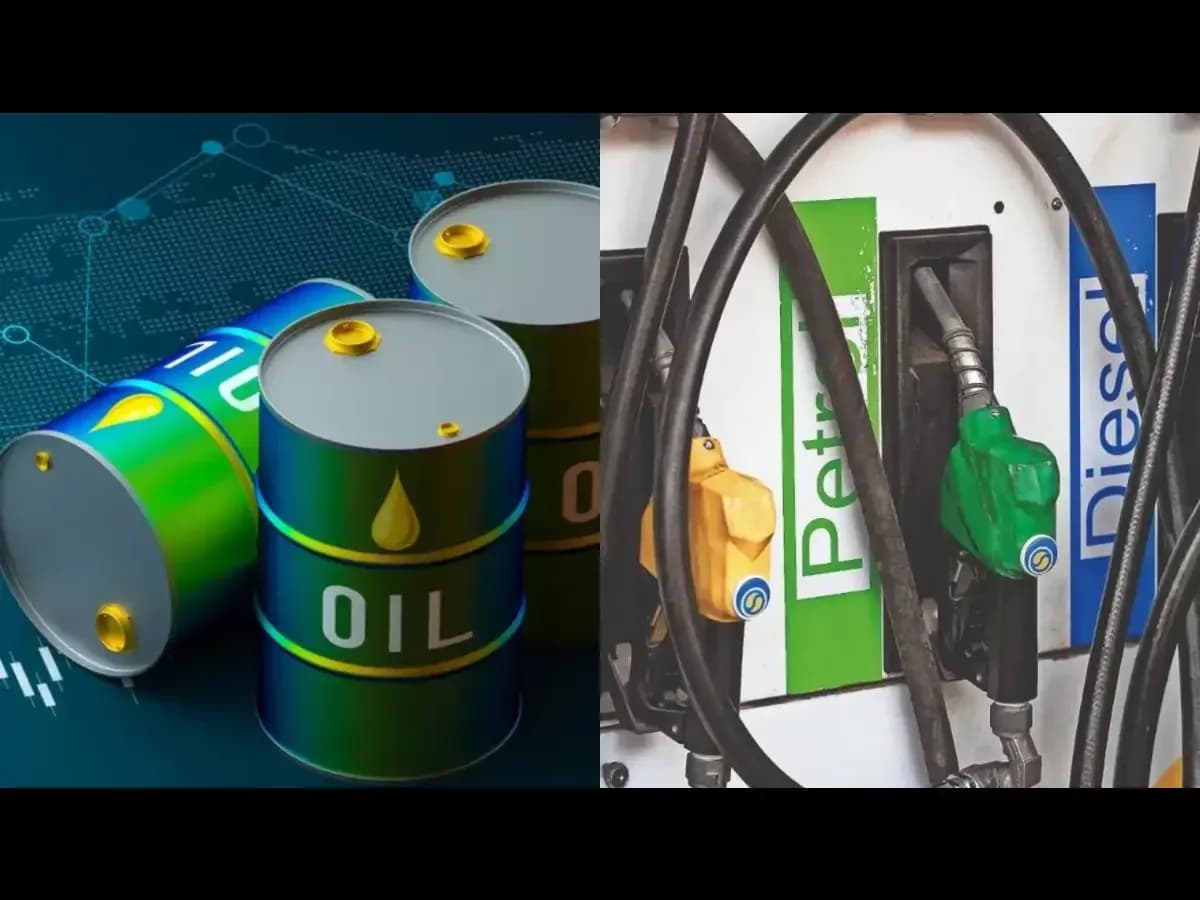
Recent MCX reports show crude falling more than 3% in a session, driven by diplomatic initiatives involving Iran and Qatar that raised hopes of resolving the US-Israel conflict. This eased fears of prolonged supply disruptions, with Brent crude retreating towards $110 per barrel and WTI to around $100.60. OPEC+ also reaffirmed its December production targets, postponing additional policy changes until next year.
Here is the thing: India imports most of its crude. When oil prices fall, it generally helps the trade deficit, reduces inflation, and lowers input costs for companies that use petroleum products. This creates a supportive environment for Indian equities. However, the data does not explicitly prove that crude caused the index rally. A common driver—easing geopolitical risk—likely lifted both sentiment in equities and pulled down crude prices simultaneously.
Oil-Sensitive Stocks: Winners and Losers
The impact of falling crude was clearly visible across specific sectors. Companies that use crude derivatives as inputs saw their costs drop, while producers faced lower realizations.
Paint stocks led the gainers. Asian Paints rose 2.03%, Berger Paints climbed 1.83%, and Kansai Nerolac Paints gained 1.56%. These companies use petrochemicals extensively, so cheaper crude directly improves their margins.
Aviation stocks also benefited. InterGlobe Aviation, which operates IndiGo, advanced 1.21%. Aviation turbine fuel is a major cost for airlines, and lower prices provide relief to their bottom lines.
Among oil marketing companies, Indian Oil gained 1.06%, HPCL added 0.67%, and BPCL moved up 0.16%. These companies refine crude and sell fuel. Lower crude can improve their marketing margins, though the relationship is not always straightforward due to government policies.
The upstream producers, however, felt the pain. ONGC fell 1.53%, and Oil India declined 1.79%. These companies produce crude oil, so lower prices directly reduce their revenue per barrel.
Gold and Silver: Precious Metals Under Pressure
Gold and silver prices steadied on November 17 after recent declines, but they remain under pressure. MCX gold was trading around ₹134,797 per 10 grams, up 0.19%, while MCX silver was at about ₹169,483 per kg, gaining 0.97%.
Despite the modest gains, both metals are hovering near one-year lows. Gold is down about 4.1% over the week, and silver has shed roughly 7%. Over the past month, silver has fallen nearly 19.7%.
The primary driver is macroeconomic, not a loss of faith in precious metals. Analysts point to a stronger US dollar, elevated Treasury yields, and expectations of further Federal Reserve tightening. Markets are pricing in a 96% probability of a 25 basis point rate hike in December. Higher interest rates increase the opportunity cost of holding non-yielding assets like gold.
Silver is more volatile than gold because it has an industrial demand component. It tends to fall harder during sell-offs and bounce back more sharply during recoveries. Speculative positioning is also weak, with silver's net speculative longs at a one-month low.
The impact on producers is mixed. Lower metal prices squeeze margins unless costs fall too. Hindustan Zinc, which produces silver as a by-product, was nearly flat at ₹550. Gold-linked lenders like Muthoot Finance and Manappuram Finance declined 1.01% and 2.37%, respectively, reflecting weaker sentiment. Titan, a jewellery retailer, was essentially unchanged.
Indian Oil's Green Aviation Bet
State-owned Indian Oil Corporation secured government approval on November 17 to commercially supply sustainable aviation fuel (SAF) from its Panipat refinery. Chairman A S Sahney announced the approval at an industry event, stating that the facility can produce enough fuel to meet India's 1% SAF blending target for international flights in 2027.
The Panipat refinery, with a crude processing capacity of about 301,000 barrels per day, received India's first International Sustainability and Carbon Certification (ISCC) CORSIA certification for SAF production in 2025. The company plans to produce around 35,000 tonnes of SAF annually using used cooking oil sourced from large hotel and restaurant chains.
India's blending targets are progressive: 1% for international flights starting in 2027, rising to 2% in 2028, and 5% by 2030, in line with the International Civil Aviation Organization's CORSIA scheme. Indian Oil has signed a Memorandum of Understanding with Air India for SAF supplies, though it sets no volumes or start date.
The company is also investing ₹1,064 crore in a joint venture for a HEFA-based SAF project at Paradip. Additionally, it is developing an alcohol-to-jet facility with US-based LanzaJet, using ethanol as feedstock, with a planned annual capacity of 86,800 tonnes targeted for completion by March 2028.
From a capital allocation perspective, the SAF investment is relatively small compared to Indian Oil's overall capex plan. The company has a FY27 capex target of ₹32,700 crore, having spent ₹12,162 crore in the first half. The much larger ongoing project is the Panipat refinery expansion from 15 to 25 million tonnes per annum, approved at about ₹38,231 crore and 95% physically complete, with completion expected in December 2026. Transcript +3
Windfall Tax Hike: The Export Squeeze
On the same day that Indian Oil received its SAF approval, the government raised the windfall tax on fuel exports. The Special Additional Excise Duty (SAED) on diesel exports increased to ₹14 per litre from ₹11.50, and the duty on aviation turbine fuel (ATF) exports rose to ₹12.50 per litre from ₹11. The export duty on petrol remains nil.
This is the second sharp increase in a row. Diesel has risen from ₹8.50 to ₹11.50 on October 31 and now to ₹14. ATF has climbed from ₹10.50 to ₹11 and now to ₹12.50 over the same period. The tax is reviewed roughly every fortnight and tracks international crude prices and refining margins.
The mechanism is straightforward. The levy is charged per litre on export clearances, effectively lowering the realized export price. Refiners cannot pass this cost to overseas buyers because export prices are set by global benchmarks. This reduces their net refining margins on exports.
Indian Oil reported Q1 FY27 refining margins (GRM) of $15.59 per barrel net of the windfall tax. Management indicated that the gross figure would be about $36 with the tax added back. The impact peaked at about $10 per barrel during the war period and fell to $2–3 per barrel in July. Transcript +2
Management has stated that it does not expect a major sustained exportable surplus of diesel or petrol. Exports are seasonal and limited. Consequently, the windfall tax affects Indian Oil mainly through reported refining margins rather than forcing a major shift in market allocation. Transcript
Conflicting Incentives or Strategic Balance?
The dual developments—SAF approval and windfall tax increase—raise questions about potential conflicts in investment allocation. However, the evidence suggests the conflict is weak.
The SAF investment is small relative to the overall capex budget. The windfall tax affects near-term margins but does not require new capital. Moreover, Indian Oil has limited room to optimize exports because management does not foresee a large exportable surplus. The company's strategy is to secure firm supply agreements with airlines before committing additional capital to SAF projects.
The real tension lies in time horizons. The windfall tax can change every two weeks, while SAF economics play out over years. Management is hedging this risk by tying new investments to confirmed airline offtake contracts.
Looking ahead, investors should watch the fortnightly levy notifications, any airline offtake agreements for SAF, and whether management resumes publishing GRM figures. The interplay between crude prices, government policy, and corporate strategy will continue to shape the landscape for India's energy sector.