China's October 2025 export controls on lithium battery technology have fundamentally altered Reliance Industries' battery manufacturing ambitions. The new regulations require State Council permits for exporting lithium-ion batteries with energy density ≥300 Wh/kg, LFP cathode materials with compacted density ≥2.5 g/cm³, and associated manufacturing equipment. These controls specifically target the high-performance battery chemistries that Reliance sought for its Jamnagar facility.
The talks, which would have allowed Reliance to manufacture cells domestically using CATL's proprietary technology, ultimately failed without an agreement. This collapse reveals the immense strategic value of proprietary battery technology—CATL's energy storage gross margin of 26.71% is sustainable only with technology leadership and scale advantages that the company is unwilling to transfer without regulatory approval.
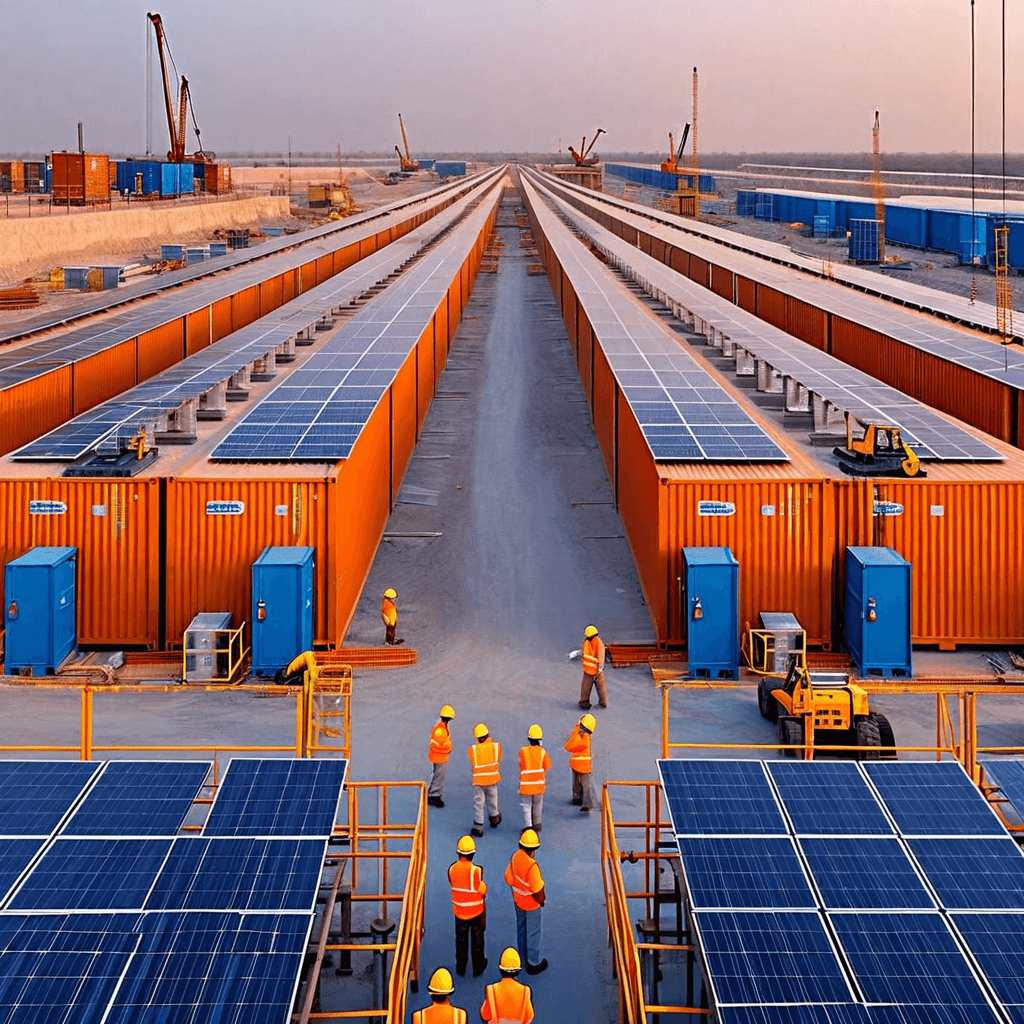
The inability to secure deep technology access has forced Reliance to pivot from cell manufacturing to battery system packaging at Jamnagar. Instead of producing cells domestically, the company now focuses on assembling Battery Energy Storage Systems (BESS) using imported pre-made cells. This strategic shift represents a significant departure from its original vision of complete vertical integration.
Cost Implications of Dual-Sourcing Strategy
Establishing CATL as a second major battery component source alongside Xiamen Hithium presents both opportunities and challenges. CATL's scale advantages are substantial—the company targets $56.47/kWh for VDA-spec LFP cells, compared to the global average of $99/kWh for battery packs. This cost differential could reduce Reliance's component procurement costs by 30-40% compared to non-Chinese alternatives.
However, dual-sourcing introduces complexity. Reliance must manage relationships with two Chinese suppliers while navigating China's export licensing process, which requires detailed documentation including business scope, sales data, employee details, key customers, trade history, and end-user certificates. The approval timeline typically spans 2-3 months, with case-by-case decisions that have historically shown differential treatment—some Indian and US applications were denied while South Korean approvals proceeded quickly.
The working capital implications are significant. Importing finished components requires higher upfront capital compared to in-house manufacturing. Reliance's traditional strength lies in negative working capital management, with current ratios around 0.58 and inventory turnover of 4.57 times annually. However, battery imports from China will increase inventory holding periods and extend payment cycles, potentially straining this efficient model.
Capital Expenditure and ROI Transformation
The shift from domestic cell manufacturing to importing pre-made cells dramatically alters the capital expenditure profile.
For Reliance's planned 40 GWh first phase, this reduces initial CAPEX from ₹10,000-26,000 crore to approximately ₹3,000-4,000 crore.
This lower CAPEX comes with trade-offs. Cell manufacturing offers potential gross margins of 20-25% at scale, while pack assembly typically delivers 15-20% margins. The ROI timeline also differs—cell manufacturing requires 7-10 years for payback, whereas assembly-focused plants can achieve 13-17% IRR with 5-8 year payback periods.
Reliance has committed ₹75,000 crores for its entire new energy ecosystem, with most already spent or committed. The company maintains that its battery manufacturing plans remain on track for 2026 commissioning, with equipment already on-site and construction proceeding round-the-clock. Transcripts +2
Market Opportunity and Capacity Utilization
India's energy storage market presents massive growth potential. BloombergNEF projects 336.7 GWh by 2035—115x growth from 2025 installations. Government projections show 82.37 GWh requirement by 2026-27, escalating to 411.4 GWh by 2031-32. This structural demand underpins Reliance's expansion plans from 40 GWh initial capacity to modular scaling up to 100 GWh.
Reliance's capacity utilization strategy follows a phased approach. For the first 3-5 years, production will primarily serve captive consumption for internal renewable energy projects at Kutch. This provides guaranteed offtake while the company builds capabilities. As domestic storage demand accelerates, Reliance will expand to external markets, targeting 70-80% optimal utilization of its 100 GWh capacity by 2035. Transcripts
At full capacity, Reliance could capture 10-30% of the 336.7 GWh market, generating ₹25,000-50,000 crore in annual revenue assuming ₹5-6 lakh/MWh for utility-scale BESS systems. However, this depends on successfully navigating the competitive landscape and maintaining reliable supply chains.
Competitive Positioning and Technology Dependence
Reliance's partnership approach contrasts with other Indian conglomerates.
However, Adani has categorically denied reports of tie-ups with BYD and Beijing Welion.
CATL gains significant competitive advantages by supplying Reliance. The partnership provides market diversification beyond CATL's existing relationships with Tesla and Ford. It also offers regulatory intelligence and early mover advantage in India's rapidly growing market. For Reliance, however, dependence on Chinese technology creates competitive vulnerabilities compared to indigenous manufacturers like Ola Electric, which is pursuing proprietary 4680 Bharat Cell technology with vertical integration.
The technology dependence gap is stark. India satisfies more than 85% of its lithium-ion battery imports from China, with purchases exceeding $7 billion over the past five years. This import dependence exposes Reliance to geopolitical risks that indigenous manufacturers are working to avoid through domestic technology development.
Regulatory and Geopolitical Risks
Indian government policy toward Chinese technology imports remains nuanced—neither imposing complete bans nor granting unrestricted access. The current framework emphasizes quality standards through mandatory BIS certification for all lithium-ion batteries sold in India. This certification process requires testing only in BIS-recognized Indian laboratories, takes 4-6 months, and carries severe penalties for non-compliance including customs detention, heavy fines, and market bans.
Potential restriction scenarios could significantly impact Reliance. Enhanced import controls could add 6-12 months to approval timelines, while targeted sector restrictions might designate battery technology as strategic requiring indigenous content. Even without comprehensive bans, increased customs scrutiny and documentation requirements could disrupt supply chains.
US-China trade tensions create additional indirect pressures. The US has imposed 100% tariffs on Chinese EVs and 25% tariffs on EV lithium batteries. FEOC rules restrict Chinese involvement in US clean energy supply chains, forcing CATL to limit operations to arm's-length licensing deals. This global pressure makes India more attractive as an alternative destination but also increases competition for Chinese technology access.
China's export controls demonstrate their willingness to weaponize technology dominance. The licensing process involves case-by-case decisions with broad discretion for Beijing. Historical evidence shows differential treatment by country, creating uncertainty for Reliance's supply chain reliability.
The company's integrated ecosystem approach provides compensating strengths. The 5,000-acre Dhirubhai Ambani Green Energy Giga Complex houses solar, battery, and green hydrogen manufacturing under one roof. This integration, combined with Reliance's financial resources and scale advantages, could enable competitive success even with technology constraints.
However, accelerated indigenous technology development remains critical. Reliance must fast-track Faradion commercialization for grid-scale storage, leverage Lithium Werks expertise for captive consumption, and develop Ambri's liquid-metal batteries for long-duration storage. Simultaneously, the company should optimize Chinese partnerships by pushing for deeper technology access while maintaining dual-sourcing for supply security.
The battery storage market is entering its "solar module moment"—hardware cost declines are forcing industry-wide restructuring that rewards companies building value in intelligence, services, and operational excellence rather than undifferentiated manufacturing. Reliance's ability to navigate this transition while managing geopolitical risks will determine its success in capturing India's massive energy storage opportunity.