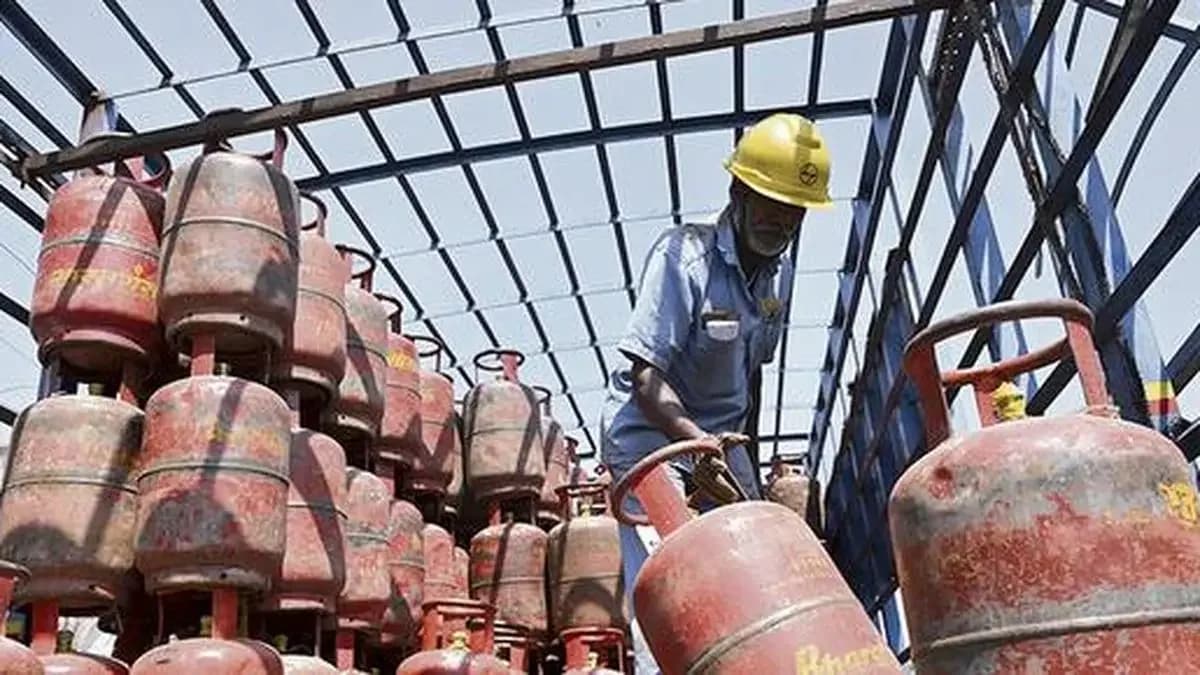
The Government has issued orders to oil refineries for higher LPG production and using such extra production for domestic use amid current geopolitical disruptions to fuel supply and constraints on supply of LPG. As reported by the Ministry of Petroleum and Natural Gas, the Government has prioritised domestic LPG supply to households and introduced a 25-day inter-booking period to avoid hoarding and black marketing. The Ministry stated that non-domestic supplies from imported LPG are being prioritised to essential non-domestic sectors such as hospitals and educational institutions. Additionally, a committee of three Executive Directors of Oil Marketing Companies has been constituted to review representations for LPG supply to restaurants, hotels and other industries.
State-owned Indian Oil Corporation (IOC) ramped up liquefied petroleum gas production by nearly 30% and kept its refineries operating above 100% utilisation as disruptions to maritime trade through the Strait of Hormuz threatened India's energy supplies, according to chairman Arvinder Singh Sahney at the company's 67th annual general meeting. The company also diversified crude sourcing, realigned refinery operations and secured alternative supplies as the escalation of conflict in West Asia disrupted global energy markets. As reported by Business Standard, India imports more than 88% of its crude oil requirement, while about 45% of its crude imports and nearly 90% of its LPG imports are linked to the Strait of Hormuz, underscoring the exposure of the world's third-largest oil consumer to disruptions in the strategic waterway.
Despite the geopolitical challenges, IOC reported record operating performance for the year ended March 2026. The company posted a standalone net profit of ₹36,802 crore on turnover of about ₹8.86 trillion, with aggregate sales exceeding 105 million tonnes across petroleum products, natural gas and petrochemicals. According to ZeeBiz, its refineries processed a record 75.45 million tonnes of crude during the year, while liquid pipeline throughput reached a record 102.52 million tonnes and domestic petroleum-product sales rose to an all-time high of 88.97 million tonnes. The momentum continued into the first quarter of the current financial year, with IOC processing a record 19.17 million tonnes of crude at 109.4% capacity utilisation and pipeline throughput reaching a quarterly record of 28.55 million tonnes. The company also expanded its retail network by adding 2,635 outlets, taking its total to 42,818 outlets, while its EV charging and battery-swapping network has expanded to more than 15,000 locations.
IOC unveiled ambitious expansion plans to significantly increase its refining capacity at its Annual General Meeting. The company plans to increase the capacity of the Panipat refinery from 15 MMTPA to 25 MMTPA, Gujarat refinery capacity will rise from 13.7 MMTPA to 18 MMTPA, while Barauni refinery capacity is planned to increase from 6 MMTPA to 9 MMTPA. As reported by ZeeBiz, following these expansions, IOC's group refining capacity is expected to increase from 80.75 MMTPA to nearly 98 MMTPA. The expansion would contribute more than 40% of the incremental refining capacity required to take India's overall refining capacity to 300 MMTPA. Work is also progressing on the 2,805-km Kandla-Gorakhpur LPG pipeline, with the Kandla-Bhopal section already completed. The company's domestic petroleum product market share also increased to 43.1% in the first quarter of FY27.
IOC is accelerating investment in its core refining operations with expansions at Panipat, Gujarat and Barauni expected to raise the company's group refining capacity from 80.75 million tonnes a year to about 98 million tonnes. As reported by ZeeBiz, the company is simultaneously seeking to reduce its dependence on traditional refining business, targeting higher contributions from petrochemicals, natural gas, renewables, biofuels, green hydrogen and sustainable aviation fuel. It plans to raise petrochemical intensity to about 15% by 2030 and increase natural-gas sales 1.5 times by the same year. The company has started commercial gas production from coal-bed methane in Jharkhand and commenced first oil production from the Jyoti-1 and Jyoti-2 wells in Gujarat. IOC also reported two significant oil discoveries at Shilaif and Habshan in Abu Dhabi and is targeting upstream integration of more than 10% by 2031.
On the energy-transition front, construction has begun on a large-scale green hydrogen plant at Panipat, while IOC has received ISCC CORSIA certification for sustainable aviation fuel production through co-processing at the refinery. According to ZeeBiz, the company's 15 hydrogen fuel-cell buses have already covered more than 1.7 lakh km. Its renewable-energy arm Terra Clean is developing 1 gigawatt of capacity, with another 4.3 gigawatts under preparation. The company has also received India's first ISCC CORSIA certification for SAF, strengthening its position in the sustainable aviation fuel segment. IOC's SPRINT programme generated savings of more than ₹2,000 crore in FY26, with LPG bottling costs declining 12% and aviation operating costs falling 8%. The balance sheet showed improvement with its debt-to-equity ratio declining from 0.75 to 0.54, while capital expenditure stood at ₹32,405 crore in FY26.