Strategic Imperatives Behind the Rs 35,000 Crore Commitment
Maruti Suzuki India Limited's decision to commit Rs 35,000 crore to the Kharkhoda facility stems from multiple converging strategic drivers. The company faces 100% capacity utilization at existing facilities, with India's passenger vehicle market growing at 7.51% CAGR to reach USD 63.84 billion by 2031. This expansion is part of a broader roadmap to scale production to 4 million units annually by FY 2030-31—nearly double current capacity.
Historically, Maruti's capital expenditure patterns show accelerating investment intensity. The company has committed over Rs 1.25 lakh crore in total capex till 2030-31, with approximately Rs 45,000 crore needed to create 20 lakh units of capacity. The Kharkhoda investment represents a significant escalation, with the first phase alone requiring Rs 11,000 crore for 2.5 lakh units. This compares to earlier expansions like the Gujarat plant, where three phases (250,000, 500,000, and 750,000 units) were commissioned between 2017-2021. InvestorPresentations
Financial Impact: ROIC, Payback Period, and Capital Efficiency
The massive capital deployment will impact Maruti's return on invested capital through a predictable cycle.
The Kharkhoda expansion follows a similar pattern—short-term ROIC pressure followed by medium-term recovery as capacity utilization optimizes. The phased approach (250,000 units each phase) allows for demand validation before each investment tranche, reducing capital risk.
The estimated payback period for the Kharkhoda investment ranges from 10-14 years, based on projected additional annual operating profit from 5 lakh units initial capacity. The integrated supplier park model enhances capital efficiency significantly—87% of Tier-1 suppliers are located within 100 km of manufacturing facilities, reducing logistics costs and working capital requirements. This cluster economics approach delivers 15-20% reduction in total capital requirement compared to standalone facilities. AnnualReports
Cost Structure Transformation and Competitive Positioning
The addition of 10 lakh vehicles annual capacity fundamentally alters Maruti's cost structure through enhanced operating leverage. Fixed costs per unit are projected to decline 15-20% as depreciation and infrastructure costs spread across higher production volumes. Material costs, currently 74.5% of net sales, should see 2-3% reduction through bulk purchasing advantages. Overall unit costs are expected to improve 8-12% through scale benefits. InvestorPresentations
However, Maruti faces significant competitive threats as it approaches 50% market share.
The phased expansion strategy mitigates demand risk by adding capacity incrementally—each 250,000-unit phase validates market demand before the next investment. This approach allows Maruti to maintain flexibility while preserving its dominant 42% market position.
Technological Leadership: Suzuki Smart Factory and Industry 5.0
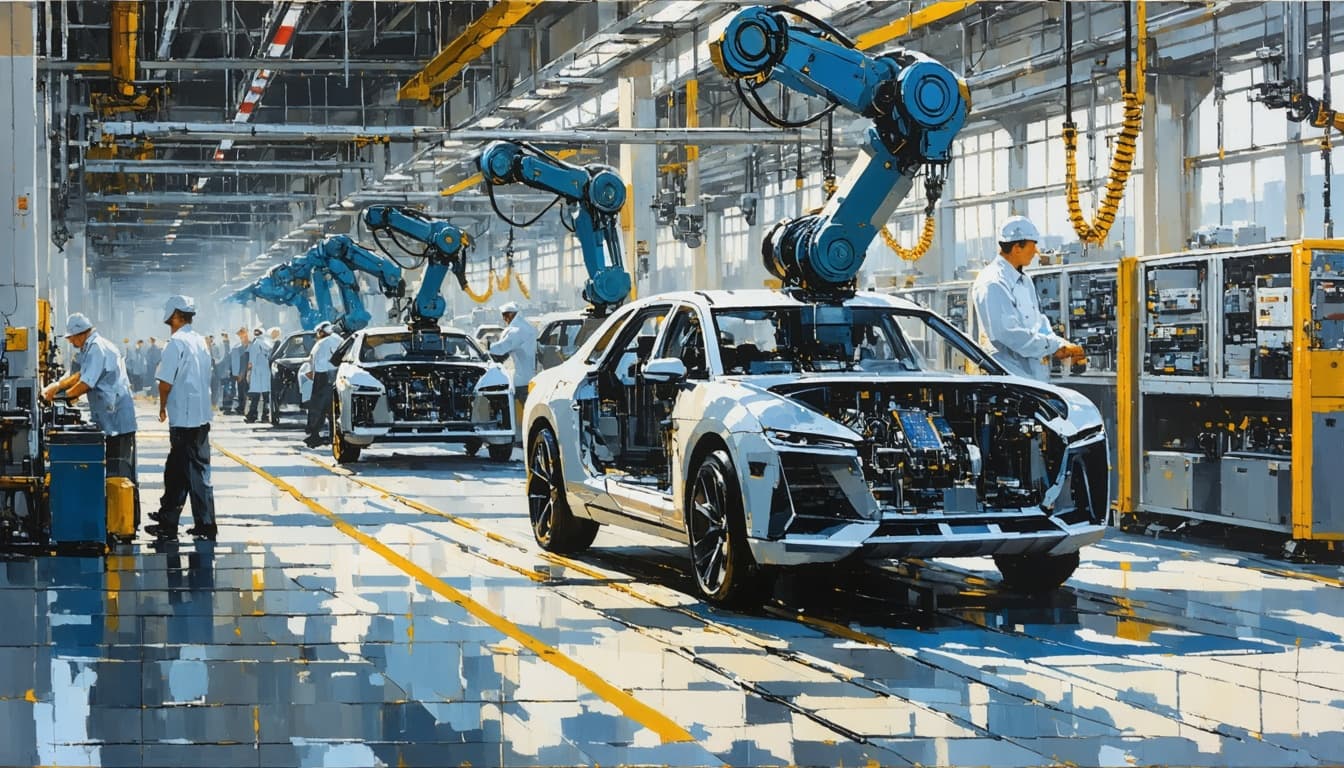
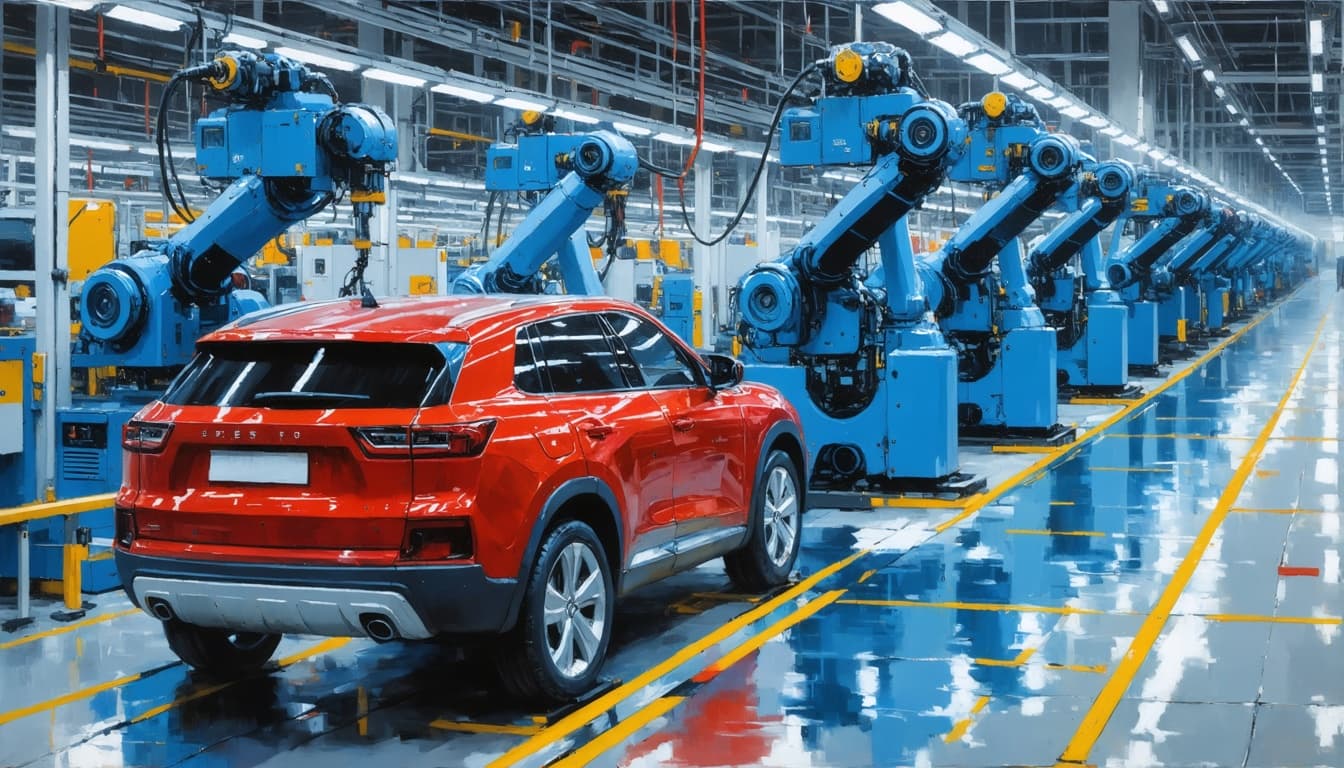
The Kharkhoda facility represents a quantum leap in manufacturing technology through the Suzuki Smart Factory concept. AI-powered collaborative robots (cobots) are expected to reduce labor costs by 30-40% while improving manufacturing precision. The facility operates on 100% renewable electricity and features AI-powered quality control systems that should reduce defect rates by 75-85% compared to traditional manufacturing.
Industry benchmarks suggest that AI-enhanced manufacturing can deliver 20-30% productivity improvements and 25-35% reduction in rework and scrap rates. The integration of AI-powered visual inspection systems from startups like AugurAI and Indus Vision enables real-time defect detection, moving quality control to the point of manufacturing. This technological sophistication positions Kharkhoda as a benchmark for Indian automotive manufacturing.
Environmental Leadership and Regulatory Compliance
The Kharkhoda facility sets new standards in environmental sustainability through comprehensive Zero Liquid Discharge (ZLD) systems, 70 MW in-house solar power plant, and biogas infrastructure. The ZLD system achieves 100% wastewater recycling, with 63.13% of total water requirements met through recycling—significantly exceeding India's increasingly stringent environmental regulations. The solar power investment of Rs 925 crore for 319 MWp capacity by FY 2030-31 should deliver 40-60% reduction in electricity costs while avoiding 59,537 tCO2 emissions annually. AnnualReports +2
The biogas plant commissioning in FY2026-27 will enhance energy security by converting in-house food waste to fuel, with the Manesar pilot already generating 18 metric tonnes of compressed biogas and avoiding 48 metric tonnes of CO2 emissions. These initiatives not only ensure compliance with India's evolving environmental framework but also position Maruti to benefit from green financing and ESG premium valuations. AnnualReports
Economic Impact and India-Japan Partnership
The Kharkhoda expansion creates substantial economic multiplier effects. The 21,000 direct jobs translate to an estimated 159,000-180,000 indirect jobs through a 6:1 employment multiplier, significantly above industry average. The integrated supplier park creates revenue opportunities of Rs 26,000-36,000 crore annually for component manufacturers, while the in-plant railway siding reduces transportation costs by 15-30% compared to road logistics.
The India-Japan partnership extends far beyond the manufacturing facility.
The 150 Japanese companies participating in the Economic Forum bring supplier ecosystem development and technology transfer capabilities. This bilateral support framework provides Maruti with access to advanced manufacturing technologies, quality systems, and capital that strengthen its competitive position.
Strategic Outlook
Maruti Suzuki's Kharkhoda expansion represents a calculated bet on India's automotive future, backed by unprecedented bilateral cooperation and technological sophistication. The project balances aggressive capacity expansion with prudent risk management through phased implementation, while simultaneously positioning the company as an environmental and technological leader. As India's passenger vehicle market continues its growth trajectory and global supply chains restructure, Maruti's strategic investments in Kharkhoda should enable it to maintain market leadership while transitioning toward electric mobility and sustainable manufacturing practices.