Mahindra Group delivered exceptional performance in FY26, with consolidated revenue growing 25% to ₹1,98,639 crores and profit after tax increasing 32% to ₹17,099 crores. This record performance was underpinned by Chairman Anand Mahindra's "Attack Mode" strategy—a Formula E-inspired approach emphasizing calculated acceleration through uncertainty rather than defensive posturing. The group's strategic pivot from navigation to acceleration has fundamentally altered its risk profile and capital deployment priorities, enabling it to capitalize on disruption as a growth catalyst.
Nagpur Plant: Transforming Cost Structure and Operational Efficiency
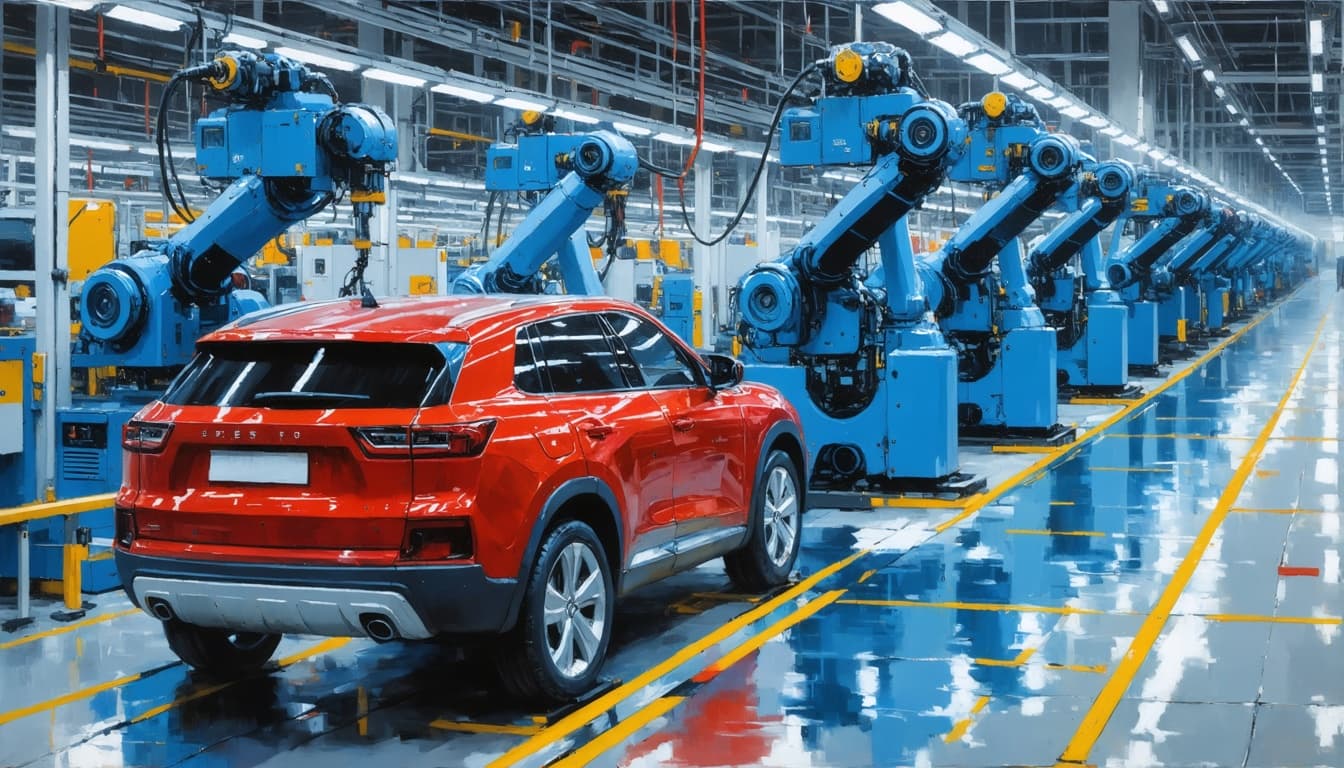
The ₹15,000 crore investment in Mahindra's first integrated automobile and tractor manufacturing facility in Nagpur represents one of the largest prospective investments in the company's history. Scheduled to commence operations in mid-2028, the 1,500-acre facility will have an annual capacity of over 5 lakh vehicles and 1 lakh tractors, supported by a 150-acre supplier park. This strategic investment is designed to deliver significant cost structure benefits through economies of scale, supplier integration, and multi-powertrain flexibility.
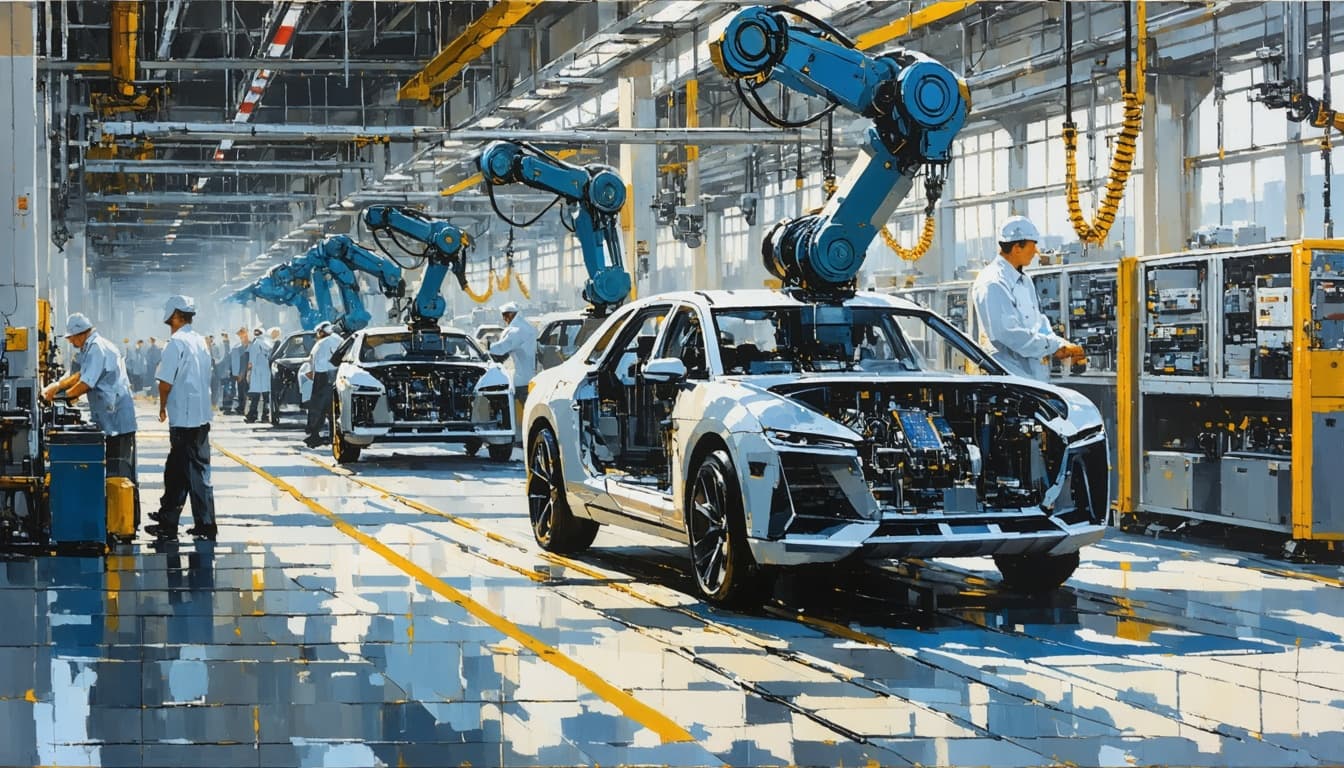
The plant's ability to manufacture internal combustion engine, electric vehicle, and future technology vehicles from a common NU_IQ platform provides substantial cost advantages. Shared tooling and assembly lines reduce capital expenditure per powertrain, while production flexibility allows reallocation based on demand shifts. The supplier park will supply components to the Nagpur facility as well as existing plants at Chakan and Nashik, reducing logistics costs through proximity and improving inventory turnover with just-in-time delivery. Advanced automation and digital manufacturing systems will drive higher labor productivity, reduced defect rates, and predictive maintenance to minimize downtime.
Capacity Expansion: Aligning with SUV Growth Momentum
Mahindra exited FY26 with total operational capacity of 64,500 units per month, including 56,500 units for ICE models and 8,000 for battery electric vehicles. This expansion is directly driven by strong demand outpacing supply across multiple product lines, including XUV 3XO, Bolero, Scorpio-N, and Thar. The company achieved 20% SUV volume growth in FY26, selling 6,60,276 units in the domestic market—the highest-ever annual passenger vehicle wholesales for any non-Maruti carmaker. Transcripts
The capacity expansion strategy aligns perfectly with FY26 performance, where auto revenue grew 30% to ₹1,17,834 crores and auto PAT increased 33% to ₹7,842 crores. The company plans to add another 14,000 units per month of capacity by FY27 end to fuel next fiscal launches, including additional EV volumes. This expansion supports an aggressive product pipeline of 16 new SUV launches by FY31 (10 ICE and 6 BEVs), with the NU_IQ platform providing fungibility between ICE and EV versions for production flexibility based on demand. InvestorPresentations +2
AI Integration: Driving Margins and Decision-Making Efficiency
Group CEO Anish Shah has articulated a clear philosophy emphasizing courage and intent in AI adoption: "This is not a moment for incremental experimentation at the margins, but for meaningful integration at scale". This enterprise-wide AI deployment is delivering quantified benefits across operations. FY27 AI projects are expected to deliver ₹4,100 crores in incremental revenue, 2-3 percentage point improvement in customer satisfaction, and 10% reduction in new product development cycles. Transcripts
The impact on operating margins is significant. In financial services, AI has reduced post-sanction turnaround time by 80%, with document processing time cut from 40 minutes to minutes while improving accuracy. Mahindra Finance expects ₹10,000 crore additional disbursements and 20% increase in thin file customer conversions through AI. In manufacturing, AI applications in paint shop and welding create more plant uptime through faster problem resolution, while quality control automation identifies defects before customer delivery. The company has established a three-tier implementation approach: Deploy (quick wins in 1-3 weeks), Transform (large customer-facing projects with 4-week deployment targets), and Invent (AI-first business process design). Transcripts +4
Market Leadership: Tractors, SUVs, and Electric Three-Wheelers
Mahindra's tractor business achieved highest-ever sales of 5,05,930 units in FY26 with 24% growth, reaching 43.6% market share. This performance was driven by government spending on rural and agriculture, diversified rural income sources (agricultural income represents only 25% of total rural household income), and the view of tractors as preferred assets that "depreciate the least" while providing ongoing income generation. Core tractor PBIT margins reached 20.8% in FY26, up from 19.7% in FY25, demonstrating operational excellence. InvestorPresentations +3
The electric three-wheeler business maintains 40% market share with strong competitive advantages including first-mover advantage, strong product execution demonstrated by successful launches like the Mahindra UDO (7,500+ vehicle billings within two months), extensive distribution network leveraging Mahindra's automotive dealer infrastructure, and vertically integrated model with strong dealer network. The EV business achieved PBIT of ₹287 crores in FY26, with the EV portfolio achieving approximately 5% PBIT margin, representing healthy profitability for a growth segment. InvestorPresentations +4
Strategic Transformation: Attack Mode and Connector Economy
Anand Mahindra's "Attack Mode" strategy represents a fundamental shift from defensive posturing to strategic acceleration backed by preparation and conviction. This approach has fundamentally altered the group's risk profile and capital deployment priorities. The most dramatic risk profile transformation occurred in Mahindra Finance, which pivoted from three years of focusing on asset quality and controls to a growth stance with diversification into mortgage, SME, insurance, and fee-based income, resulting in 60% increase in operational PAT. Transcripts +1
The transition from "navigation to acceleration" positions Mahindra to capitalize on India's emergence as a "connector economy" in a fragmented global order. Anand Mahindra articulated this vision: "The next global order may well be built by those who can become 'connectors' in a fragmented world. This opens up an opportunity for India to be a 'connector economy' that works across divides". The group's enhanced supply chain resilience—covering ₹1,06,000 crores of purchases, 1,00,000 parts, and 40 commodities for multiple risk factors—enables it to leverage global opportunities including China+1 manufacturing and nine major Free Trade Agreements covering 38 countries. Transcripts +2
Conclusion: Building Enduring Competitive Advantage
Mahindra Group's transformation under the "Attack Mode" strategy and enterprise-wide AI integration represents a fundamental repositioning for leadership in disruptive times. The ₹15,000 crore Nagpur investment, capacity expansion to 64,500 units per month, and large-scale AI deployment are not isolated initiatives but interconnected elements of a comprehensive strategy to build enduring competitive advantage. The group's ability to accelerate through uncertainty while maintaining financial discipline has enabled record performance while establishing foundations for sustained growth. As Anish Shah emphasized, "Those who move early and decisively will lead. We are determined to be among them".