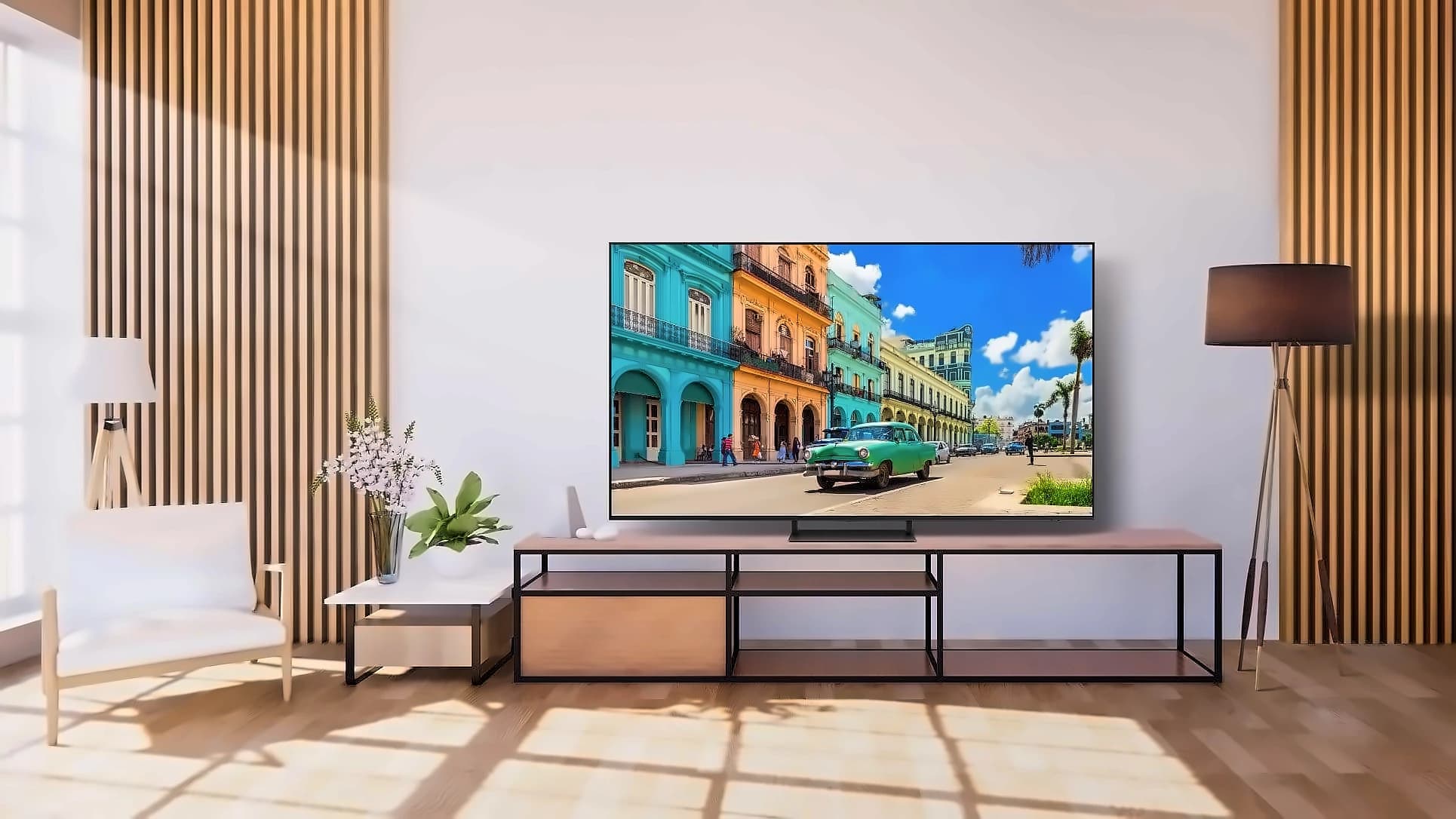
The authorities argue these OLED glass screens, called "open cells," should have attracted a 15% duty rate—three times higher than what the companies actually paid. Both manufacturers contend that OLED technology represents an advanced form of LED and should qualify for the same preferential treatment. This classification battle centers on whether OLED parts fall under heading 8529 (parts suitable for use with display apparatus) at 5%, or heading 8524 (flat panel display modules) at 15%.
The investigation specifically targets OLED display components that constitute 60-70% of television manufacturing costs. India's overall television market reached $4.7 billion last year, with OLEDs holding a near 4% share. For context, complete colour televisions face combined customs duties of 22-26.4% plus 18% IGST, making component imports significantly more attractive for local assembly. The concessional 5% rate under notification No. 50/2017-Customs explicitly restricts benefits to LCD and LED display parts, creating what industry groups call an "anomalous situation" for more advanced OLED technology.
Financial Exposure and Penalty Framework
The exact magnitude of alleged duty evasion remains undisclosed, but the potential liability structure is severe.
This means total exposure could reach 200% of the duty differential—retrospective duty plus maximum penalty. Samsung is already contesting a separate $520 million India tax demand for allegedly misclassifying networking gear imports, providing context for the potential scale of such disputes.
LG has made a voluntary, unspecified monetary deposit to cover potential additional duty, suggesting proactive financial provisioning. Samsung stated it is "reviewing the matter and cooperating fully with the relevant authorities." Both companies can legally challenge any demands in courts, and Samsung has previously succeeded in High Court challenges against tax demands. However, the investigation comes at a vulnerable time—Samsung's visual-display and digital-appliances businesses globally recorded a slight operating loss in Q2 2026, while LG India's EBITDA margins of 12.8% leave limited room for additional cost absorption.
Margin Impact and Pricing Pressures
Display panels represent 60-70% of TV manufacturing costs, meaning a 10 percentage point duty increase translates to approximately 6.5% higher overall manufacturing costs. For companies with single-digit operating margins in competitive markets, this compression is significant.
This strategy protects volumes but squeezes margins further.
The premium segment where OLED competes is critical for profitability. Televisions priced above ₹60,000 are projected to expand at 23.70% CAGR through 2031, making this the fastest-growing category.
Chinese competitors like TCL and Xiaomi are aggressively attacking premium segments with MiniLED technology positioned as an affordable OLED alternative. If LG and Samsung must pass through higher costs, they risk losing share to these rivals; if they absorb costs, margins suffer further.
Supply Chain Vulnerability and Compliance Overhaul
Both companies maintain substantial import dependency for OLED components. India's imports of displays including TV parts rose 15% to $5.6 billion by March 2026, highlighting the nation's reliance on overseas supplies. LG manufactures 95% of its products locally with 55% domestic raw material sourcing, but OLED panels remain imported. Samsung previously considered shifting TV production from India to Vietnam due to tariff concerns, demonstrating sensitivity to regulatory changes.
The investigation necessitates comprehensive compliance overhauls. Companies must reassess HSN code classifications under India's customs tariff, potentially shifting from CTH 8529 to CTH 8524 for OLED components. Documentation requirements will intensify, with enhanced technical specifications, end-use certifications, and classification justifications. Proactive advance rulings from customs authorities and regular legal opinions on classification decisions will become essential. Both companies may also accelerate localization efforts—LG is investing ₹5,000 crore in a Sri City manufacturing facility, while Samsung could reconsider its India manufacturing strategy if costs become prohibitive.
Enforcement Risks and Market Consequences
Beyond financial penalties, Indian regulators possess extensive enforcement powers. Under the Customs Act, 1962, authorities can seize goods, detain shipments, impose customs clearance delays, and in severe cases, suspend import privileges. The Volkswagen case demonstrates how tax disputes translate into operational challenges—Volkswagen India faced customs clearance delays on air shipments, leading to spare parts shortages at dealerships. Similar disruptions could significantly impact LG and Samsung's just-in-time manufacturing operations given their reliance on imported OLED components.
The investigation threatens both companies' premium positioning at a critical juncture. MiniLED shipments increased more than thirteenfold from a small base, with Chinese manufacturers using this technology to attack Korean incumbents. TCL and Samsung maintained leadership in QLED shipments while Xiaomi recorded significant growth. If tariff costs force OLED price increases or supply disruptions, Chinese competitors could gain ground in the premium segment both companies have cultivated. The investigation also sets precedents for customs classification enforcement in the electronics sector, following patterns established in automotive and telecommunications industries.
Strategic Responses and Future Outlook
LG and Samsung are pursuing divergent response strategies. LG received written questions and submitted responses with a voluntary monetary deposit, indicating a conciliatory approach. Samsung faced DRI visits to its Gurugram headquarters and is contesting the allegations while cooperating. Both companies are privately opposing the DRI position, arguing OLED is an advanced form of LED technology deserving equal tariff treatment. Their industry groups, CEAMA and MAIT, launched a campaign in August 2026 urging India's IT ministry to extend the 5% concessional rate to OLED parts, arguing the current restriction creates higher input costs and reduced competitiveness.
If tariff costs increase permanently, both companies would likely accelerate technology diversification toward QLED and MiniLED, implement tiered pricing strategies focusing on premium segments less sensitive to price increases, and deepen localization efforts. Samsung Display is already strengthening supply chain ties through partnership programs and expanding production capacity by 10% in 2025. LG's export business reached double-digit growth in Q1 FY27, with the company targeting double-digit revenue share from exports supported by its Sri City expansion.
The investigation's outcome will significantly influence India's attractiveness for electronics manufacturing.
The balance between regulatory enforcement and investment attractiveness will shape not just LG and Samsung's India operations, but broader multinational investment decisions in advanced technology manufacturing. As India positions itself as a preferred manufacturing destination under its China+1 strategy, the resolution of this dispute will signal how the country navigates the tension between domestic revenue protection and global integration.