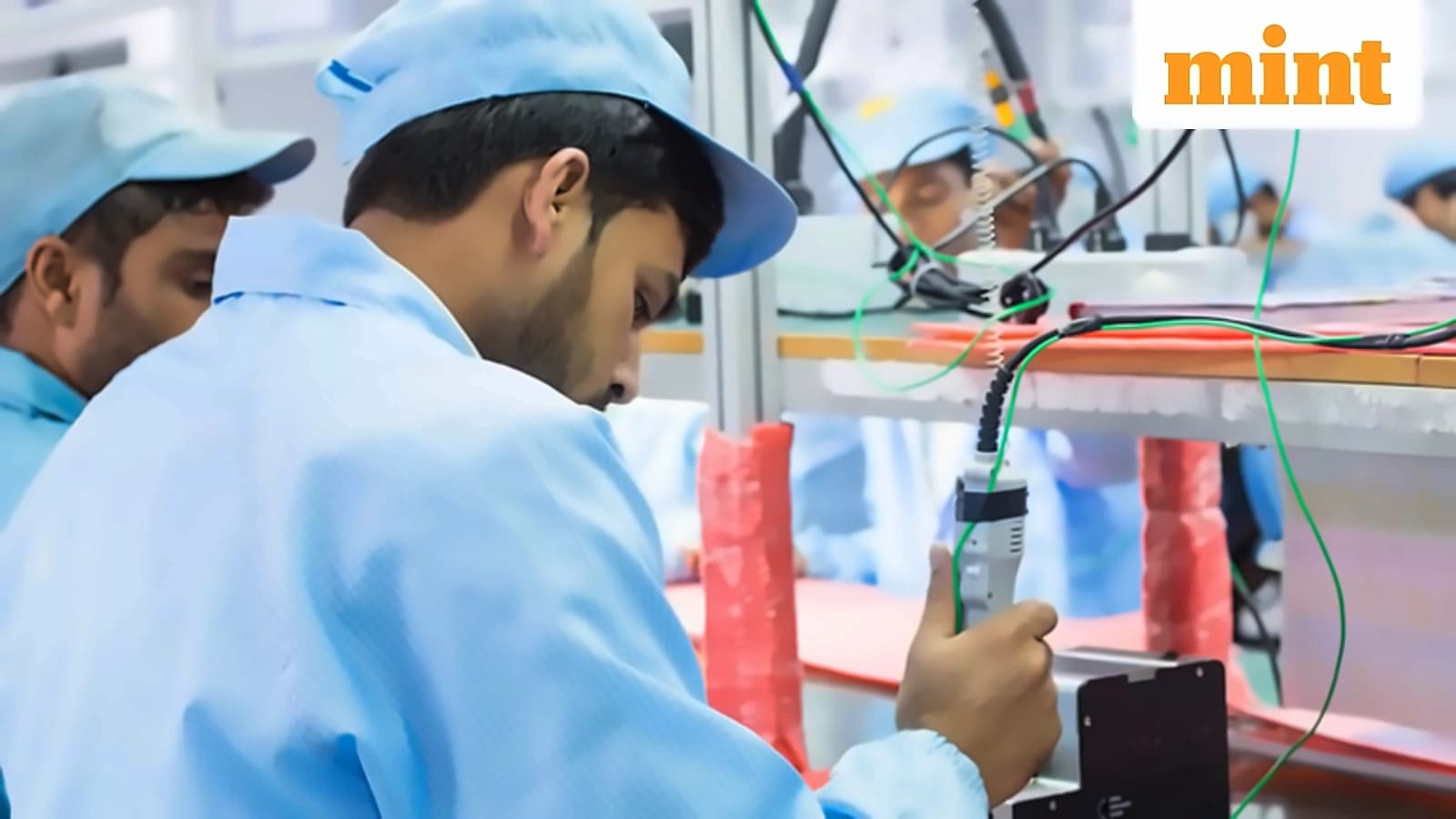
The Central Board of Indirect Taxes and Customs (CBIC) has expanded customs duty concessions on electronics manufacturing equipment and components, extending benefits until March 31, 2029. The move covers 85 categories of lithium-ion battery production machinery, five display assembly components for automotive and industrial applications, and six wireless charging module parts for smartphones. While the policy aims to strengthen domestic manufacturing, its impact varies significantly across three key electronics manufacturers—Dixon Technologies, Amber Enterprises, and Kaynes Technology.
Dixon Technologies: The Battery Manufacturing Bet
Dixon Technologies is actively pursuing lithium-ion battery manufacturing, primarily for mobile applications, through its joint venture company Ismartu (a Transsion brand). The company is in advanced discussions with technology partners and has submitted applications under the Electronic Component Scheme (ECMS). The concessional customs duty on 85 categories of battery manufacturing equipment—covering material mixing, coating, pressing, slitting, winding, stacking, electrolyte filling, welding, testing, ageing, inspection, and packaging—directly reduces Dixon's capital expenditure requirements by an estimated 15-25% on imported machinery. Transcripts +1
This cost advantage is particularly significant given Dixon's aggressive expansion plans. The company invested approximately ₹1,000 crores in capital expenditure during FY26, with similar levels planned for FY27, focused on display capacity expansion, IT business expansion, and camera module capacity enhancement.
The impact on gross margins could be substantial. Dixon's component business shows "extremely good" unit economics with much higher operating margins potential compared to typical EMS margins.
The concessional duty on battery equipment strengthens this margin expansion trajectory by reducing depreciation burdens and improving operating efficiency. Transcripts +2
Amber Enterprises: Strategic Realignment Required
Amber Enterprises faces a more complex scenario. The duty exemptions on display assembly components (display cells, FPCAs, backlight units, frames, and ACF) apply only to automotive, medical, and industrial electronics—explicitly excluding mobile phones, smartwatches, televisions, smart meters, and interactive flat-panel displays. This exclusion creates a strategic challenge given Amber's recent entry into mobile phone manufacturing through a partnership with Oppo India (covering Oppo, OnePlus, and Realme brands). Transcripts
Amber's Electronics Division, which generated ₹3,268 crore in FY26 (26.8% of total revenue) with 49% YoY growth, serves multiple segments including Automobile (since FY22), Industrials (since FY24), Defence & Aerospace (since FY25), and Industrial Automation (FY26). The Ascent Circuits subsidiary, part of the Electronics division, derives approximately 65% of its revenue from the automotive sector, positioning it to benefit from the display duty exemptions. InvestorPresentations +3
However, Amber has no current display assembly manufacturing capabilities. The company's phased component integration roadmap targets 30-35% domestic value addition over 5-6 years, starting with SMT and assembly operations, then adding HDI capabilities, and finally display modules. The duty exemptions could accelerate this timeline for automotive and industrial displays, potentially improving Electronics Division EBITDA margins from the current 8.8% toward double-digit levels. Transcripts +2
The revenue impact could be meaningful but not transformative. Assuming automotive and industrial segments represent approximately 35% of Electronics Division revenue (~₹1,150 crore), the 15-20% cost reduction on display components could generate ₹175-230 crore in additional EBITDA, representing 150-200 basis points of margin improvement in the Electronics Division. Overall, this translates to a revenue uplift of ₹200-300 crore (1.6-2.5% of total revenue) over FY27-FY29.
Kaynes Technology: Limited Current Exposure
Kaynes Technology's situation is markedly different. The concessional duty on six wireless charging components (nano-crystalline assemblies, E-shields, PET liners, PC shims, coils, and neodymium magnets) applies specifically to wireless charging inductor coil modules for smartphones. However, Kaynes has no current involvement in wireless charging component manufacturing. The company serves over 360 customers across 28+ countries, with long-term relationships averaging 7-9 years with top 10 customers, but its focus remains on EMS, PCB assembly, and semiconductor packaging rather than mobile phone components. AnnualReports +1
Kaynes's current cost structure is characterized by significant import dependency—approximately 60% of materials are imported while 40% are locally manufactured. The company has made progress in localization, with direct sourcing from India increasing from 12.30% in FY23 to 32.10% in FY24. The duty concessions could support this localization trend, particularly if Kaynes chooses to enter wireless charging component manufacturing. Transcripts +1
However, this would require strategic decisions and significant investments.
Without such strategic entry, the duty concessions have minimal immediate impact on Kaynes's cost structure or pricing competitiveness.
Competitive Dynamics and Supply Chain Implications
The asymmetric impact of the customs duty relief creates divergent competitive advantages. Dixon Technologies emerges with the strongest position due to its scale advantages and strategic alignment with battery manufacturing. The company's near-zero debt position, 1.4 million+ sq ft manufacturing footprint under expansion, and strategic joint ventures with global leaders like HKC (displays), Inventec (IT hardware), and Longcheer (smartphones) amplify the benefits of concessional duties. AnnualReports +3
Dixon's scale provides significant advantages in procurement and supply chain management. The company serves all top 8 brands in the Android ecosystem and can leverage bulk import volumes to negotiate better terms.
This establishes sustainable competitive barriers estimated at 5-10 years for competitors to overcome. Transcripts +1
Amber Enterprises faces execution challenges in converting duty concessions into sustainable market share gains. The company has a 65-70% probability of success, contingent on establishing display manufacturing capabilities, entering the medical electronics segment, and developing customer relationships in target segments. The 3-5 year sustainability of any advantage depends on successful execution of these strategic initiatives.
Kaynes Technology's competitive position remains largely unchanged in the short term. The company maintains strong relationships with over 1,700 suppliers, with 12-year average relationships with top 10 suppliers and 30-year partnerships with top 25 suppliers. The duty concessions create strategic opportunities but require major investments and strategic decisions to realize competitive advantages. AnnualReports +1
The Road Ahead
The CBIC's customs duty concessions demonstrate targeted effectiveness for companies with existing strategic alignment (Dixon) and limited impact for companies without current exposure to the exempted categories (Amber, Kaynes). The policy creates a favorable environment for battery manufacturing ecosystem development but shows limited causal influence on investment decisions without strategic alignment, timing synchronization, and competitive priorities.
For Dixon Technologies, the next three years will be critical in executing its battery manufacturing strategy and leveraging the concessional duty advantage. For Amber Enterprises, strategic realignment toward automotive and industrial displays while managing the exclusion of mobile phone displays will determine its ability to capture the available benefits. For Kaynes Technology, strategic decisions about entering wireless charging component manufacturing will determine whether the duty concessions translate into meaningful competitive advantages.
The extended timeline until March 31, 2029, provides a three-year window for these companies to align their strategies with the available duty concessions. Those with existing scale, strategic partnerships, and clear market positioning—like Dixon—are best positioned to capture the full benefits of this policy initiative.