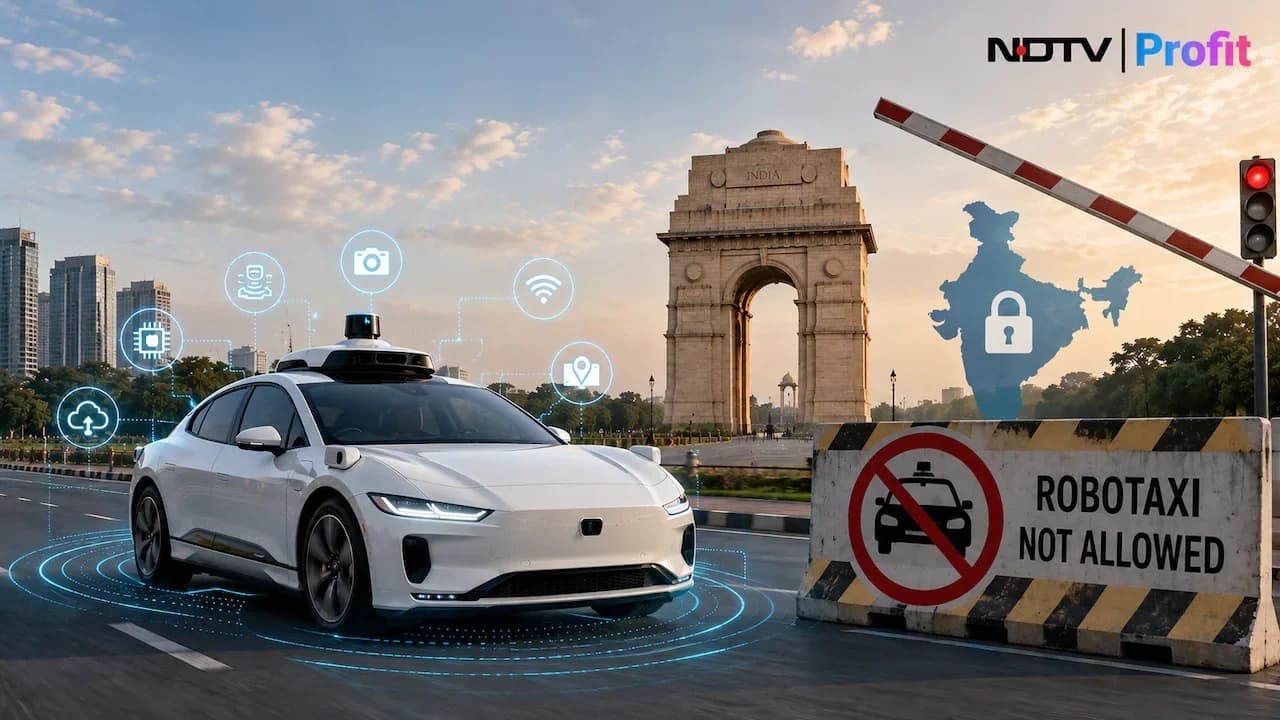
What started as pandemic protection hardened into strategic policy after the deadly Galwan Valley clash that June. The result? A near-complete shutdown of Chinese equity investment in India's auto sector.
Chinese EV giant BYD learned this the hard way. In July 2023, India rejected its $1 billion proposal to build an EV manufacturing plant with Hyderabad-based Megha Engineering on national security grounds. Great Wall Motor failed to acquire a mothballed General Motors plant for similar reasons. Even MG Motor India, owned by China's SAIC, faces such intense scrutiny that it's diluting ownership to Indians over the next few years.
The Licensing Workaround
Faced with these barriers, Chinese EV makers have pivoted to a clever workaround: technology licensing without equity ownership. The model is simple—license the platform, avoid the shareholder. Tata Motors' recent deal with China's Chery Automobile exemplifies this approach. Tata will use Chery's Freelander EV platform for its premium Avinya brand, with the first model expected in 2027 and a second in 2029.
This structure completely bypasses Press Note 3 because it involves no equity investment, no beneficial ownership in Indian companies, and represents a commercial contract rather than FDI. As one analysis notes, Tata gets "Chinese EV engineering without a Chinese shareholder, and the arrangement stays on the right side of New Delhi's sensitivities".
The Speed Imperative
Why would India's largest EV maker, with electric vehicles already accounting for 14% of its sales, turn to Chinese technology? The answer lies in competitive pressure. Tata aims to raise EV sales to 30% by 2030, but competition from Mahindra & Mahindra and JSW MG Motor is intensifying, narrowing its early lead.
Tata's original plan to use Jaguar Land Rover's Electrified Modular Architecture was shelved, delaying its premium EV rollout initially targeted for 2025. The Chery platform helps Tata "regain lost time by providing access to advanced EV architecture, software systems, and scalable vehicle platforms". Industry observers describe it as a "stop-gap arrangement"—compressing years of development into an assembly-and-localization exercise.
The Cost of Speed
But this speed comes at a price. Licensing creates a permanent cost structure disadvantage.
For a premium EV platform producing 100,000 units over five years, royalty payments could total ₹1,500-2,500 crore annually at higher volumes.
More importantly, these royalties create inverse scalability—margins worsen as volumes increase, the opposite of typical manufacturing economics. Over a 10-year product lifecycle, royalty payments could reach ₹15,000-25,000 crore, representing a permanent 3-5 percentage point margin disadvantage versus competitors with indigenous technology.
The Localization Trap
The licensing model also creates significant challenges for meeting India's domestic value addition (DVA) requirements. Government incentive schemes like PLI and FAME II mandate minimum 50% DVA over five years. However, royalty payments are excluded from DVA calculations, effectively suppressing the DVA percentage by 2-4 points.
The initial CKD kit approach—shipping vehicles as completely knocked down kits from China for assembly in India—creates additional DVA challenges. Early DVA levels might only reach 10-20%, potentially disqualifying vehicles from incentive eligibility during critical early years. Even with progressive localization, the platform architecture creates inherent constraints. Chinese platforms are designed around Chinese component specifications and supply chains, making it difficult to substitute Indian components without compromising performance or certification.
The Strategic Dependence Risk
Beyond immediate costs, the deeper concern is strategic dependence. Chinese EV companies are 30% faster in developing new car models than legacy automakers. Chinese institutions account for 65.4% of high-impact research publications for electric batteries, compared to America's 11.9%. This capability gap means Indian OEMs relying on licensed technology will perpetually lag behind competitors controlling their own roadmaps.
The supply chain vulnerability is equally concerning. India already imports 75% of its batteries from China. Tata's current EVs use lithium-ion cells from Gotion and EVE, both Chinese manufacturers. As geopolitical tensions persist—with India's trade deficit with China reaching $116 billion in 2025—this dependence represents significant strategic risk.
The Policy Dilemma
The Indian government faces a difficult balancing act. Recent amendments to Press Note 3 show some calibration—allowing non-controlling ownership up to 10% through the automatic route and introducing a 60-day approval process for priority sectors. In electronics, officials have signaled willingness to consider Chinese investments "provided they come through joint ventures with Indian companies and involve clear technology transfer".
But the core tension remains. As one official stated, "What is needed is technology learning for Indian players. If a proposal simply adds an assembly line with no transfer of know-how, it won't be supported". Pure licensing arrangements often provide limited technology transfer—assembly knowledge but not core technology, integration expertise but not component design.
The Path Forward
The fundamental question is whether licensing represents a bridge to indigenous capability or a pathway to permanent dependence. The Tata-Chery deal includes progressive localization plans, but the effectiveness of this approach remains uncertain. Without sustained investment in R&D, strategic talent development, and supportive government policies, Indian automakers risk becoming permanent integrators of Chinese technology rather than global competitors in their own right.
The economic calculus is stark. Scenario analysis shows that moderate localization strategies result in 52-60% loss in government incentives and 35-50% higher total costs over five years compared to aggressive localization. Aggressive localization requires higher upfront investment but delivers better long-term economics and strategic autonomy.
India's EV ambitions hang in the balance. The country aims for 30% electric vehicle sales by 2030, but achieving this with imported technology undermines the broader "Make in India" vision. The challenge for policymakers and industry leaders alike is transforming Chinese technology partnerships from short-term competitive crutches into long-term capability building bridges. The window for making this transition is closing—and the stakes for India's automotive future have never been higher.