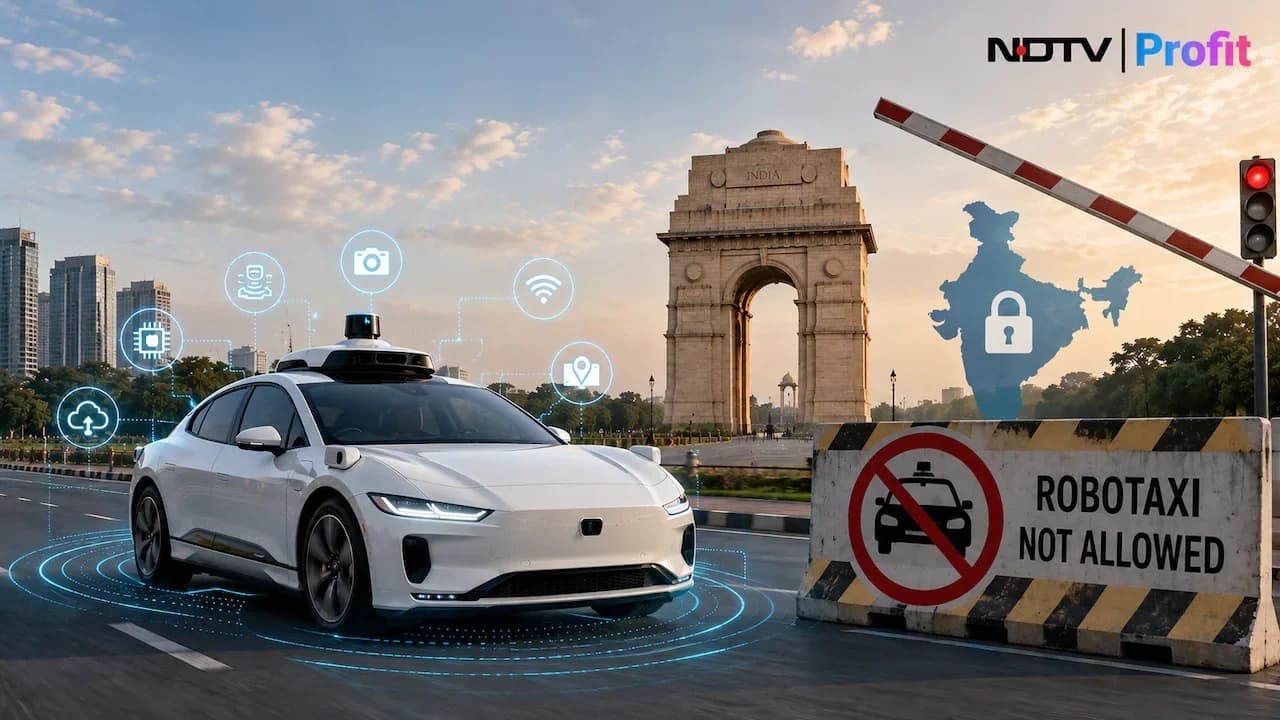
India's complete ban on driverless cars, as stated by Road Transport and Highways Minister Nitin Gadkari, who declared he will not allow driverless cars in India at any cost, may protect jobs today but risks leaving the country behind in autonomous vehicle technology. According to reports from NDTV Profit, this policy stance means anyone wanting to experience autonomous vehicles may have to travel to countries like the US. The ban on robotaxis completely has created a significant barrier for India's participation in the rapidly growing autonomous vehicle industry.
The autonomous vehicle sector extends beyond physical cars to encompass software, sensors, computing systems, and data infrastructure. As reported by NDTV Profit, companies like Waymo don't build cars from scratch but add autonomous stacks including lidar, radar, cameras, compute, and sensor-fusion software to existing vehicle platforms. Baidu's Apollo Go customises the Baidu RT6 EV manufactured in China, while GM's Cruise modifies its Cruise Origin cars and Motional retrofits Korean-made Kia and Hyundai cars in American plants. India, despite being a meaningful exporter of conventional auto components and automotive electronics, has not entered the AV ecosystem widely, representing a missed opportunity.
Indian firms and academia are developing autonomous vehicle solutions specifically for Indian road conditions. According to NDTV Profit reports, Wipro, the Indian Institute of Science (IISc), and RV College of Engineering have jointly tested a prototype designed for Indian road conditions. Flux Auto is developing self-driving trucks for mines and industrial zones, while Flo Mobility is testing autonomous shuttles within IT parks. Minus Zero has developed India's first end-to-end autopilot system using a vision-based approach rather than LiDAR-heavy systems common in Western countries. In Bhopal, Swaayatt Robots has tested self-driving Mahindra SUVs, demonstrating progress despite active policy support.
A successful autonomous vehicle testing program could significantly enhance India's position as a global R&D hub. As reported by NDTV Profit, aggressive R&D in this sector could attract better-quality foreign direct investment beyond assembly capital, including engineers, software teams, mapping systems, testing infrastructure, and university partnerships. The initiative would push India up the value chain from generic components toward high-value, high-margin products, creating spillovers into logistics, mining, warehousing, defence, agriculture, and industrial automation. India has already missed much of the early value creation in semiconductors and EV batteries, today importing all of that technology, making autonomous systems a potential next major technology breakthrough.
India does not need to legalise robotaxis immediately but requires a phased policy approach. According to NDTV Profit analysis, the framework should first allow large-scale R&D, prototyping, and controlled testing by Indian and foreign firms in closed environments such as mines, ports, warehouses, airports, industrial parks, and campuses. Over the next decade, the supporting ecosystem should be built including safety regulations, quality roads, public awareness, insurance frameworks, cybersecurity standards, digital mapping, and data-reporting requirements. Limited public-road use can be introduced in controlled zones such as freight corridors, ports, and selected highways, with broader commercial deployment considered only after sufficient safety data is available.