The Strait of Hormuz disruption cut nearly 30% of LPG supplies, exposing how vulnerable India's 60-65% import dependence really is. With 87% of LPG used in domestic kitchens and most imports transiting through that narrow waterway, the crisis wasn't just logistical—it was a wake-up call.
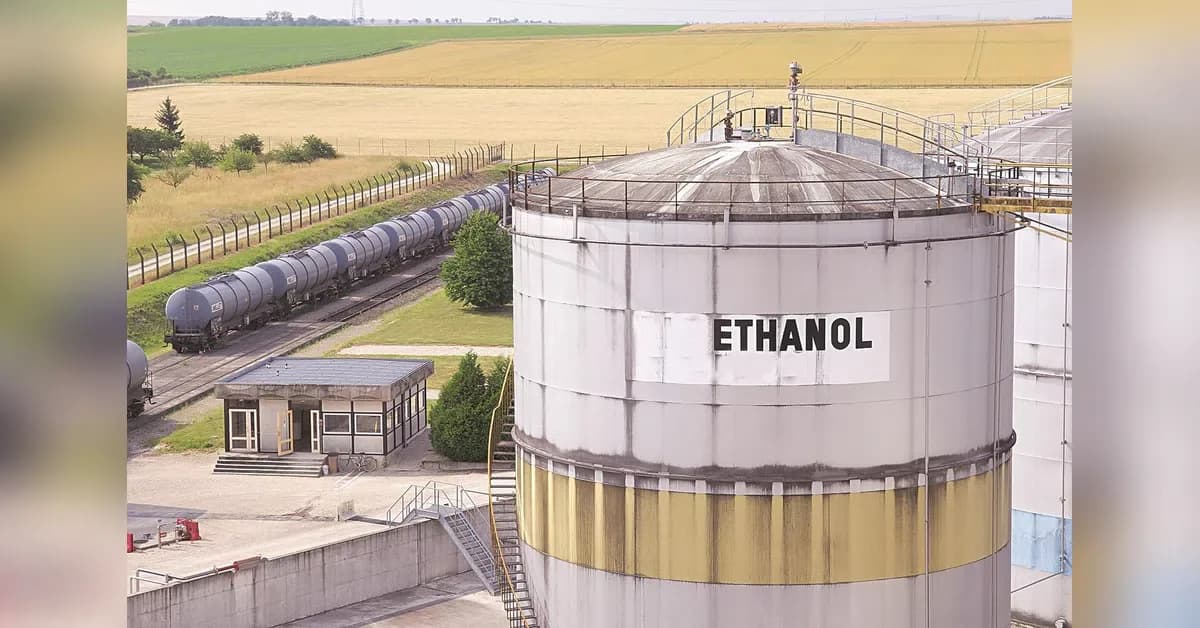
The timing couldn't have been more telling. India's ethanol production capacity has crossed 20 billion litres annually, but the E20 blending programme only absorbs about 11 billion litres. That leaves roughly 7 billion litres of surplus capacity sitting idle while distilleries operate at just 60% utilization. The math is compelling: divert even 250 crore litres to cooking fuel, and you could serve nearly 20 million households without touching E20 targets.
The Subsidy Puzzle: Capital vs. Fiscal Commitment
The Petroleum and Natural Gas Ministry faces a fundamental choice in how to structure ethanol cooking fuel incentives. The capital-driven model would front-load investment through infrastructure grants, equipment subsidies, and GST reductions—ISMA has proposed cutting GST on ethanol cooking fuel to 5% from the current 18%. This approach requires significant upfront spending but creates a self-sustaining ecosystem.
The alternative is an ongoing fiscal commitment model, similar to the PAHAL Direct Benefit Transfer system used for LPG. This spreads costs over time through per-liter or per-session subsidies but creates recurring budget obligations. Current LPG subsidies already cost ₹12,085 crore for 2026-27, and adding ethanol to the mix could require another ₹8,000-12,000 crore annually at 25% household penetration.
The economics tilt toward capital-driven models for long-term sustainability. While the initial investment of ₹500-800 crore for a 500-station rollout seems steep, it generates recurring revenue without perpetual subsidy dependence. The break-even timeline stretches to 5-7 years, but the payoff is a 15-18% return on capital comparable to traditional fuel retail.
Infrastructure Integration: The ATM Challenge
Integrating ethanol dispensing into existing fuel stations isn't as simple as adding another pump. Each outlet requires ₹22-34 lakh in capital expenditure—covering ethanol ATM equipment, storage tanks, safety systems, and site modifications. The operational challenges are equally complex. Retail outlets need separate access points for ethanol customers, additional electrical load for pumps, and enhanced safety protocols for handling liquid fuel in a retail environment.
The phased rollout strategy reflects these realities. The initial phase targets 50-100 strategically located stations with a ₹15-35 crore investment over 12-18 months. Network expansion to 500 stations by 2028-30 requires ₹150-200 crore, with full national coverage potentially reaching ₹600-900 crore by 2035. State-run OMCs like Indian Oil Corporation Limited, Bharat Petroleum Corporation Limited, and Hindustan Petroleum Corporation Limited have the balance sheets to absorb this capital, but private players may struggle without similar government backing.
Technology Strategy: Build or Buy?
The stove technology decision presents another strategic fork in the road. HPCL's collaboration with IIT Guwahati to develop indigenous ethanol cooking stoves represents the proprietary approach—complete control over technology and intellectual property, but with longer development timelines and higher R&D costs.
The partnership model offers faster time-to-market. Companies like KoKo Networks already manufacture ethanol fuel stoves at their Sanand, Ahmedabad facility, with capacity to scale 2-2.5x over two years. This approach eliminates development costs and provides immediate access to proven technology, but comes with ongoing licensing fees and limited customization options.
For OMCs focused on rapid market penetration, partnerships make more strategic sense. The technology exists, the manufacturing capacity is available, and the learning curve has already been climbed. Proprietary development might make sense for specialized applications, but mainstream household adoption favors speed and scale over differentiation.
The Surplus Advantage: Pricing Power in a Buyer's Market
The 7 billion litre surplus gives OMCs unprecedented pricing power. In ESY 2025-26, OMCs tendered for 1,050 crore litres but received offers for 1,776 crore litres—1.69x oversubscription. This imbalance creates a buyer's market where OMCs can dictate terms and quality specifications.
The administered price mechanism provides additional stability. Ethanol procurement prices are government-fixed at ₹57.97-65.61 per litre depending on feedstock, insulated from Brent crude volatility and geopolitical disruptions. This price stability is a strategic asset—nearly 20% of every litre of petrol sold today contains domestically produced ethanol that doesn't fluctuate with international markets.
As cooking fuel demand grows, this dynamic will shift. Moderate adoption (25% households) could bring the market closer to balance, while aggressive adoption (50% households) might create supply shortages and upward pressure on prices. But in the near term, OMCs have the upper hand in negotiations.
Energy Security: Reducing the Strait of Hormuz Dependence
The strategic implications extend far beyond OMC balance sheets. India currently imports 60-65% of its LPG needs, with 80-85% transiting the Strait of Hormuz. The recent disruption cut imports from 2 million tonnes per month to 0.95 million tonnes in April—a 50% reduction that sent domestic prices soaring.
Ethanol adoption could fundamentally alter this equation. Conservative penetration (10% households) would reduce LPG imports by 2 million tonnes annually. Moderate adoption (25% households) cuts imports by 5 million tonnes. Aggressive adoption (50% households) eliminates 10 million tonnes of imports—30% of total demand.
The fiscal impact is equally compelling. At current prices, 50% household penetration could save ₹50,000-60,000 crore annually in foreign exchange. This isn't just about cost savings—it's about strategic autonomy. Domestic ethanol production eliminates dependence on Gulf geopolitics and shipping route vulnerabilities.
Storage Strategy: Complement or Competition?
The 30-day strategic LPG storage plan being developed by state-run OMCs raises questions about resource allocation. BPCL is investing ₹5,000 crore to expand storage from 200 TMT to 340 TMT, with similar expansions planned by IOCL and HPCL.
Rather than competing with the ethanol transition, strategic storage should be viewed as complementary. Storage provides immediate protection during the transition period, while ethanol development delivers long-term structural energy security. As ethanol penetration increases, storage requirements can be scaled down—diverting 1,000 crore litres to cooking fuel could reduce the strategic reserve needed by 30-40%.
The phased approach makes sense strategically. Build storage capacity now to address immediate vulnerabilities, then scale back as ethanol penetration reduces import dependence. This optimizes capital allocation while maintaining energy security throughout the transition.
The Revenue Transformation: LPG Decline, Ethanol Rise
The transition will fundamentally reshape OMC revenue streams over the next 5-10 years. Current LPG operations generate approximately ₹1,50,000 crore annually. Even conservative ethanol adoption (10% households by 2030) could reduce this by ₹7,500 crore annually by 2031.
But ethanol cooking fuel offers substantial replacement revenue. At 10% household penetration, ethanol could generate ₹12,000-15,000 crore annually with 8-12% margins. At 25% penetration, revenue jumps to ₹30,000-37,500 crore. The net impact across all scenarios is positive—conservative adoption yields a net gain of ₹4,500 crore annually by 2031, while aggressive adoption could deliver ₹30,000 crore in additional revenue.
The key is strategic positioning. OMCs that view this as a transformation rather than a substitution will capture the full value. Repurposing underutilized LPG infrastructure, developing subscription models for ethanol fuel, and expanding into stove sales and maintenance services can turn a threat into an opportunity.
The Competitive Landscape: State-Run Advantage
Their existing retail footprint of 67,641 petrol pumps selling biofuels provides an unmatched distribution network. They already dispense E20 blends at more than 17,400 retail outlets nationwide. Their financial resources and government relationships enable infrastructure investments that private players cannot match.
Private sector companies will likely focus on niche segments—premium markets, commercial applications, and specific geographic regions where they can compete effectively. The market share projections reflect this reality: state-run OMCs are expected to capture 70-85% of rural markets and 60-65% of commercial applications, while private players target 40-45% of premium segments.
Export Opportunities and Regional Dynamics
The surplus ethanol capacity is already driving export discussions. India is considering exports to Nepal, Bangladesh, and Indonesia—countries with 10% blending mandates but insufficient domestic production capacity. Nepal has already approved 10% ethanol blending and could reduce petrol imports by 73 million litres annually, saving ₹6.2 billion.
These export opportunities could influence domestic pricing strategies. Currently, first-generation ethanol exports remain prohibited, but selective liberalization could create price floors that reduce OMC bargaining power. The strategic approach is gradual liberalization—allowing limited second-generation ethanol exports while maintaining administered pricing for domestic supply.
The regional dynamics favor India. Geographic proximity to target markets reduces transportation costs compared to competitors like Brazil. BIS-certified quality standards ensure product consistency, and diplomatic support through biofuel alliances provides market access advantages.
The September Timeline: Strategic Planning Imperative
The September policy framework deadline creates urgency for OMC strategic planning. Companies that begin infrastructure investment now will capture first-mover advantages in prime locations. Those that delay risk being locked out of high-potential markets and face higher costs as demand accelerates.
The phased implementation strategy aligns with this timeline. Pilot projects in 2026-27, network expansion in 2028-30, and national rollout through 2035 allows OMCs to match infrastructure deployment with adoption curves. This staged approach manages capital intensity while building market momentum.
The ethanol cooking fuel transition represents one of the most significant opportunities in India's energy landscape. It addresses critical vulnerabilities in LPG import dependence while creating new revenue streams for OMCs. The capital requirements are substantial, but the strategic benefits—energy security, import reduction, and market repositioning—far outweigh the costs.