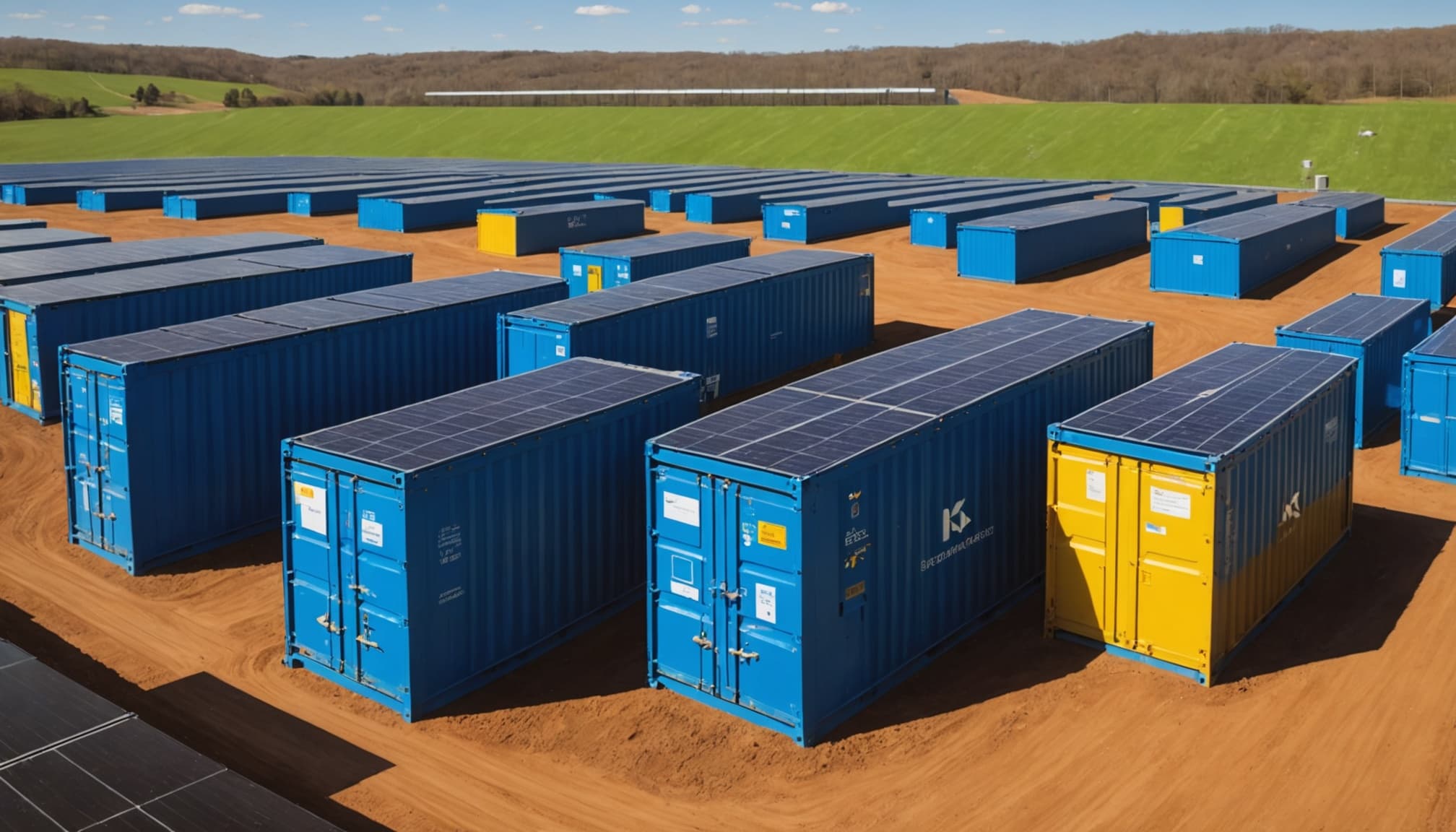
India's battery energy storage system (BESS) market is undergoing a dramatic transformation.
The project pipeline has exploded from 19 GWh in 2024 to 92 GWh in 2026, with the national target set at 200-250 GWh by 2030. This creates a massive opportunity, but three very different companies are chasing it in three very different ways.
Waaree Energies: The Manufacturing Bet
Waaree Energies is building India's largest integrated BESS manufacturing facility. The company plans 20 GWh capacity by FY28 through a two-phase approach: Phase I (FY27) delivers 3.5 GWh LFP Prismatic cells, 5.15 GWh battery packs, and 5.15 GWh BESS containers. Phase II (FY29) adds 16.5 GWh LFP+ cells, 15 GWh battery packs, and 15 GWh BESS containers. The total capex outlay is approximately Rs 10,000 crore, representing 32% of the company's asset allocation. InvestorPresentations
This vertical integration creates structural cost advantages. While competitors like ACME Solar procure from third-party suppliers including CATL and Hithium, Waaree controls the entire value chain from polysilicon to BESS containers. The company has invested strategically in United Solar Holdings, Oman for 100 KTPA polysilicon production, ensuring a non-Chinese, FEOC-compliant supply chain. This matters because Waaree can capture a 25-30% pricing premium in FEOC-compliant markets (USD 75-80/kWh) versus Chinese cells (USD 50-55/kWh). InvestorPresentations +1
The financial metrics reflect this manufacturing advantage. Waaree delivers ROCE of 28.5% and ROE of 24.8%, significantly higher than Adani Green Energy's 12.48% ROCE and 8.32% ROE.
This disconnect stems from margin compression concerns—EBITDA margins declined from 22.5% in Q1 FY26 to 18.2% in Q1 FY27, driven by raw material inflation (cost of materials consumed increased 63.5% YoY) and export challenges (126% US tariffs caused a 35% export decline). InvestorPresentations
As BESS capacity ramps to 20 GWh, margins should recover toward 20-22% by FY29, supported by backward integration benefits and FEOC export premiums. The solar glass plant (2,500 TPD, Rs 3,900 crore capex) coming online will further reduce import dependency. If execution succeeds, Waaree's P/E could expand toward 25-30x as the market recognizes the sustainable competitive advantage of integrated manufacturing. InvestorPresentations
Adani Green Energy: The Scale Play
Adani Green Energy is pursuing a radically different strategy—utility-scale deployment with a target of 50 GWh BESS capacity by FY30. The company currently has 3.5 GWh operational, with 10+ GWh targeted for FY27. This scale ambition positions Adani Green to capture more than two-thirds of India's battery storage market. InvestorPresentations
The competitive advantage comes from scale and technology. Adani Green's Khavda deployment represents one of the world's largest single-location BESS installations. The company leverages AI-driven asset intelligence, cloud-based analytics, and an industrial cloud partnership with Google for maintenance optimization. Centralized project management through Adani Infra India Ltd creates execution advantages over distributed approaches. InvestorPresentations
This provides EBITDA visibility of Rs 25-30 lakh per MWh, eliminating merchant market volatility. The arbitrage model stores power at ~Rs 2.5/unit and monetizes during peak hours with Rs 4-5/unit margins, targeting 15-16% IRR. InvestorPresentations
The 105x P/E multiple reflects growth scarcity and strategic positioning. Adani Green is well-positioned to benefit from AI- and data-center-led power demand, with the Central Electricity Authority estimating 411 GWh storage requirement by FY32. The company's technology moats, long-term contracts, and market leadership justify the premium despite lower current return ratios. InvestorPresentations
ACME Solar Holdings: The Speed Advantage
ACME Solar Holdings has taken a merchant-focused approach, commissioning 3.62 GWh of BESS capacity by Q1 FY27 with a target of 10+ GWh by FY27 and 25 GWh by 2030. The company's accelerated commissioning—nearly three quarters ahead of its original timeline—creates a first-mover advantage in the early deployment phase. InvestorPresentations
The merchant arbitrage model delivers impressive current metrics.
Realization of Rs 8-10 per unit on short-term contracts (85% of revenue) and Rs 93 lakh/MWh capitalized costs demonstrate strong economics. Technical performance is solid with 89% round trip efficiency, 93% depth of discharge, and 99.9% state of health. InvestorPresentations
However, this model faces sustainability challenges. As Adani Green scales to 50 GWh and Waaree brings 20 GWh of integrated manufacturing online, arbitrage spreads will compress. The 82% EBITDA margins are likely unsustainable in a more competitive market. ACME's 25 GWh target by 2030 versus Adani Green's 50 GWh creates a scale disadvantage, and third-party procurement from CATL and Hithium lacks Waaree's integration benefits. InvestorPresentations +1
The Policy Tailwind
All three companies benefit from supportive policy mechanisms. The Central Electricity Authority estimates 411 GWh storage requirement by FY32, with mandatory two-hour energy storage systems in solar tenders. Data centre expansion demand of 15-20 GW for combined solar-plus-BESS installations creates additional opportunity. Viability Gap Funding covering up to 40% of standalone BESS capex and a Rs 18,100 crore PLI scheme for domestic cells improve project economics.
The Verdict
The competitive dynamics will shift as capacity scales. Waaree's manufacturing integration creates sustainable cost advantages and export opportunities, but execution risks on Rs 30,000+ crore capex remain. Adani Green's scale and long-term contracts provide stability, but the 105x P/E requires sustained delivery of ambitious growth targets. ACME Solar's merchant model delivers high current returns but faces margin compression as competition intensifies.
The market will likely reward different models at different stages. Near-term, ACME's speed and merchant margins provide value. Medium-term, Waaree's integration and FEOC compliance drive re-rating. Long-term, Adani Green's scale and contracted cash flows create utility-like stability. Investors betting on India's BESS revolution need to understand which horse they're riding—manufacturing, scale, or speed.