India's battery energy storage systems (BESS) market is witnessing an aggressive expansion race, but the three leading players—Waaree Energies, Pace Digitek, and JSW Energy—are running very different races. Each has placed its bets on distinct strategies, capital allocation priorities, and risk appetites, even as they chase the same massive opportunity: India's target of 300 GWh storage capacity over the next 5-7 years. Transcripts
Capital Efficiency: Scale vs. Speed
Waaree Energies is making the boldest capital commitment with a ₹10,000 crore outlay for 20 GWh of integrated BESS capacity. That's roughly ₹500 crore per GWh, but this higher capital intensity reflects a deliberate choice: backward integration into LFP cell manufacturing, not just assembly. The phased approach—3.5 GWh by FY27, followed by 16.5 GWh by FY28—spreads the risk but creates execution pressure. Management has already demonstrated timeline flexibility on other projects, like the ingot-wafer facility delayed from FY27 to FY28 due to scaling and location changes. InvestorPresentations +2
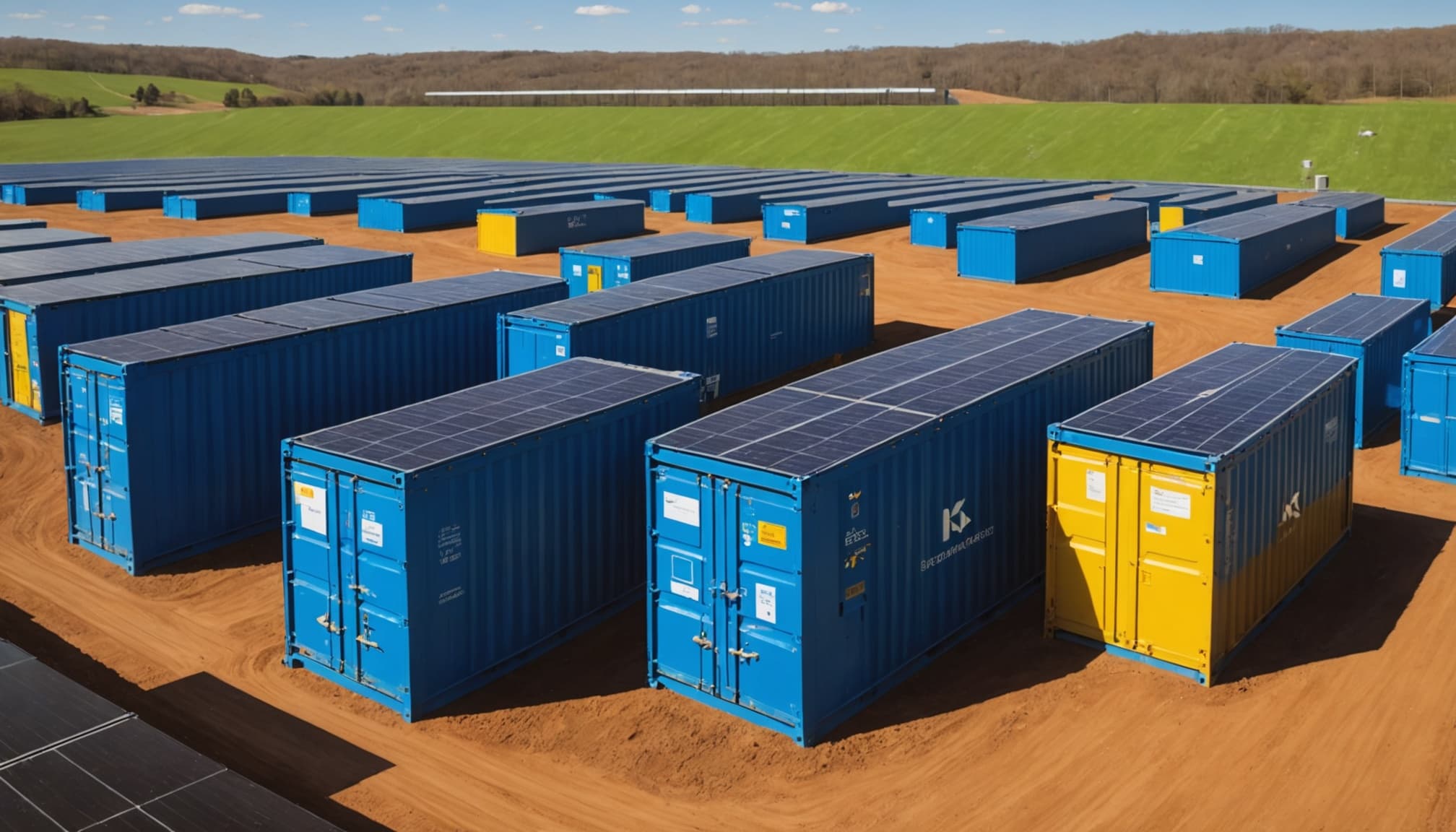
The company is expanding from 2.5 GWh to 10 GWh by October 2026, investing approximately ₹300 crore total. That's significantly lower capital intensity, but Pace's model is assembly-focused rather than integrated manufacturing. The company imports cells from top Chinese manufacturers and adds value through pack-to-container integration. This approach provides faster time-to-market but creates vulnerability if domestic content requirements are mandated. Transcripts +3
JSW Energy's ₹165 crore investment in a 5 GWh battery assembly facility in Pune represents yet another approach: strategic assembly for captive needs first, external markets later. The facility, commissioned in Q4 FY26, imports cell packs from China and assembles them domestically. It's capital-light but creates supply chain dependencies, particularly given dual import restrictions from both Indian and Chinese governments. Transcripts +3
Financial Performance: Growth Drivers and Margin Pressures
The Q4FY26 and FY26 financial results reveal how these different strategies are playing out. Waaree Energies delivered exceptional performance with 112% year-on-year revenue growth to ₹8,480 crore in Q4FY26. The ₹53,000 crore order book provided the conversion engine, but the real story lies in execution: module production reached 4.2 GW, up 104% YoY. The company's diversification across utility (41.1%), retail (25.1%), overseas (21.8%), and EPC (12.0%) segments provided resilience, with retail growing 84% YoY and overseas commanding 40-50% higher pricing than domestic markets. Transcripts +4
Pace Digitek's more modest 8.3% revenue growth and 10.1% net profit growth in FY26 mask a more complex story. The company delivered a record 178 BESS containers and executed 480 MWh of utility-scale capacity, demonstrating strong operational capabilities. However, the transition from telecom-focused operations to a balanced energy-telecom mix impacted margins—EBITDA margins declined to 17.2% from 19.8% in FY25. Energy segment margins are lower than telecom, and as energy orders increase, overall margins face pressure. Yet Q4 FY26 showed accelerating momentum with 60.5% revenue growth, suggesting the BESS investments are gaining traction. AnnualReports +4
JSW Energy's 39% YoY revenue growth to ₹4,851 crore in Q4FY26 was firmly anchored in storage infrastructure expansion. The company's 29.6 GWh locked-in storage capacity (3.2 GWh BESS, 26.4 GWh pumped hydro) provides recurring revenue through capacity charges and energy arbitrage. The newly commissioned 5 GWh battery assembly facility is already contributing commercial sales, and management emphasized they remain "much more competitive as compared to the best imports" despite cell pack price increases. Transcripts +2
Strategic Integration: Competitive Moats
The companies are building very different competitive moats. Waaree Energies is betting big on backward integration. Management expects BESS margins of 18-20% without policy support, with an additional 300-350 basis points expansion through backward integration—targeting 22-25% overall margins. The company emphasizes that "cell is the currency in this business," especially for domestic content requirements. With 90-98% of cell production planned for domestic DCR markets, Waaree is positioning itself as the primary beneficiary of any localization mandates. Transcripts +3
Pace Digitek's competitive advantage lies in end-to-end value chain integration. Management explicitly claims "first-mover advantage in the BESS market" with the largest BESS order book among individual companies. But beyond manufacturing, Pace has built capabilities across EPC execution, deployment, and lifecycle services. The company operates a Network Operating Center for remote monitoring and has 200 engineers supporting field operations. This complete ecosystem approach creates customer stickiness that pure manufacturers can't match. The company's 4-5% pricing and operating efficiency improvement through in-house container fabrication demonstrates the tangible benefits of this integration. Transcripts +3
JSW Energy's vertical integration strategy extends beyond BESS to include blade manufacturing facilities at Halol and southern India, scheduled for commissioning in H1 FY27. The blade facility will provide significant cost reductions through logistics elimination—both ocean freight from China and local transport costs. Management expects "huge reduction in logistics costs" and supply chain de-risking. This approach mirrors the company's broader strategy: lowest project execution costs in the industry, efficient O&M, and supply chain insulation for 1.5-2 years. Transcripts +4
Market Positioning: Diversification vs. Specialization
Customer segment strategies reveal another layer of differentiation. Waaree Energies targets data centres, utilities, C&I customers, and residential segments—a deliberate diversification that provides revenue resilience. The retail segment commands premium pricing of 1-1.5 cents per watt compared to other markets, while overseas markets generate 18-20% margins versus 15-16% in domestic utility. This multi-segment approach creates entry barriers through the extensive retail network built over "more than a decade". Transcripts +2
Pace Digitek maintains sharp focus on utility-scale BESS, where its record delivery of 178 containers has established market leadership. Management notes that "in India the container manufacturing is not there as of now," creating a first-mover advantage. The company is helping establish industry benchmarks for quality, performance, and execution standards. However, this specialization creates concentration risk if utility tender cycles slow or pricing pressures intensify—recent tenders have seen bids at levels management considers "closer to impossible". Transcripts +3
JSW Energy's diversified storage portfolio—3.2 GWh BESS and 26.4 GWh pumped hydro—provides revenue stability that pure-play BESS manufacturers can't match. The pumped hydro assets are backed by long-term PPAs (24 GWh contracted), providing strong EBITDA visibility and stable cash flow generation. This mix offers operational flexibility: BESS for rapid response and short-duration balancing, pumped hydro for longer-duration storage with remunerative returns. Transcripts +2
Policy Drivers and Execution Risks
Government policy is accelerating expansion timelines across all three companies. India's grid modernization initiatives, including mandatory 2-hour duration ESS for solar PV tenders and a target of 236 GWh BESS capacity by 2032, are creating substantial demand. Waaree Energies management emphasizes that "BESS is emerging as core enabler of grid stability and renewable integration," with grid stability concerns accelerating demand. InvestorPresentations +3
However, execution risks loom large. Waaree Energies faces significant challenges in commissioning 3.5 GWh this fiscal year and 16.5 GWh next year. The company has demonstrated timeline revisions on other projects, and the pack line takes longer to start commercial production than the cell line. Supply chain disruptions from Middle East conflicts have already impacted exports, and technology changes every 3-4 years create obsolescence risks. Transcripts +3
Pace Digitek's rapid expansion from 2.5 GWh to 10 GWh by October 2026 creates operational efficiency and quality control pressures. Commissioning was already delayed two months due to West Asia conflict affecting equipment shipments from China. The company is building a team to manage 10 GWh capacity, but workforce training and equipment fine-tuning remain critical dependencies. Transcripts +3
JSW Energy faces integration challenges in coordinating its 5 GWh assembly facility with 29.6 GWh storage portfolio and renewable assets. The assembly-only model creates supply chain vulnerabilities, and grid evacuation infrastructure is lagging behind capacity additions. Management has adopted a pragmatic approach, focusing on contractual PPA-based deployments rather than aggressive merchant expansion. Transcripts +2
The Road Ahead
As India's BESS market evolves toward potential localization mandates, the competitive positioning will shift. Waaree Energies is best positioned for aggressive domestic content requirements with its integrated cell manufacturing. JSW Energy's strategic assembly approach provides flexibility, while Pace Digitek's import-dependent model may need adaptation if localization policies are implemented. Transcripts +2
The companies that successfully navigate execution risks while maintaining quality standards will capture significant opportunities. India needs 60-80 GWh of BESS annually according to industry estimates, and the government's "Make in India" framework for BESS is expected to include PLI schemes, viability gap funding, and tariff barriers against imports. Transcripts +1
The race is just beginning, and the finish line keeps moving. But one thing is clear: India's energy transition depends on battery storage, and these three companies are placing very different bets on how to win.