India's battery energy storage system (BESS) manufacturing sector faces a massive structural gap between demand and supply capabilities, with the country currently accounting for less than 1% of its approximately 260 GWh demand pipeline from competitive tenders in 2026. According to Wood Mackenzie's latest research, it will take more than a decade for India to achieve self-sufficiency in battery storage, as there is a huge gap between demand and current capability to manufacture essential battery cell components. This stark reality contrasts sharply with India's ambitious renewable energy targets, where battery energy storage systems and pumped storage projects are gaining importance as the country expands renewable capacity to meet rising electricity demand and balance solar generation with peak demand.
Industry stakeholders are urging caution against treating import dependence as a reason for slow deployment, emphasizing the urgent need for storage systems. Piyush Goyal from Volks Energie stated that India's storage demand is running well ahead of what domestic cell manufacturing can supply, and that gap is a matter of years, not a few quarters. He warned against pausing for a decade until cells are fully indigenous, noting that "the grid needs storage now to firm up the renewable capacity we are adding, and pausing for a decade until cells are fully indigenous is not a choice we can make." Sunkind India's Hanish Gupta highlighted that batteries and other storage technologies are key to addressing the intermittency risk of solar power and unlocking its growth potential, while Premier Energies' Vinay Rustagi emphasized that batteries are essential for storing renewable energy generated during the daytime and using it in the absence of sunlight.
The government is providing significant support through strategic allocations to address the storage challenge. NTPC Chairman Gurdeep Singh revealed that the company has been allocated 5 GWh of battery energy storage capacity under the Viability Gap Funding scheme to optimize existing thermal generation and transmission infrastructure. This initiative aims to ensure reliable and economical power supply during non-solar hours, demonstrating how storage systems help in both storing renewable energy and providing backup during non-renewable periods. The government's backing provides crucial momentum for the sector's development, particularly as India Energy Storage Demand is projected to grow at 40.03% CAGR from 2026-2034.
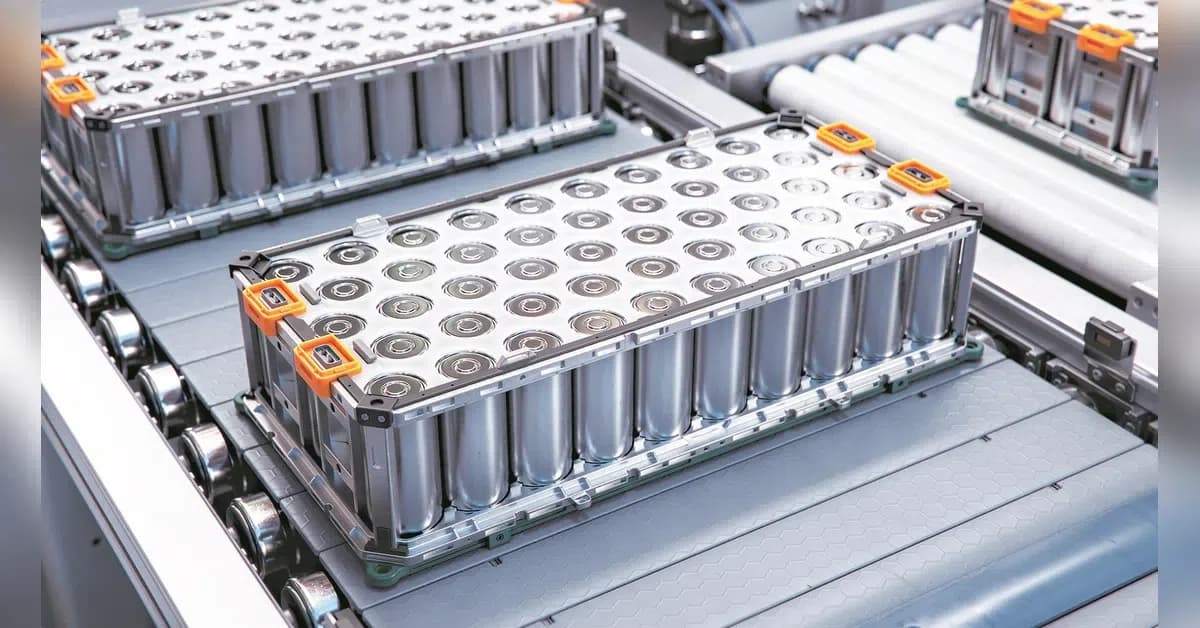
India's manufacturing challenge becomes clear when compared to global competitors. China controls between 85% and 98% of global capacity across every major supply chain component, from cathode to anode, separator and electrolyte, with cumulative capacity of 2,695 GWh. In contrast, India has just 2 GWh of commissioned cell manufacturing capacity as of 2026. This stark disparity leaves the country structurally dependent on imports even as policy ambition accelerates. The typical BESS manufacturing plants require an investment of ₹20-200 crore with a payback period of 3-6 years and net profit margins of 10-18%, making domestic manufacturing both economically viable and strategically crucial for energy security.
The lithium market continues to show mixed signals as operations across the industry chain diverged this week, with the lithium segment remaining relatively strong despite broader market pressures. According to SMM Cobalt & Lithium Morning Meeting Minutes, an upward shift in the price center of lithium carbonate drove ore prices higher, while peak-season demand support gradually strengthened. This divergence comes as industry analysts had previously expected lithium prices to decline in the current half of 2026 due to resurging supplies, with lithium carbonate prices dropping to a six-month low of 140,000 Chinese yuan ($20,770) per tonne as risks of consumption drops combined with higher global supply. However, energy storage demand is likely to prevent sharp price falls, with prices having recovered by $1,000 over the past week and current spot prices ruling at 155,400 yuan ($23,054).