The investment, which began in 2016 and has progressively increased Hero's ownership to approximately 30-40% (not the 32.8% mentioned in initial reports), serves multiple strategic objectives that go beyond simple capital allocation. AnnualReports +1
The primary objective is early market positioning. By investing in Ather when the EV market was nascent, Hero secured a foothold before fully developing its own VIDA brand. This provided immediate access to advanced EV technology, battery management systems, and charging infrastructure that would have taken years to develop in-house.
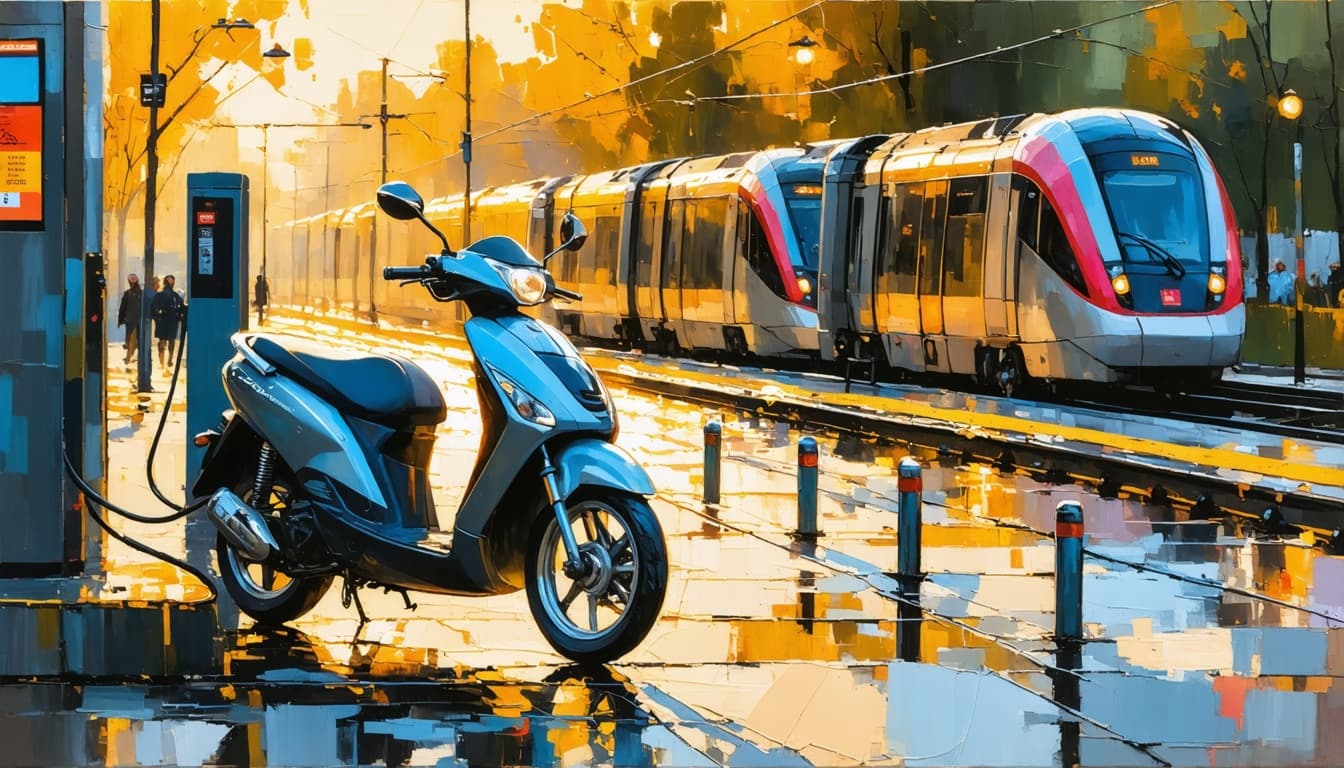
The partnership also enables ecosystem development, particularly in charging infrastructure. Hero and Ather have established an interoperable fast-charging network allowing users seamless access to both VIDA and Ather Grid charging stations. The combined network has grown to 5,900+ charging points, representing the largest two-wheeler charging infrastructure in India. This addresses range anxiety—a critical barrier to EV adoption—while creating significant competitive advantages. InvestorPresentations
Perhaps most importantly, the investment provides technology access and learning opportunities. Hero gains exposure to specialized EV expertise without building everything internally, particularly in areas like proprietary battery management systems and fast-charging IP that are currently superior to its in-house VIDA development. This creates a defensive and offensive moat, reducing the risk of Hero being disrupted by pure-play EV startups.
Capital Allocation and Financial Impact
Despite the substantial investment, Hero MotoCorp maintains an exceptionally strong balance sheet with minimal leverage. The company's debt-equity ratio remains extremely low at 0.01 for both FY24 and FY25, indicating that the Ather investment has not materially impacted its leverage position. This conservative approach is supported by record cash flow from operations of ₹9,395 crores in FY26, up 80% year-on-year, comfortably funding investment requirements. AnnualReports +2
The ₹960 crore warrant subscription component is structured to optimize cash-flow flexibility, requiring an upfront payment of only 25% (approximately ₹240 crore) with the remaining 75% (₹720 crore) deferred until conversion over up to 18 months. This staged payment approach significantly improves Hero's near-term liquidity position while providing optionality—the right but not obligation to convert—allowing for strategic decision-making based on Ather's performance and market conditions.
The investment follows a "cash earned" funding approach—using internally generated cash to fund investments without entering cash burn scenarios. Hero's strong balance sheet enables it to absorb long-term EV gestation periods without compromising dividend payouts or financial flexibility.
Regarding return profile, management has not provided specific payback period guidance, consistent with its characterization as a long-term strategic play. However, Ather's financial performance trajectory shows promise—total annual turnover expanded to ₹3,671.76 crore in FY26, up from ₹2,255 crore in FY25, and the company recently reached operating breakeven before depreciation. Hero also recognized a one-time gain of ₹170 crores from the conversion of Compulsorily Convertible Preference Shares in Q4FY25. Transcripts
Operational Influence and Strategic Synergies
Hero maintains Ather Energy as an "Associate Company," indicating significant influence but not control over operational decisions. This structure preserves Ather's entrepreneurial independence while providing Hero with substantial strategic input. The partnership has enabled Ather's aggressive market expansion—the company doubled its experience centers from 351 to 700 in one year and achieved significant operational improvements, with production cost per scooter falling 9% year-on-year. InvestorPresentations
The most visible operational synergy is the shared charging infrastructure. The interoperable network reduces capital expenditure requirements for both companies while expanding overall coverage.
This creates economies of scale that pure-play EV competitors struggle to match. Transcripts
Distribution synergies leverage complementary strengths. Hero has presence in 93% of talukas across India, providing unparalleled service accessibility, while Ather focuses on 700 experience centers targeting tech-savvy urban professionals seeking premium experiences. This market segmentation allows Hero to serve mass-market and semi-urban customers through Vida, while Ather focuses on premium urban segments. Transcripts +1
The partnership creates a unique competitive advantage versus traditional ICE competitors like TVS Motor and Bajaj Auto.
This creates a multi-pronged attack capturing both mass and premium segments simultaneously. In H1 2026, TVS, Bajaj, Hero and Ather together accounted for 95.6% of incremental electric two-wheeler registrations, demonstrating the dominance of established manufacturers with scale and distribution networks.
Policy Exposure and Regulatory Risks
Hero's investment in Ather Energy provides strategic exposure to India's EV policy incentives. The company actively realizes Production Linked Incentive (PLI) scheme benefits through both its VIDA brand and Ather Energy investment. Hero received ₹48 crores in PLI benefits in Q1FY27 covering 60% of their EV portfolio, with expectations for 100% of EV portfolio to be PLI-eligible by December 2026. Ather Energy is also positioned to potentially join the PLI Auto scheme following government consideration of widening eligibility criteria to include pure-play EV manufacturers. Transcripts +1
The concessional 5% GST rate on electric vehicles (compared to 28% GST plus compensation cess for petrol/diesel vehicles) has provided significant tailwinds. Management notes that GST rate cuts have reduced prices by approximately 10%, taking prices back to levels from three years ago. However, industry bodies have requested further reductions to 0-2%, which could accelerate adoption but may compress margins if manufacturers cannot fully pass on benefits. Transcripts
Significant regulatory risks exist, particularly around battery sourcing and local content requirements. The Battery Waste Management Rules, 2022 create compliance obligations, but management notes that "sufficient guidance on waste collection mechanisms and associated costs are not yet made available" and they are "currently unable to reliably estimate a range of possible outcomes and the financial implications". AnnualReports +1
The PLI Auto scheme requires minimum 50% Domestic Value Addition (DVA) for EV manufacturers to qualify for incentives. Management is committed to improving domestic value addition across the portfolio and actively working on optimizing BOM cost through localization. Building a strong local base of vendors is identified as a key risk mitigation strategy for geopolitical tensions and supply chain disruptions. Transcripts +2
Additional regulatory challenges include BIS certification compliance requirements for lithium-ion batteries under IS 16046 standards, new safety regulations including IS 18590:2024 and IS 18606:2024, and MoRTH's draft notification making ABS mandatory for EVs greater than 4 kilowatt effective January 1, 2026, which management acknowledges "is going to be expensive". Transcripts
Despite these uncertainties, Hero has demonstrated resilience to policy changes by adapting product strategies and cost structures. The company maintains a four-pillar profitability strategy: volume scaling, BOM cost reduction through localization, PLI benefit realization, and operational efficiency improvements. This diversified approach reduces dependence on any single policy incentive, providing resilience against regulatory changes affecting Ather Energy's performance. Transcripts +1
The Strategic Hedge
Hero's partnership with Ather represents a sophisticated strategic hedge against uncertain EV market evolution. If VIDA scales rapidly, Hero participates directly; if Ather gains market share, Hero participates as a major shareholder. This dual exposure provides risk diversification while maintaining flexibility as competitors must bet on specific market segments or technology approaches.
As the Indian electric two-wheeler market is projected to reach 40-50% penetration by 2030, Hero's comprehensive strategy positions it to capture growth across multiple segments and scenarios. The ₹1,758 crore investment reinforces Hero MotoCorp's status as a formidable player in the green mobility revolution—buying not just a stake, but a seat at the head of the EV table for the next decade.