The company has explicitly identified building "EV leadership" as a core pillar, establishing a dedicated Electric Mobility Business Unit (EMBU) to accelerate innovation. This fresh capital deepens that commitment, positioning Hero to capture the massive upside potential of the rapidly expanding electric two-wheeler market rather than relying solely on its internal VIDA brand. Transcripts
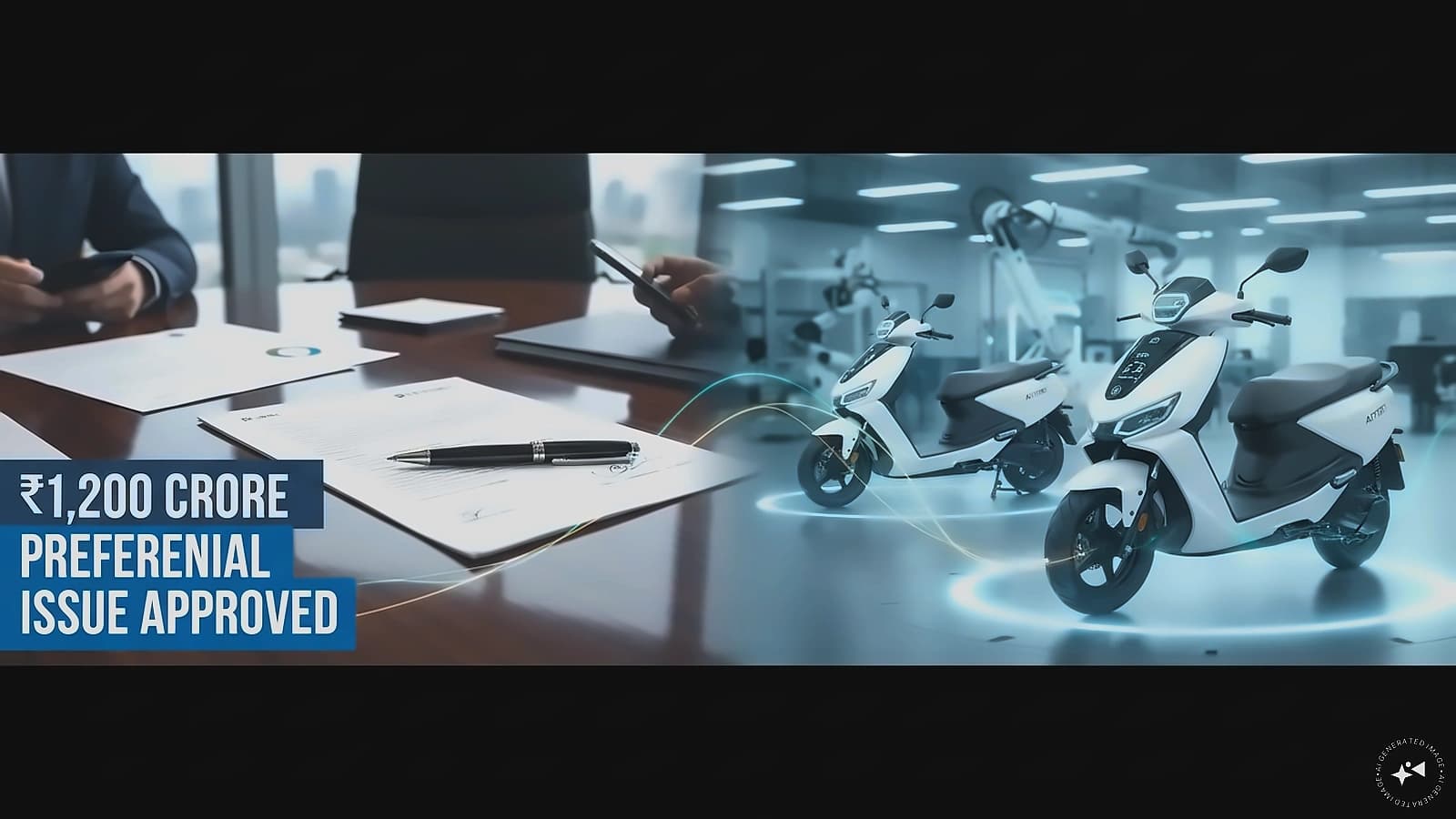
The investment structure itself is telling. Hero currently holds a 29.48% stake in Ather on a fully diluted basis, making it the largest shareholder. This significant existing influence allows Hero to shape strategic direction without the operational headaches of full ownership. By choosing to increase equity exposure through a preferential allotment—potentially in the form of equity shares, compulsorily convertible preference shares (CCPS), or warrants—Hero is effectively doubling down on a proven winner while maintaining the flexibility to scale its involvement based on Ather’s performance milestones. Others +2
Ather’s Explosive Growth Fuels Confidence
The numbers behind this decision are compelling. Ather Energy reported a staggering 74% year-on-year revenue jump to ₹1,175 crore in Q4 FY26, alongside a 57% reduction in net losses to ₹100 crore. For the full fiscal year, revenue surged 63% to ₹3,671.76 crore, while losses narrowed by 37% to ₹517 crore. This isn’t just growth; it’s accelerating momentum. Even more impressive is the operational improvement—EBITDA margins improved by a massive 2,080 basis points year-on-year to reach -2.5% in Q4, putting the company on the doorstep of operational break-even. Others +1
This financial trajectory validates Hero’s confidence. Ather’s volumes hit 83,418 units in Q4, up 76% YoY, driven by the successful launch of the family scooter Rizta and a retail network that doubled to 700 Experience Centers in a single year. The company is also executing on cost reduction, with bill of materials costs dropping from ₹1.48 lakh in FY24 to ₹1.1 lakh by Q3 FY26. This combination of top-line expansion, margin improvement, and operational efficiency creates a clear line of sight to profitability, making the additional capital injection a catalyst rather than a rescue. InvestorPresentations +1
Accelerating the Path to Profitability
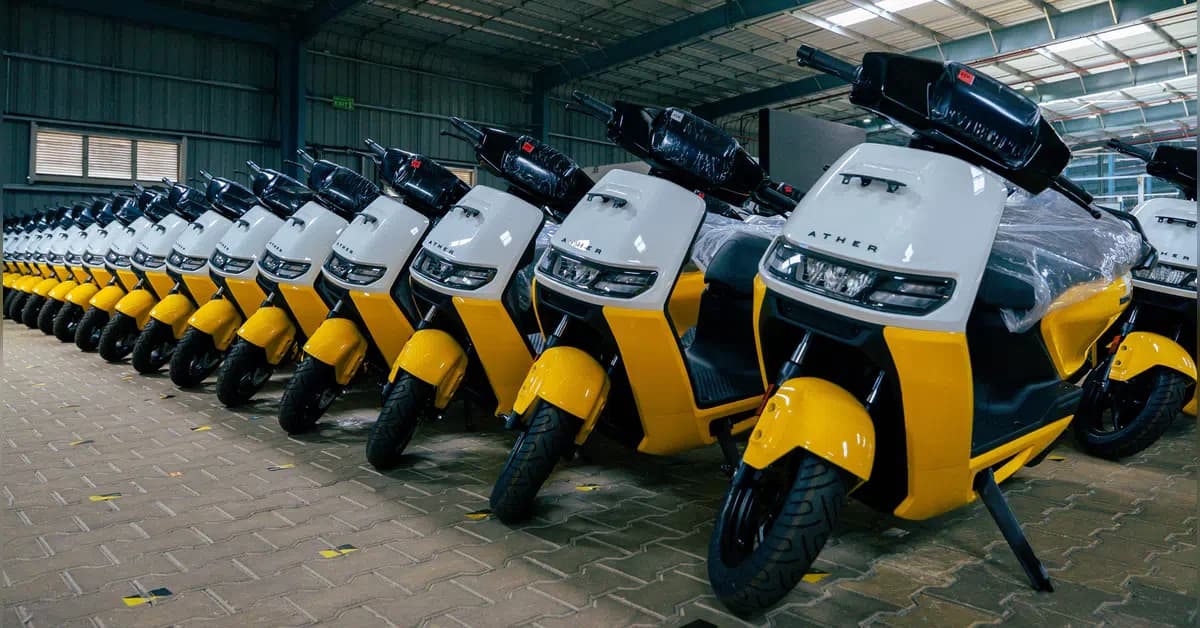
The ₹1,000 crore infusion will serve as high-octane fuel for Ather’s profitability engine. The company is currently supply-constrained, operating its Hosur facility at 90-95% capacity with a monthly output of 35,000 units. The fresh capital will accelerate the development of Factory 3.0 at AURIC (Aurangabad Industrial City), which will add 5 lakh units of annual capacity in Phase I alone, with trial production expected before the end of calendar year 2026. This scale is critical—management believes EBITDA break-even is within reach for FY27, with net profitability following in FY28 as the new EL platform drives substantial cost reductions through steel frame architecture and enclosed gearbox designs. Transcripts +5
For Hero MotoCorp, the opportunity cost analysis favors this external investment. While Hero could deploy this capital into its own VIDA brand development or international expansion, Ather offers immediate market position, proven technology, and an established charging ecosystem. Building these capabilities from scratch would require significantly more time and capital. Hero’s financial strength—with a market cap of nearly ₹98,000 crore and robust returns on capital—provides the luxury of making strategic bets without jeopardizing core operations . The preferential allotment structure also offers flexibility; depending on the final pricing and instrument mix, Hero’s stake could increase by roughly 2.5-3.1%, potentially bringing its total ownership to around 32%.
Manufacturing Scale and Operational Synergies
The investment unlocks massive manufacturing and operational advantages. Factory 3.0 isn’t just about capacity—it’s designed for higher vertical integration, including in-house battery pack assembly, transmission assembly, painting, and electronics assembly. This enhanced integration is expected to improve unit economics by 15-20% through better supply chain control and reduced logistics costs. Hero’s manufacturing expertise, honed across 8 global plants with 9.5 million units of capacity, will prove invaluable in optimizing this expansion. InvestorPresentations +2
Perhaps the most immediate synergy lies in distribution. Ather has built an impressive network of 700 Experience Centers, but Hero operates India’s largest two-wheeler distribution network with 7,600+ dealer partners and 1,500+ authorized service centers. This represents a 10x expansion opportunity for Ather, particularly in Tier 2 and Tier 3 cities where Ather is currently focusing its growth efforts. Hero’s supply chain resilience—developed through decades of navigating component crises—will also help Ather manage the supply chain disruptions that plagued the industry in FY26, including rare-earth magnet shortages and lithium price volatility. InvestorPresentations +5
Competitive Positioning and Market Dynamics
This strategic investment fundamentally alters the competitive landscape. In June 2026, the electric two-wheeler market grew 75.5% YoY to 1.94 lakh units, with TVS leading at 24.3% market share, followed closely by Bajaj at 22.3%. Ather held third place with 16.1% share, while Hero’s VIDA brand was the fastest-growing major player at 11.3% share with 176.2% YoY growth. By increasing its stake in Ather, Hero is effectively building a dual-brand strategy—VIDA for the mass market and Ather for the premium segment—that creates comprehensive market coverage.
The combined entity creates formidable barriers to entry for new competitors. Consider the capital requirements: Ather’s Factory 3.0 requires multi-crore investment, while the company spent ₹890 crore on R&D in Q1 FY26 alone. Building comparable manufacturing capabilities would require new entrants to invest ₹2,000-3,000 crore minimum. Distribution presents another hurdle—replicating Hero’s 7,600+ dealer network would take 5-7 years and ₹500-1,000 crore. Technology moats are equally deep, with Ather holding 643 patents and operating India’s largest fast-charging network with 6,000+ points. The partnership also shapes industry standards through Ather’s leadership in the LEAF consortium, which established the LECCS charging standard. InvestorPresentations +4
Regulatory Path and Execution Risks
The transaction faces a relatively straightforward regulatory path. Hero MotoCorp requires no government approvals, having already secured internal Committee of Directors approval. The critical path lies with Ather Energy, which needs Board and shareholder approval via special resolution under the Companies Act, 2013. The investment must be completed within 15 days of Ather receiving these approvals, suggesting a total timeline of 45-60 days from announcement under normal circumstances. However, pricing negotiations, shareholder deliberations on dilution, or documentation complexities could extend this to 90 days or more. Others +1
Execution risks remain significant. Ather faces unprecedented commodity price inflation of 40-50%, with aluminum and lithium prices creating margin pressure. Supply chain disruptions, particularly in rare-earth magnets and battery components, could impact production scaling. The aggressive expansion timeline for Factory 3.0 also carries coordination and technical implementation risks. However, Ather has demonstrated resilience by navigating these challenges in FY26 while achieving minimal production impact and significant margin improvement. InvestorPresentations +2
The Strategic Horizon
Looking ahead, this investment positions Hero MotoCorp to capture the full upside of India’s EV transition. Ather’s EL platform launch, expected before end of FY27, will enter the mass-market ₹1-1.25 lakh segment where the company currently has no presence—a move that could drive market share gains to 25%+ over the next 2-3 years. For Hero, the combined strength of VIDA’s explosive growth and Ather’s premium leadership creates a powerful competitive position that traditional ICE manufacturers and pure-play EV startups will struggle to match. Transcripts +1
The ₹1,000 crore investment is more than capital; it’s a strategic anchor in the future of mobility. By deepening its partnership with Ather Energy, Hero MotoCorp isn’t just participating in the EV revolution—it’s positioning itself to lead it.