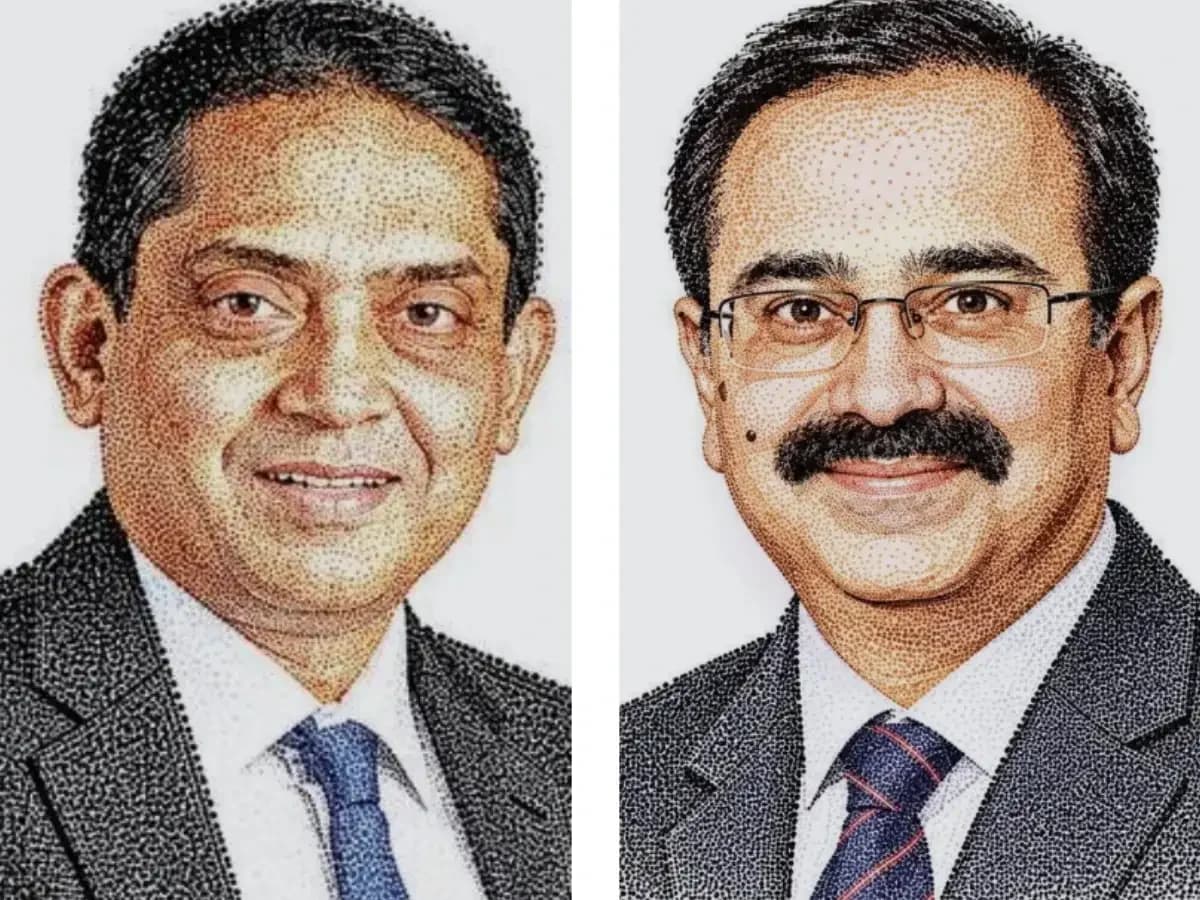
India's largest private sector bank, HDFC Bank, is navigating its most significant leadership transition since its founding days. The Reserve Bank of India (RBI) has approved Anup Bagchi, a seasoned ICICI Group veteran, as the new Managing Director and Chief Executive Officer for a three-year term beginning October 27, 2026. He succeeds Sashidhar Jagdishan, who announced in late August that he would not seek a third term.
This decision ends months of speculation but opens a new chapter of uncertainty. Kaizad Bharucha, the bank's Deputy Managing Director and the internal frontrunner for the top job, is reportedly considering early retirement, according to anonymous sources cited by Moneycontrol. While the bank has made no official announcement, the potential exit of its longest-serving executive board member raises critical questions about succession planning, executive retention, and the continuity of the bank's corporate lending franchise.
A Surprise Regulatory Clearance
Typically, such approvals take three to six months.
This swift clearance removed the immediate uncertainty over who would lead the bank but also set in motion the potential departure of the internal candidate.
The board had sent two names to the regulator: Bharucha, who has been with the bank since 1995, and Bagchi, the external candidate. The RBI's choice of the outsider effectively ended Bharucha's aspirations for the corner office. At 60 or 61 years old, Bharucha was already approaching the RBI's 15-year cap for whole-time directors, which he would have hit by April 2029. Missing out on the CEO role, combined with the tenure limit, appears to have influenced his reported decision to consider an early exit.
The Compensation Signal
Bagchi's appointment comes with a substantial pay package that signals a shift in the bank's compensation philosophy.
Additionally, he stands to receive a one-time joining bonus of ₹7.35 crore in stock-linked instruments, vesting over four years.
This package is significantly higher than what outgoing CEO Jagdishan received. According to the bank's FY26 statutory annual return, Jagdishan's total remuneration was ₹28.65 crore.
The heavy emphasis on variable pay—about 75% of the target—is tied to performance and stock price, aligning the new CEO's incentives with shareholder returns.
However, this premium compensation for an external hire, while the internal candidate who built much of the wholesale business may exit, could create friction among other senior executives. Three brokerages have already flagged the possibility of churn at senior and mid-senior levels as the bank enters this new leadership phase.
Succession Planning Under the Microscope
Bharucha's potential exit reveals both strengths and weaknesses in HDFC Bank's internal succession planning. On one hand, the board had a credible internal candidate and submitted his name to the RBI, indicating some bench strength. On the other hand, the bank relied heavily on one aging deputy for the wholesale business. Bharucha was elevated to Deputy MD only in 2023, reopening a position that had been vacant for five years after Paresh Sukhtankar's exit in 2018.
The compressed timeline of the succession process also suggests reactive planning. Jagdishan was widely expected to continue until Chairman Atanu Chakraborty's sudden resignation in March 2026, citing practices at odds with his "personal values and ethics". The CEO search was then fast-tracked into weeks, leaving little room for a measured transition.
To address these gaps, the bank is expanding its senior management structure. It has proposed Jimmy Tata, the Chief Credit Officer, as an additional whole-time director and sought the reappointment of V Srinivasa Rangan. A fourth whole-time director position is also being created to strengthen oversight and support succession planning. Earlier this year, the board named Puneet Sharma as CFO-Designate and Jigar Shah as General Counsel-Designate. Other +1
The Wholesale Business at a Crossroads
The potential departure of Bharucha comes at a critical juncture for HDFC Bank's wholesale business. As of Q1 FY27 (June 2026), corporate and other wholesale advances stood at ₹8,401 billion, growing 18.6% year-on-year and accounting for about 27% of the bank's advances under management. The asset quality remains strong, with 77.6% of the externally rated wholesale book rated AA and above. Investor Presentation +1
Bharucha has been instrumental in building this franchise. He oversees Corporate Banking, Emerging Corporates, Investment Banking, Healthcare Finance, and also leads retail assets, mortgages, and rural banking. He co-chaired the Integration Committee for the landmark HDFC Ltd merger in 2023, giving him deep institutional knowledge of the bank's post-merger strategy.
His exit could create near-term risks. The simultaneous loss of corporate lending leadership and the CEO transition poses challenges to business continuity, particularly in maintaining client relationships and credit decision-making processes. However, the bank's wholesale franchise is more than one person—it rests on institutional relationships, market-leading positions in cash management and capital markets, and strong credit frameworks. Transcript +1
Bagchi's background may help mitigate these risks. As an Executive Director at ICICI Bank from 2017 to 2023, he oversaw retail, business, and rural banking, and subsequently wholesale banking. This experience across both lending and liabilities segments could prove valuable as HDFC Bank works through the structural changes following the HDFC Ltd merger.
What Lies Ahead
The immediate focus will be on the Q2 FY27 results, expected around October 17, and any board announcements regarding Bharucha's status. Shareholders will vote on Bagchi's appointment and remuneration through a postal ballot until November 6.
For investors, the leadership uncertainty has largely been resolved, but the execution risk remains. Brokerages have identified leadership clarity as an important potential catalyst, with Macquarie highlighting the possibility of a fresh strategic mandate under an external CEO. The key test for Bagchi will be whether he can set out a clear growth and profitability roadmap while maintaining the scale, asset quality, and risk discipline of the franchise.
The broader question is whether HDFC Bank can rebuild its valuation premium, which has eroded as loan growth and return on equity moved towards industry averages. The bank has outlined several targets—loan growth faster than the banking system, stable net interest margins, a cost-to-income ratio of 30%, and a loan-to-deposit ratio of 90%—but analysts have noted the absence of clear timelines.
As HDFC Bank enters this new phase, the departure of legacy executives like Bharucha may mark the end of an era. But it also presents an opportunity for the bank to refresh its leadership pipeline, strengthen its governance practices, and accelerate its post-merger integration under a CEO who brings an external perspective to one of India's most storied financial institutions.