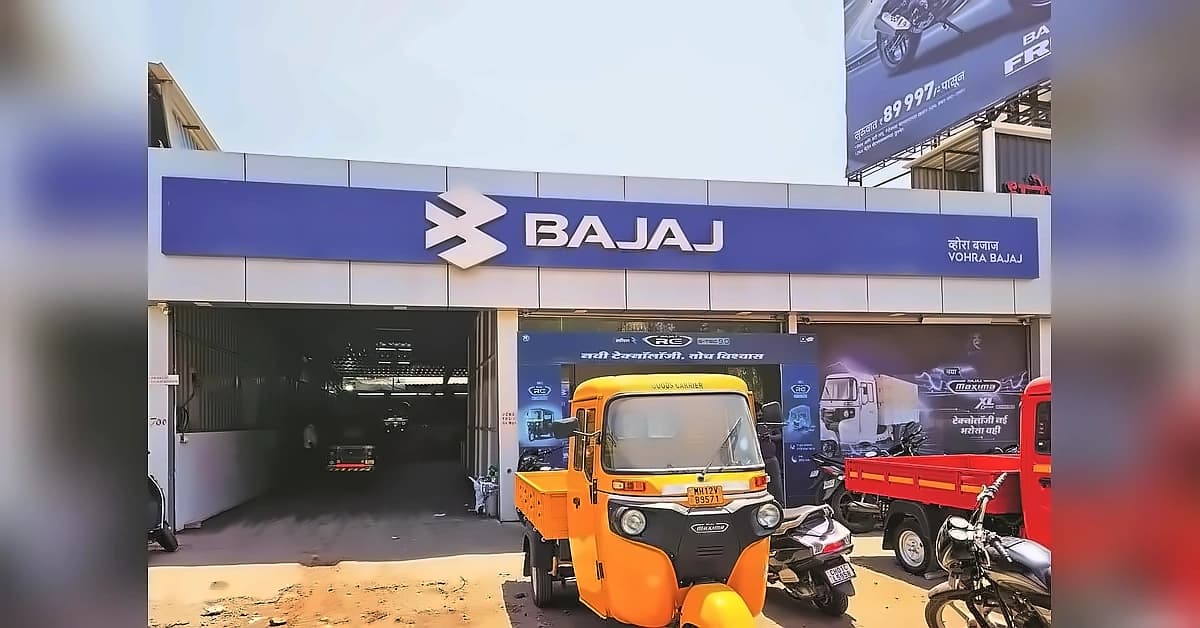
Bajaj Auto Limited reported a stellar 40% year-on-year jump in total sales for April 2026, reaching 5,13,792 units compared to 3,65,810 units in the same month last year. This performance was overwhelmingly driven by exports, which surged 83% to 2,65,582 units, overtaking domestic volumes of 2,48,210 units for the first time in recent periods. The stock responded enthusiastically, climbing nearly 5% to trade around ₹10,477 on the NSE, pushing the Nifty Auto index over 1% higher. But beneath the headline numbers lies a complex story of strategic trade-offs, margin pressures, and shifting competitive dynamics that investors need to unpack carefully .
Export Surge Drives Structural Shift
The export surge wasn't just broad-based—it was strategically concentrated. Two-wheeler exports jumped 78% to 2,29,890 units, while commercial vehicle exports more than doubled, rising 125% to 35,692 units. The commercial vehicle segment, particularly three-wheelers, emerged as the most profitable export franchise, rebounding sharply after a prolonged slowdown in key international markets. Nearly 80% of the incremental volume growth in April came from exports, underlining the extent to which Bajaj Auto's performance is once again being driven by its global business rather than domestic demand .
Geographically, the recovery is playing out across multiple fronts. Nigeria, the company's biggest market, has recovered from zero to 30,000 units per month and is targeting 35,000–40,000 units. Sri Lanka is back to over 10,000 units monthly after complete collapse two years ago. But the real star is Latin America, where January 2026 alone saw over 50,000 motorcycles sold, mostly Pulsar and Dominar models, plus 5,000 three-wheelers. This geographic diversification across 108 countries, with management giving equal attention to smaller markets rather than just the top 30, provides resilience against country-specific shocks Others.
Margin Headwinds Amid Volume Growth
However, translating this volume growth into earnings isn't straightforward. Analysts project Q4 FY26 revenue of ₹15,780 crore (nearly 30% YoY growth) and net profit of ₹2,631 crore (28% YoY growth), but EBITDA margins are expected to expand only 40 basis points year-on-year to around 20.6%. This modest margin expansion despite 40% volume growth reflects significant headwinds. Management anticipated 50-60 basis points of material cost inflation for Q4, driven primarily by noble metals (platinum, palladium, rhodium) experiencing double-digit inflation, along with significant increases in copper and continued hardening of aluminum and nickel Others.
The company has made deliberate strategic choices prioritizing volume and market share over immediate margin maximization. In Q3, it deferred all pricing actions despite commodity inflation, absorbing a roughly 50 basis point margin hit to protect volume during the festive season. For Q4, management implemented pricing to cover only about 50% of the anticipated inflation, choosing to absorb the remainder. Even more strikingly, the company absorbed the full impact of a GST rate increase on 350cc+ motorcycles (from 31% to 40%) by holding prices to protect momentum, which resulted in best-ever performances for KTM and Triumph brands. This approach demonstrates a willingness to sacrifice near-term profitability for long-term positioning Others.
Product Mix and Competitive Pressures
The product mix evolution adds another layer of complexity. While three-wheeler exports and premium motorcycles (KTM, Triumph) drive positive mix effects, the sharp scale-up of electric two-wheelers temporarily dilutes profit mix. Chetak EV has reached highest-ever volumes but operates at lower margins compared to the roughly 20% enterprise margin. However, the overall electric portfolio (combining two-wheelers and three-wheelers) has achieved double-digit EBITDA margins, reducing this profit drag over time. The company is also reinvesting currency gains into select export markets rather than maximizing pricing, further constraining near-term margins Others.
Competitive pressures are intensifying on multiple fronts. Domestically, Bajaj Auto has lost market share, declining from 12.5% in December 2021 to 10.63% in February 2026, while TVS Motor gained nearly 4.5 percentage points to reach 19.64%. In exports, TVS is gaining ground rapidly with 37% growth versus Bajaj's 15% in the April-December 2025 period, particularly dominating the 125cc segment where it controls 53% of made-in-India exports. Chinese OEMs continue to pressure margins in markets where Bajaj relies on volumes and local financing. The company faces the classic dilemma of investing for growth while defending market share against aggressive competitors .
Analyst Expectations and Valuation
Looking ahead, brokerages maintain a positive consensus with an average target price of ₹9,800, implying roughly 14% upside from pre-surge levels. Motilal Oswal has a Buy rating with a target of ₹11,000, CLSA rates it Outperform with a ₹10,500 target, and Elara Capital sees it reaching ₹11,500. The bull case at ₹11,500 values the company at 27x FY27 earnings, justified by EV business value, export recovery, and the Triumph partnership unlocking the premium ₹2-5 lakh motorcycle segment. However, the bear case at ₹7,500 assumes export markets fail to recover from currency-related declines, Chetak EV struggles against Ola Electric's aggressive pricing, and Hero MotoCorp successfully launches a premium motorcycle that takes Pulsar market share .
Key Risks to Monitor
The risks to current momentum are substantial. Demand sustainability concerns persist, particularly in domestic entry-level segments where management noted "continued stress." Rural buyers, accounting for about 45% of two-wheeler volumes, face pressure from RBI repo rates at 6.50% and inflation at 6.5%, which have pushed EMI costs up 8-12% year-on-year. Export volatility remains a material risk, with currency devaluation in Nigeria (down 20% historically) and potential FX crises in Africa and Latin America capable of disrupting shipments and receivables. The Red Sea shipping crisis is already affecting about 3% of exports through Gulf countries, with freight costs up 15-25% and transit times extended by 10-14 days .
Margin headwinds from commodity inflation are expected to persist into FY27. Aluminum prices are up 44% year-on-year to $3,518 per tonne, copper has risen 6% on the MCX, and noble metals continue to see double-digit inflation. The EV transition timeline remains uncertain, with slower-than-expected battery cost declines or supply constraints potentially delaying the targeted mid-to-late FY26 breakeven. Regulatory risks include potential changes to EV incentives under the PM E-Drive scheme and ongoing compliance costs from tighter emissions and safety norms .
Investment Perspective
The April 2026 performance represents a significant structural shift for Bajaj Auto, with exports now accounting for 51.7% of total volumes compared to 39.7% in April 2025. This transition from a domestic-focused to an export-driven business model has profound implications for earnings quality, business cyclicality, and growth drivers. The company's strong balance sheet, with net cash exceeding ₹18,000 crore, provides the flexibility to sustain this investment-led approach. However, the stock's future trajectory will depend on whether April's performance marks the beginning of a sustained structural upturn or a cyclical bounce that faces headwinds in subsequent quarters .
Investors should focus on several key monitorables in the coming months. Q4 FY26 results on May 6 will be critical—any material beat or miss on revenue and PAT estimates will be the primary price driver. Management commentary on FY27 guidance, particularly regarding export sustainability and margin trajectory, will be closely scrutinized. The progression of Chetak EV toward profitability and the success of new premium motorcycle launches will indicate whether the company can successfully execute its triple-engine growth strategy. Ultimately, Bajaj Auto's ability to convert its impressive volume growth into sustainable margin expansion while defending market share against intensifying competition will determine whether the current stock rally has legs or runs out of steam .