Export Surge: Structural Drivers Behind the Numbers
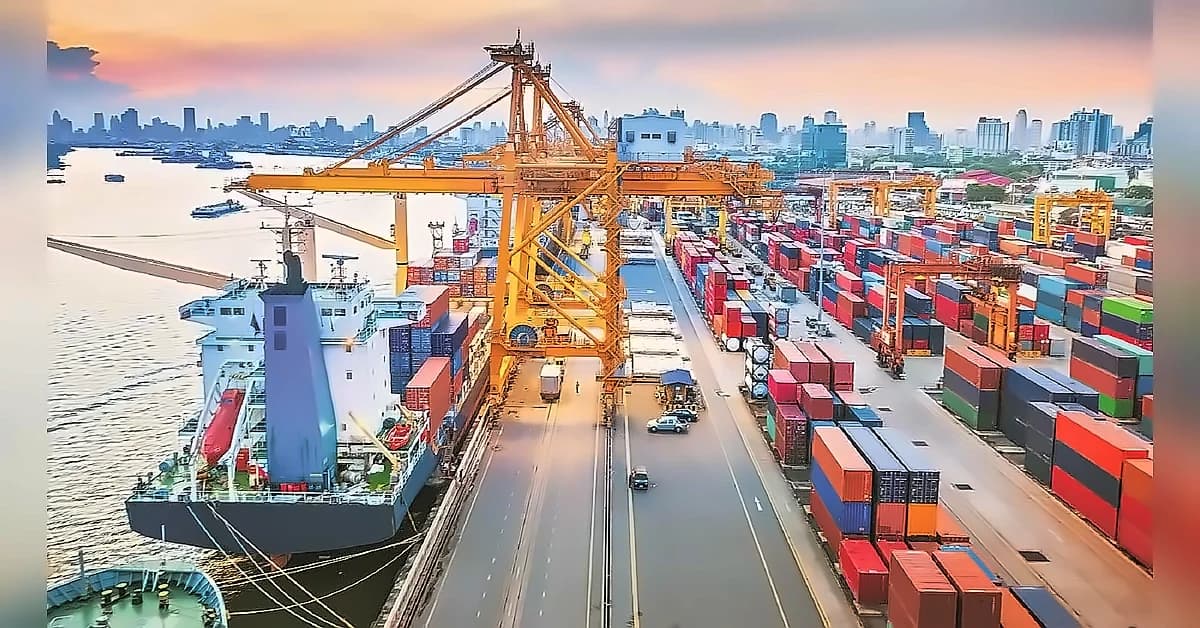
Bajaj Auto's export performance has been spectacular. Two-wheeler exports surged 42% year-on-year, with year-to-date export growth hitting 49% through April-July 2026. This isn't temporary—it's structural. Exports now account for 40-45% of total revenue, up from 40% in FY25 to nearly 44% in FY26. In some months, export volumes have exceeded domestic sales.
The geography tells the story. African markets grew nearly 50%, with Bajaj growing at twice that rate and doubling retail sales. Nigeria stands out with nearly 60% market share, driven by the Boxer 125 Heavy Duty upgrade. Latin America emerged as another powerhouse—Mexico is now among Bajaj's top 5 markets globally, benefiting from a supply chain securing optimal 3% tariffs. Brazil retail sales grew 50%+ with healthy financial performance. Transcripts +1
Product innovation has been equally crucial. Premium models like the NS series and N250s gained traction in Latin America. Three-wheeler exports achieved record volumes of 100,000 units, growing 70% year-on-year and commanding over 65% of India's three-wheeler exports. KTM exports from India revived with 20%+ growth, while Triumph exports grew 40% year-on-year. Transcripts +1
Profitability Impact: The Export Margin Advantage
The export-heavy mix isn't just volume—it's margins. Export markets typically offer better realizations than domestic markets. Q1 FY27 tells the story: EBITDA margin expanded to 20.9% from 19.7%, with currency movements contributing 110 basis points of year-on-year margin improvement. Net profit surged 42% to ₹2,983 crore, while revenue jumped 37% to ₹17,244 crore. Transcripts
Bajaj Auto's profitability metrics stand out. The company commands an EBITDA margin of 23.42% and net profit margin of 19.65%, significantly outperforming TVS Motors (15.2% and 6.43%) . While Eicher Motors leads on margins due to luxury positioning, Bajaj sits between volume-focused Hero and premium-focused Eicher, capturing both segments effectively.
The export advantage goes beyond pricing. Strong exports improve factory utilisation and reduce fixed costs per vehicle. A wider geographical presence reduces dependence on any single market. Currency depreciation provides an additional cushion. In Q1 FY27, the rupee depreciated to INR 94.4 from INR 90.6 in the previous quarter and INR 85.6 in the same quarter last year, delivering what management called an "important and welcome cushion" against inflationary input costs. Transcripts
Domestic Headwinds: Why Growth Lags
While exports surge, domestic two-wheeler sales grew only 19% year-on-year in July 2026, significantly lagging the 42% export surge. Full-year FY26 domestic growth was just 3%, compared to 21% export growth. This divergence reflects fundamental structural challenges.
The macroeconomic environment is weighing on sentiment. Management notes that "the upper half of the society are economically much, much stronger" while "people down the pyramid have weakened". This K-shaped recovery is visible—premium segments maintain strong growth while entry-level segments struggle. The West Asia crisis and LPG shortages created difficulties "into every kitchen of India and affected consumer sentiment," leading people to postpone purchases. Transcripts
Pricing pressures haven't helped. Price hikes rolled back approximately 30-40% of the benefits consumers received from the GST rate cut, impacting demand in lower segments. Commodity inflation remains sharp—steel up ~15%, copper ~20%—creating margin pressures that limit pricing flexibility. Transcripts +1
Competitive dynamics are shifting. Bajaj is strategically losing market share in the 100cc segment, which management accepts as part of their focus on profitability over volume. The company faced market share challenges in their core 150cc-plus segment due to "asymmetry of our new product and upgrade cycle compared to that of key competitors". They've launched a comprehensive turnaround program with seven interventions between November and January, with plans for eight more in the following four months. Transcripts +2
Commercial Vehicles: Balanced Growth Engine
The commercial vehicle business has emerged as a reliable growth driver, delivering 23% year-on-year sales growth with balanced performance across domestic (24%) and export (22%) markets. This segment achieved a historic milestone by crossing the 5-lakh unit mark for the full year for the first time in company history. Transcripts
Structural shifts in mobility are driving demand. Exploding mobility requirements in non-metro locations and smaller towns, fueled by road network expansion, are creating new opportunities. People increasingly travel between towns for work, using shared three-wheelers to commute from hometowns to neighboring towns rather than renting homes in work locations. Women's mobility growth is also creating new demand patterns. Transcripts +1
The electric revolution is accelerating this trend. Electric three-wheelers are growing at 50% plus rates, significantly outpacing the ICE segment. E-autos have doubled in sales and now constitute 44% of the L5 segment. The L3 e-rickshaw segment represents approximately 45,000 units per month, with 90% still using lead-acid batteries—presenting significant upgrade opportunities. Transcripts +3
Bajaj Auto's market leadership is overwhelming. The ICE franchise maintains approximately 70% market share, while the company holds 85% plus in the CNG segment—the largest within ICE. In electric three-wheelers, they've maintained the number 1 position throughout Q4 FY26 and April in terms of registrations. The industry's widest electric three-wheeler portfolio with 12 models covers the full spectrum from smallest to largest vehicles. Transcripts +3
Pulsar Strategy: Upgrades to Regain Market Share
Bajaj Auto is executing an aggressive product launch strategy for the Pulsar brand, with management outlining an exhaustive portfolio makeover within approximately 6 weeks. The pipeline includes an absolutely new 150cc motorcycle, an absolutely new 125cc motorcycle, 10 facelifts across the 160cc to 400cc range, and 2 new brand introductions in the 125cc segment. Transcripts +2
The next-gen Pulsar 125 represents the biggest update in years. The most significant change is the addition of a rear mono shock suspension—no Classic Pulsar has offered this setup before. The motorcycle gets a new LED headlamp with more aggressive appearance, a revised LED tail lamp (first update since 2006), and a larger colour LCD instrument cluster expected to support turn-by-turn navigation.
These upgrades target the 125cc plus segment, which contributes 77.5% of total motorcycle sales and offers "more degrees of freedom" for product innovation and better profitability. The company has already gained 2-3 percentage points in market share in the last 5 months based on Vahan registration data. The N and NS series are growing at least 1.5x that of the industry, with all states except one showing growth. Others +3
The pricing strategy is deliberate. Current Pulsar 125 pricing ranges from ₹87,255 to ₹94,287 (ex-showroom), positioning it as a premium offering compared to TVS Raider (₹83,410). The mono shock suspension, LED lighting package, and larger instrument cluster provide justification for this premium positioning. A key strategic element is persuading customers to upgrade from 100cc to 125cc and higher segments—this upgrade strategy is expected to improve average realizations by shifting the sales mix toward higher-displacement, more feature-rich motorcycles. Transcripts +1
FY27 Outlook: Growth Trajectory and Sustainability
Q1 FY27 performance provides a strong foundation. Revenue from operations reached ₹21,689 crore (+65% YoY), net profit hit ₹3,226 crore (+46% YoY), and EBITDA margin stood at 20.9% (+110 basis points YoY). Total unit sales were 12.22 lakh (+29% YoY), with exports crossing 700,000 units for the first time—the strongest quarter on record.
Management has outlined seven strategic focus areas for FY27, with specific targets including exports passing the 250,000 per month level (current run rate ~244,058 units/month). The company is undertaking significant capacity expansion, increasing from 7 million to 9 million units per annum—a 25% expansion focused on EVs, high-end motorcycles, and three-wheelers. Transcripts +1
However, sustaining this growth trajectory comes with cost implications. Cost pressures have broadened significantly beyond base metals, now affecting proprietary components, electronics, electrical parts, labour, logistics, energy, and conversion costs simultaneously. International logistics emerged as a critical area requiring close management. Geopolitical developments in West Asia led to force majeure declarations by global suppliers and disrupted maritime logistics. Combined impacts impaired availability by 10-15%, more so in exports, high-end bikes, and EVs. Transcripts +4
The currency environment remains a double-edged sword. Bajaj Auto is currently not hedged and realizes currency benefits at market rates. The rupee depreciation has provided a "structural advantage" over recent quarters, but the company maintains continuous monitoring with readiness to hedge export exposure based on market developments. Transcripts +2
The biggest question for FY27 is whether Bajaj Auto can continue to deliver export growth above 20%. High export dependence (40-45% of revenue) increases exposure to global economic conditions and potential cyclicality in international demand. Geopolitical risks and trade policy changes represent ongoing threats. Yet the company's diversified global footprint across 108 countries, strong balance sheet, and premium positioning provide structural advantages that support sustainable growth. Transcripts +2
The trajectory appears reasonably sustainable in the medium term given strong structural drivers and management's disciplined approach to cost management. But the high export dependence and potential cyclicality in international demand represent key risks requiring careful monitoring. The ability to maintain pricing power, manage cost inflation, and navigate geopolitical challenges will be critical determinants of long-term sustainability.