Two electronics manufacturing projects involving a combined investment of ₹6,750 crore are expected to generate around 3,000 jobs and help transform Jewar into one of India's leading electronics and semiconductor manufacturing hubs, according to reports from The Times of India. Union Electronics and Information Technology Minister Ashwini Vaishnaw made these remarks after jointly laying the foundation stones for the projects with Uttar Pradesh Chief Minister Yogi Adityanath in Yamuna City, Jewar. The projects were launched during the foundation stone laying ceremony in Yamuna City, Jewar, with Union Minister of Railways & IT Ashwini Vaishnaw, Environment Minister Bhupender Yadav, and Uttar Pradesh Chief Minister Yogi Adityanath present at the event.
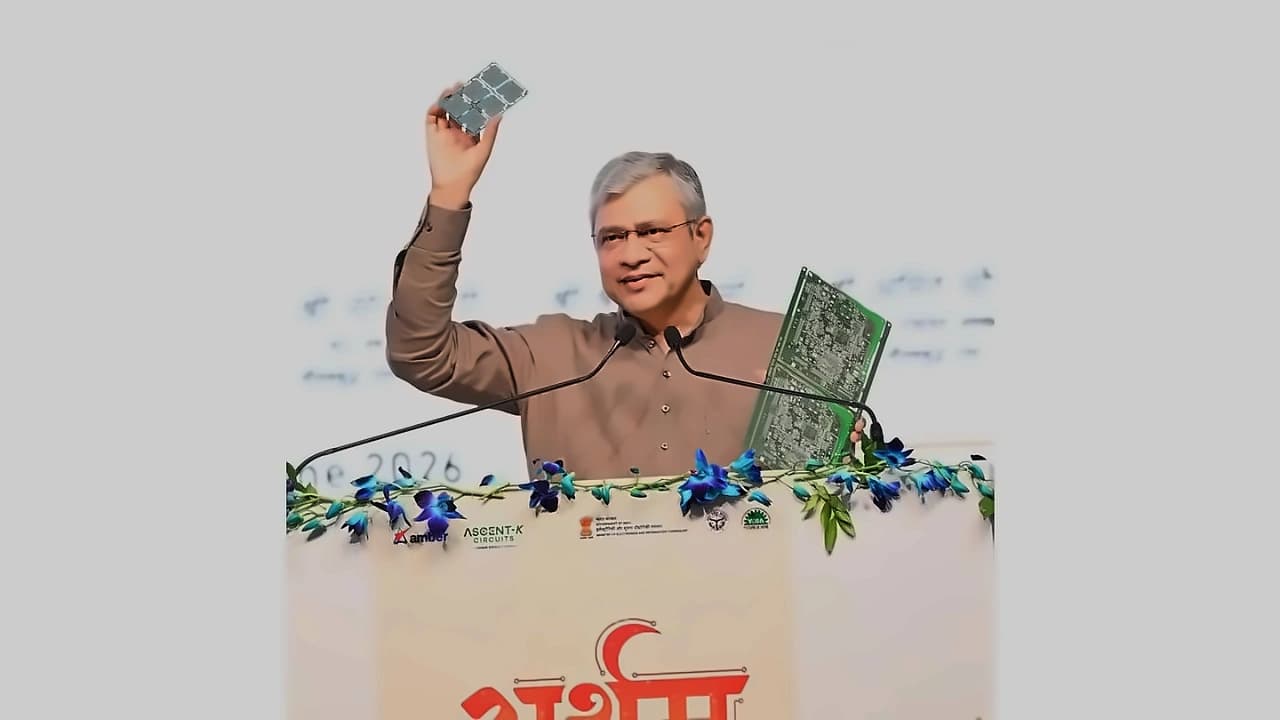
The projects include a ₹3,250-crore investment by ASCENT-K Circuit, a 70:30 joint venture with South Korea's KCC, to manufacture advanced high-density and multi-layer printed circuit boards (PCBs), as reported by The Times of India. Additionally, Amber Enterprises will establish a ₹3,500-crore facility for manufacturing HVAC components and PCB assemblies. The facility will be supported under the Centre's Electronics Component Manufacturing Scheme (ECMS) and backed by incentives from the Uttar Pradesh government. Both projects were launched during the foundation stone laying ceremony in Yamuna City, Jewar.
Highlighting India's growing domestic electronics manufacturing capabilities, Vaishnaw emphasized the country's transition from assembly to deep manufacturing, according to The Times of India. He stated that the advanced multi-layer PCBs being built in Jewar, some with 20 to 22 layers, are the backbone of modern technology. The minister noted that what India once imported, the country will now manufacture for the global market under the 'Make in India' initiative. Vaishnaw confirmed that India had been importing PCBs worth nearly ₹40,000 crore every year and domestic production would substantially reduce import dependence. He emphasized that every PCB manufactured domestically will save foreign exchange, strengthen the rupee and improve India's balance of payments.
According to Amber Group CEO Singh, the company's electronics business is currently growing at 40-45 per cent annually, while its railway and defence division has returned to a 30-35 per cent growth trajectory. For the current financial year, Amber plans capital expenditure of around ₹1,200-1,300 crore, with a similar amount likely next year. The company expects to reach the $2 billion revenue milestone shortly, as all three divisions are witnessing growth. Singh noted that exports are currently minuscule but the company has already entered markets such as the United States and the Middle East, with significant export growth expected over the next three to five years as domestic scale improves.
Amber Group currently operates 33 manufacturing facilities across 11 states, with the new projects set to become its 34th manufacturing location. The company follows a strategy of setting up plants close to customers and industrial clusters to strengthen its supply-chain integration. Singh emphasized that the company is very excited about building blocks and adding horizontal and vertical expansion on both volume and value sides. The consumer durables business continues to grow in line with industry trends, though it faces slow volume growth, margin pressures, slower consumption demand, and erratic seasonal demand.