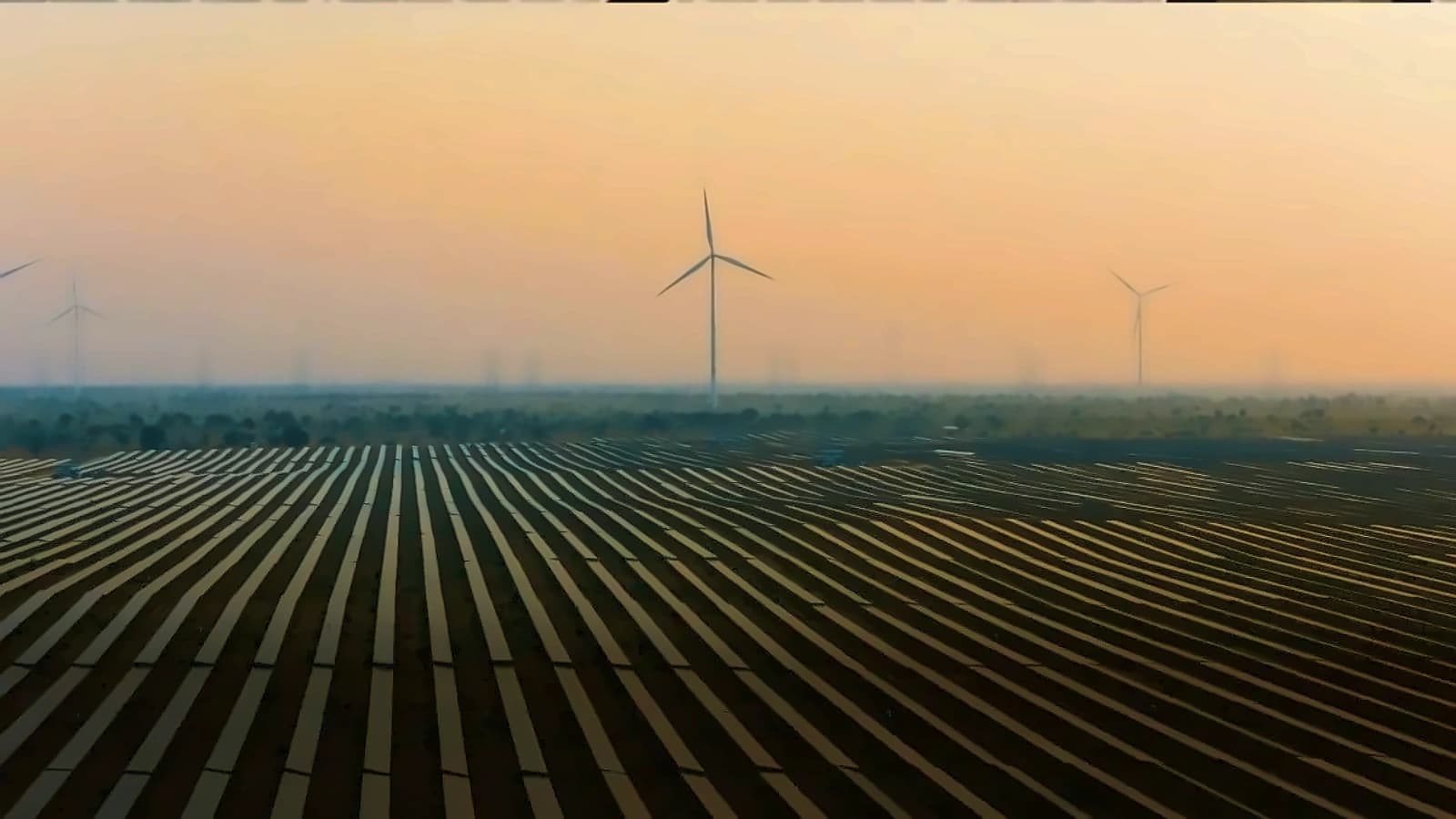
India's renewable energy sector has achieved an extraordinary milestone in 2025, with total investment reaching $2 billion—more than five times the amount recorded in the previous year, according to Fieldfisher reports. This surge stands in sharp contrast to the global trend, where overall renewable energy deal values slipped by 7%, falling from $13 billion in 2024 to $12 billion in 2025. The global market also saw a significant contraction in deal activity, with total deal numbers dropping by nearly 27% from 639 in 2024 to 468 in 2025. In India specifically, while the number of renewable deals declined from 21 in 2024 to 18 in 2025, the total value of those deals grew significantly, signaling a growing preference among investors for larger, more strategic investments.

India's renewable energy sector has demonstrated unprecedented performance during recent peak demand periods, with solar energy contributing 22% of total generation at the record 256 GW peak demand recorded on April 24, according to AL Circle reports. Solar industries contributed nearly 57 GW at the peak load, with earlier that day reaching almost 81 GW and making up approximately one-third of total electricity generation. This performance represents a significant increase from renewable energy's contribution to peak power demand, which stood at 10.9% in 2023, 15.1% in 2024, and 15.4% in 2025. The system's ability to handle such high demand levels highlights the rapid scale-up of both utility-scale solar projects and rooftop installations across the country.
India's electricity system is entering a decisive phase as power demand has rebounded sharply after a brief slowdown over the past two years, according to The Economic Times. Apoorva Bahadur, Senior VP at IIFL Capital, noted that the power demand has increased significantly, coming after a lull of almost two years. FY26 is seeing a sharp reversal after subdued demand conditions in FY25, driven by rising appliance usage, climate volatility, and structural economic growth. The system faces a critical juncture where soaring summer demand, rising renewable capacity, and structural gaps in storage are reshaping the entire power value chain.
India's installed renewable base—led by nearly 150 GW of solar capacity—is now capable of meeting daytime demand comfortably, as reported by The Economic Times. During recent peak load conditions of around 256 GW, the grid did not face shortages during the day. However, the evening hours remain the critical bottleneck where the solar contribution goes down to zero as the system lacks generation during non-daytime periods. This mismatch between daytime surplus and evening shortage is now defining the urgency for energy storage systems, particularly Battery Energy Storage Systems (BESS) and pumped hydro projects.
With gas-based plants facing fuel constraints, hydro output uncertain due to weaker monsoon expectations, and coal plants carrying most of the load, the system is becoming increasingly dependent on storage technologies to balance demand, according to The Economic Times. Recent capacity additions have come from players like Adani Green and ACME, while NTPC has also commissioned pumped storage assets. However, the pace is still insufficient to match the speed of demand growth. Quite likely that this year if the summer demand continues to outperform, we might see peak shortages like we saw two years back or maybe more than that as well, Bahadur warned. The government is also focusing on storage solutions with increased importance, with officials noting that the expansion of battery energy storage systems is expected to further strengthen the solar industry's role in meeting peak demand.