India's passenger vehicle market experienced a significant cooling in April 2026, with total industry dispatches declining to 3.98 lakh units from 4.43 lakh units in March, according to reports from CNBC TV18. This represents a 10% sequential decline that reflects broad-based pressure across major original equipment manufacturers (OEMs). The downturn comes after the financial year-end push in March, indicating genuine demand softening rather than seasonal factors. The global automotive landscape faces even more intense competition, with BYD executive vice-president Stella Li telling the BBC that "history suggests not all will survive" in the sector, as reported by multiple sources.
Market leader Maruti Suzuki retained its top position but reported a decline to 1.58 lakh units in April, compared to 1.75 lakh units in March, as reported by CNBC TV18. Tata Motors and Mahindra & Mahindra also experienced moderation, with April sales at 57,472 units and 54,897 units respectively. The pressure was broad-based, with Hyundai, Toyota, and Kia all reporting month-on-month declines, pointing to widespread demand softening across the industry. International competitors are particularly concerned, with Honda President Toshihiro Mibe stating "we have no chance against this" after visiting a BYD factory, while Toyota CEO Koji Sato warned that "unless things change, we will not survive."
Despite the overall market decline, the electric vehicle segment demonstrated remarkable resilience, with EV sales standing at 22,677 units in April, only marginally lower than March's 23,097 units, according to CNBC TV18 reports. Tata Motors maintained its leadership in EVs with 8,507 units, followed by MG Motor at 4,978 units and Mahindra & Mahindra at 5,394 units. Notably, Maruti Suzuki and VinFast showed a sharp uptick in EV volumes, signalling increasing competition in the segment and sustained underlying demand for electric mobility. The global EV landscape shows similar dynamics, with BYD overtaking Tesla to become the world's top EV seller, though the company faces challenges in the U.S. market where it has "no chance against this."
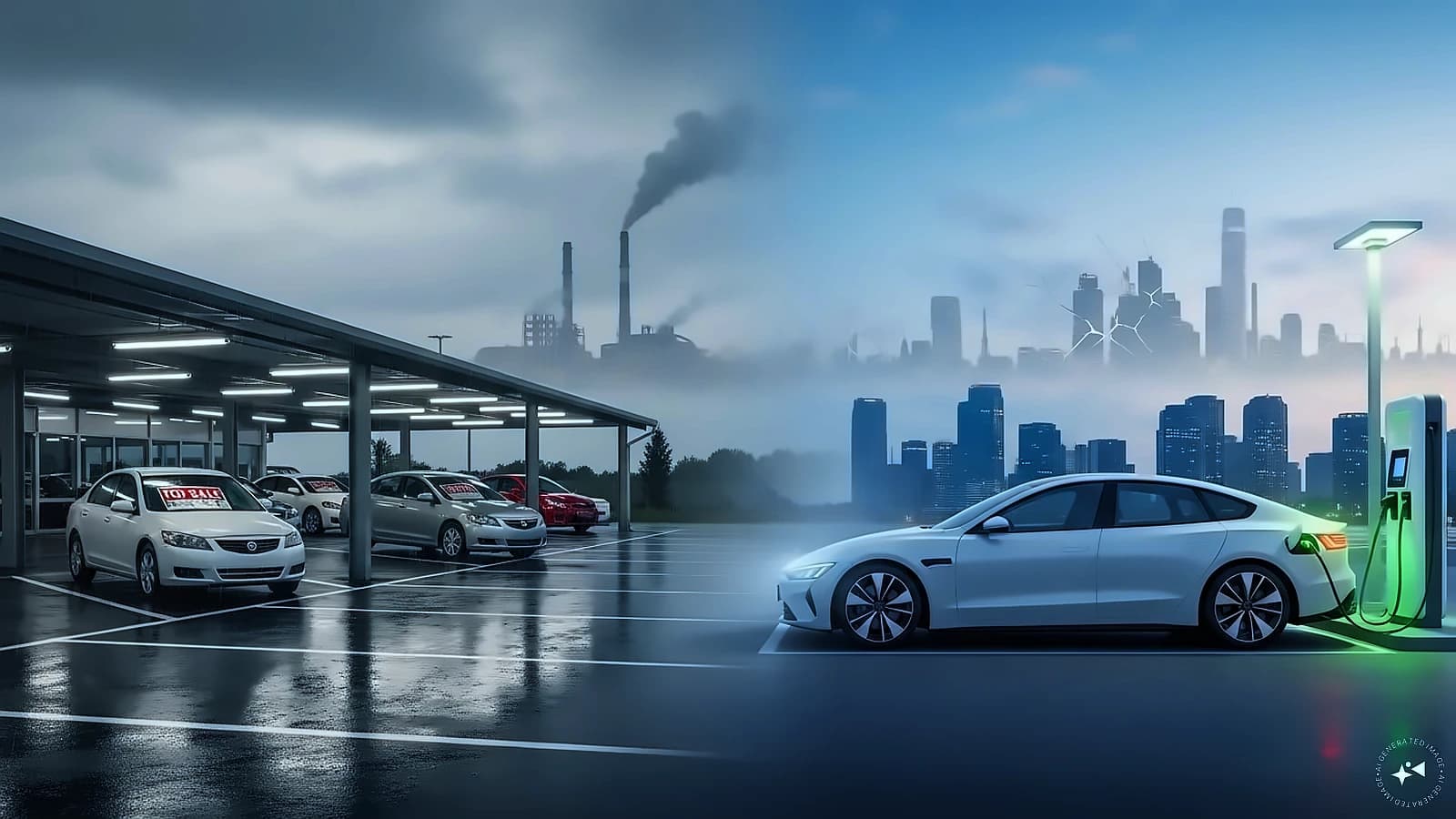
The electric two-wheeler segment faced significant headwinds in April, with registrations declining 27% month-on-month to 1.4 lakh units from 1.92 lakh units in March, according to Vahan data. Despite the contraction, registrations remained 50% higher than April 2025's 92,532 units. Ola Electric emerged as the standout performer with a 20% jump to 11,391 units, improving its market share to 8% from around 5% in March. However, most legacy OEMs witnessed declines, with TVS Motor down 23% to 35,980 units and Bajaj Auto falling 27.6% to 31,083 units.
While April reflects post-March normalization in volumes, the bigger risk ahead lies in external shocks, particularly if geopolitical tensions persist, according to CNBC TV18 analysis. The sector could face rising cost pressures and uneven demand, even as EVs continue to offer a structural growth cushion. However, global competition is intensifying significantly, with BYD executives expressing confidence that "not all will survive" in the sector. The company's foundation as a battery and smartphone component producer has provided an "ecosystem" of market potential, while its flash charging technology and global supply chain advantages position it favorably against traditional automotive manufacturers struggling with EV transition costs.