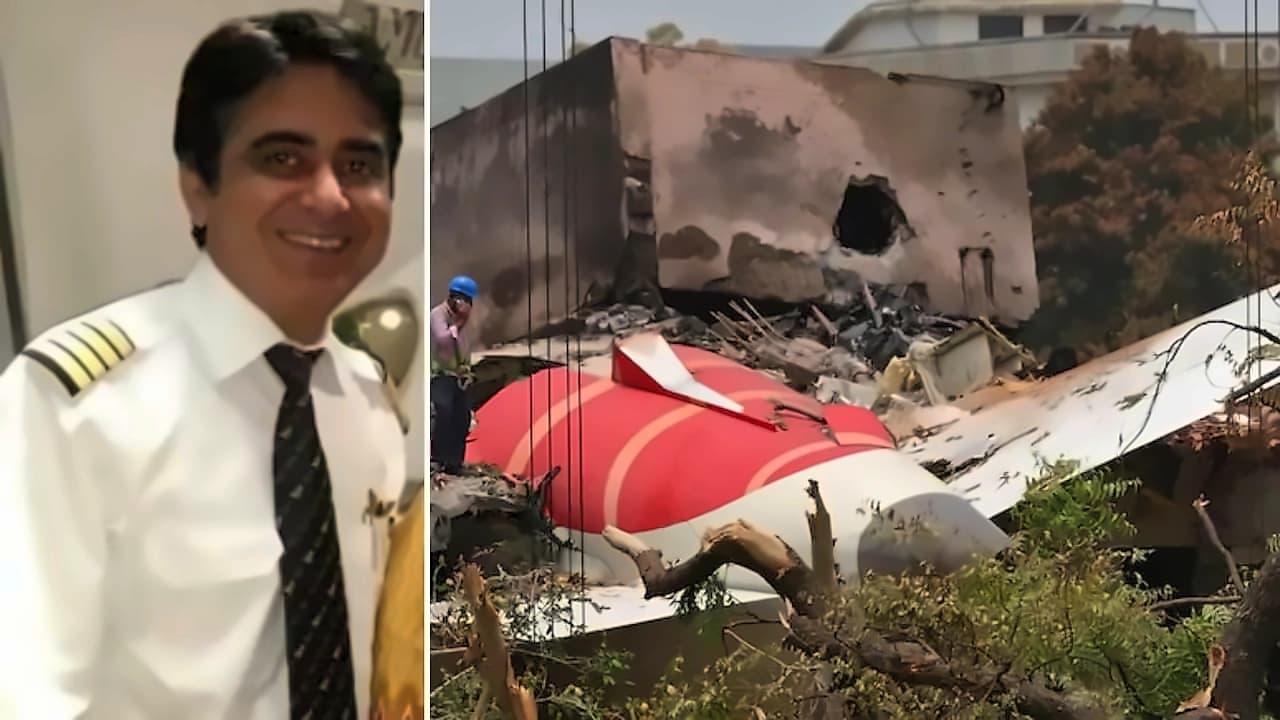
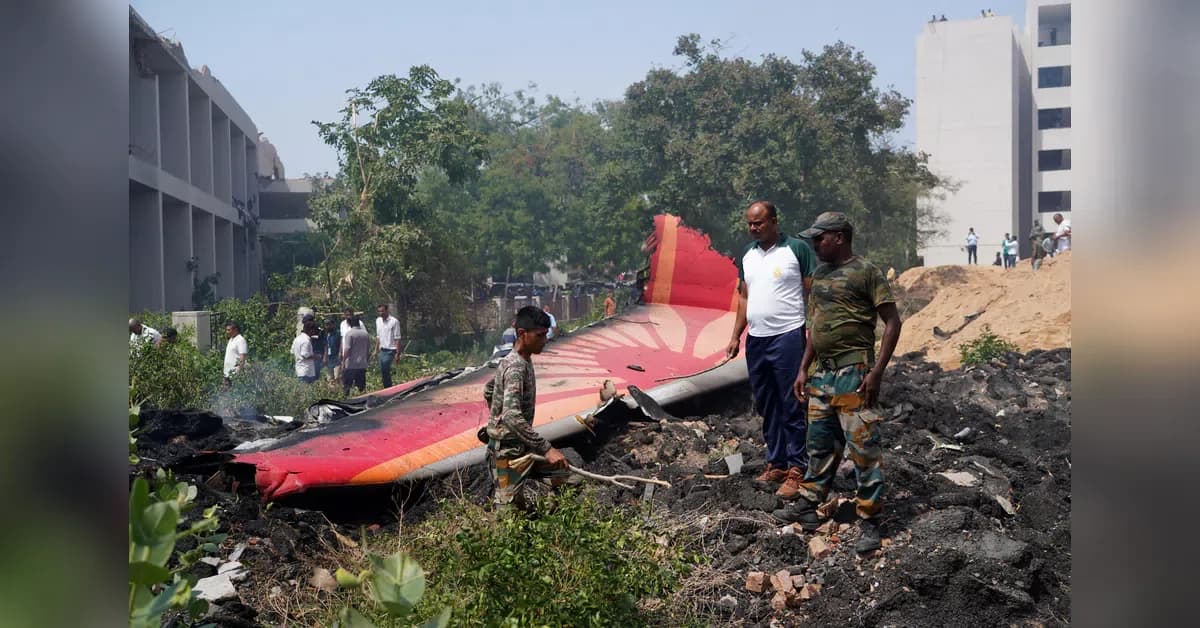
The Aircraft Accident Investigation Bureau (AAIB) is now preparing the final report on the Air India Flight 171 crash, expected to be released within two months. According to The Times of India, American major GE Aerospace has sent the engine analysis reports of the ill-fated Boeing 787 Dreamliner, which crashed on June 12, 2025 in Ahmedabad. A source familiar with the investigation confirmed that all inputs awaited by the AAIB have been received, with the engines having been sent to the US for analysis by GE. The AAIB will now analyze all factors, conduct sequencing, and prepare the comprehensive final report.
The Federation of Indian Pilots (FIP) has challenged the official government narrative surrounding the tragic crash of Air India Flight 171, presenting new simulator data that points to a massive, systemic electrical failure rather than pilot suicide. According to reports from The Economic Times, Captain CS Randhawa, president of the FIP, claimed that investigators ignored crucial technical evidence and intentionally sidelined India's foremost aviation experts to protect a predetermined conclusion. The official interim report into the disaster claimed that the flight crew deliberately cut off fuel supplies to the engines in a coordinated suicide pact, with cockpit voice recordings capturing one pilot asking, 'Why did you cut off?' while the other replied, 'I didn't.'
The FIP has raised fresh concerns over the preliminary findings released by the Aircraft Accident Investigation Bureau (AAIB), alleging that key cockpit warning data may have been omitted from the interim report. As reported by The Economic Times, Captain Randhawa argued that if an electrical failure had occurred, cockpit systems would likely have generated multiple caution messages and accompanying audio warnings. The association questioned why the expected sequence of warnings was not reflected in the preliminary findings, with Randhawa stating that the absence of such information raises questions about whether all relevant cockpit data has been adequately presented. The federation believes the interim report does not fully reflect evidence that could point to an electrical malfunction before the simultaneous loss of power to both engines.
The FIP recently conducted 10 independent simulator exercises using a Boeing 787 platform after requests for comparable official testing allegedly did not result in such trials. Based on these simulations, the association claimed that the Ram Air Turbine (RAT) — an emergency system that restores essential hydraulic and electrical functions following a major power loss — would require about 18 seconds to deploy and re-establish hydraulic pressure after both engines shut down. This differs significantly from the sequence described in the interim report, which indicated that the RAT became operational around four seconds after the fuel control switches moved from 'run' to 'cutoff' position. The FIP's simulator tests prove that a manual fuel cutoff takes a full 18 seconds to drop that backup turbine, contradicting the official timeline of four seconds.
The final AAIB report is expected to face extensive global scrutiny and potential legal challenges across multiple countries, as reported by The Times of India. An aviation expert with decades of accident investigation experience emphasized that air accident investigations must eliminate all probabilities and zero in on what could have happened, warning that the final report should not resort to oblique blame if the exact cause is not definitively established. The expert noted that what is known is that the engines had stopped owing to fuel supply cut, but what is not known is why this happened. This expectation stems from the controversial line in the AAIB's first preliminary report issued last July, which has raised questions about the investigation's approach and methodology.
The FIP has formally requested the government to instruct the AAIB to undertake validation exercises as part of the investigation into the June 12, 2025 crash that killed 260 persons, leaving only one survivor. According to The Economic Times, the federation is demanding the immediate reinstatement of Captain RS Sandhu, widely regarded as India's top Boeing 787 expert, to the official investigation team to ensure a transparent, unbiased review of the data. The pilot body also demands the immediate halt to the publication of the final accident report until the mathematical and technical discrepancies are fully investigated. The FIP has sent the evidence to Boeing and the government, seeking to stop the final report until the error is fixed. Captain Randhawa drew parallels with the 2009 Hudson River investigation, stating that extensive testing was particularly important because the pilots involved in the crash were no longer alive to provide their account of the events, emphasizing that 'The only way to arrive at an objective conclusion is through technical reconstruction that can be independently replicated.'