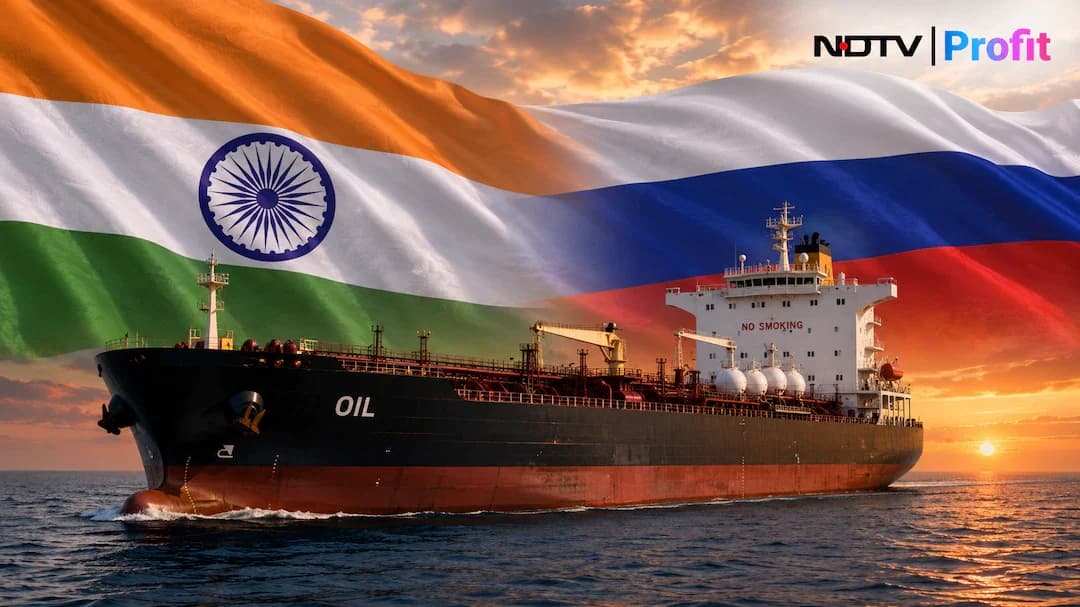
The US has extended permission for Russian petroleum product purchases for another month, responding to rising international oil prices and the Iran crisis impact. According to documents from the US Treasury Department, this allowance applies specifically to shipments of Russian oil that have been loaded onto vessels, opening a window for countries like India to access Russian oil sitting in transit across international waters. However, buyers will have to pay higher prices compared to earlier discounted levels, as the era of heavily discounted Russian crude appears to be fading. A CBS News report estimates that around 124 million barrels of Russian oil are presently stored across the world's oceans, though this adds limited supply when compared to world daily demand of about 104 million barrels. Warren Patterson, head of commodities strategy at ING, noted that the US move will not fully cover supply disruption and that the oil market will only stabilize properly once flows through the Strait of Hormuz return to normal.
The price difference between Russian Urals crude and Brent crude has reduced significantly since the Iran crisis began, showing how tightly world oil markets are now trading. On Thursday, Urals crude was trading around $101 to $102 per barrel, while Brent crude stood close to $110 per barrel, compared to earlier levels when Urals was near $55 per barrel and Brent was around $70 per barrel before the war in February. This narrowing difference to about $8 per barrel demonstrates that Russian oil is no longer trading at the discounts seen earlier in the conflict period. The US Treasury Department has clarified that this short-term waiver will not bring major financial gains for Russia, as most of the country's energy revenue is collected through taxes at the point of extraction rather than final sale prices, limiting the impact of price changes on overall earnings.
India will continue purchasing Russian crude oil irrespective of whether the US extends sanctions waiver, according to Sujata Sharma, joint secretary in India's Petroleum Ministry. As reported by Bloomberg, Sharma emphasized that India has been purchasing from Russia before the waiver, during the waiver, and now also, driven by commercial sense rather than geopolitical alignment. "There is no shortage of crude. Whatever waiver or no waiver, it will not affect," she stated to reporters on Monday. This commitment comes after the temporary US sanctions waiver expired on May 16, which had been introduced to stabilize global energy markets following disruptions caused by the Iran war's closure of the Strait of Hormuz. India and other Asian economies are likely to be the main buyers of this newly available Russian oil, according to market analysts.
India's imports from Russia hit record levels driven by disruption of Middle Eastern supplies from the Iran war, with daily inflows reaching an unprecedented 2.3 million barrels per day in the first two weeks of May, according to Kpler data. Full-month flows are expected to average around 1.9 million barrels per day, close to record levels. Russian supply almost doubled to 2.25 million barrels per day over the same period as refiners replaced lost Iranian and Gulf volumes with Russian oil. Middle Eastern crude supply to India plunged 61% to 1.18 million barrels per day in March compared with February, while Russian supply increased to 2.25 million barrels per day over the same period. The oil that was once sold at discounted rates to India is now being sold at a premium, making Russia major profits as the Iran war changed dynamics in Russia's favor. The availability of additional Russian oil in international waters could help ease supply constraints and support refinery operations, allowing India to maintain imports while managing its energy needs.
India, one of the world's largest consumers, has been increasing its dependence on Russian oil since the start of the Iran war, with Russia becoming India's dominant crude supplier since 2022. Although the US and European countries imposed sweeping sanctions on Russia, Russian oil itself was never directly sanctioned, allowing Indian refiners to maintain purchases through compliance with non-sanctioned sellers, vessels, insurance and payment routes. Global onshore crude stocks have fallen by 60 million barrels since late March to around 3,000 million barrels, implying an average drawdown of roughly two million barrels per day over the past two months. Cumulative crude and condensate supply losses from the Middle East reached 782 million barrels as of May 8, with losses expected to hit one billion barrels later this month. For major importers like India, stability in supply may improve, but the era of heavily discounted Russian crude appears to be fading, with the situation bringing a mix of short-term stability and longer-term cost concerns for New Delhi as it balances reliable energy supplies with Western sanctions alignment.